
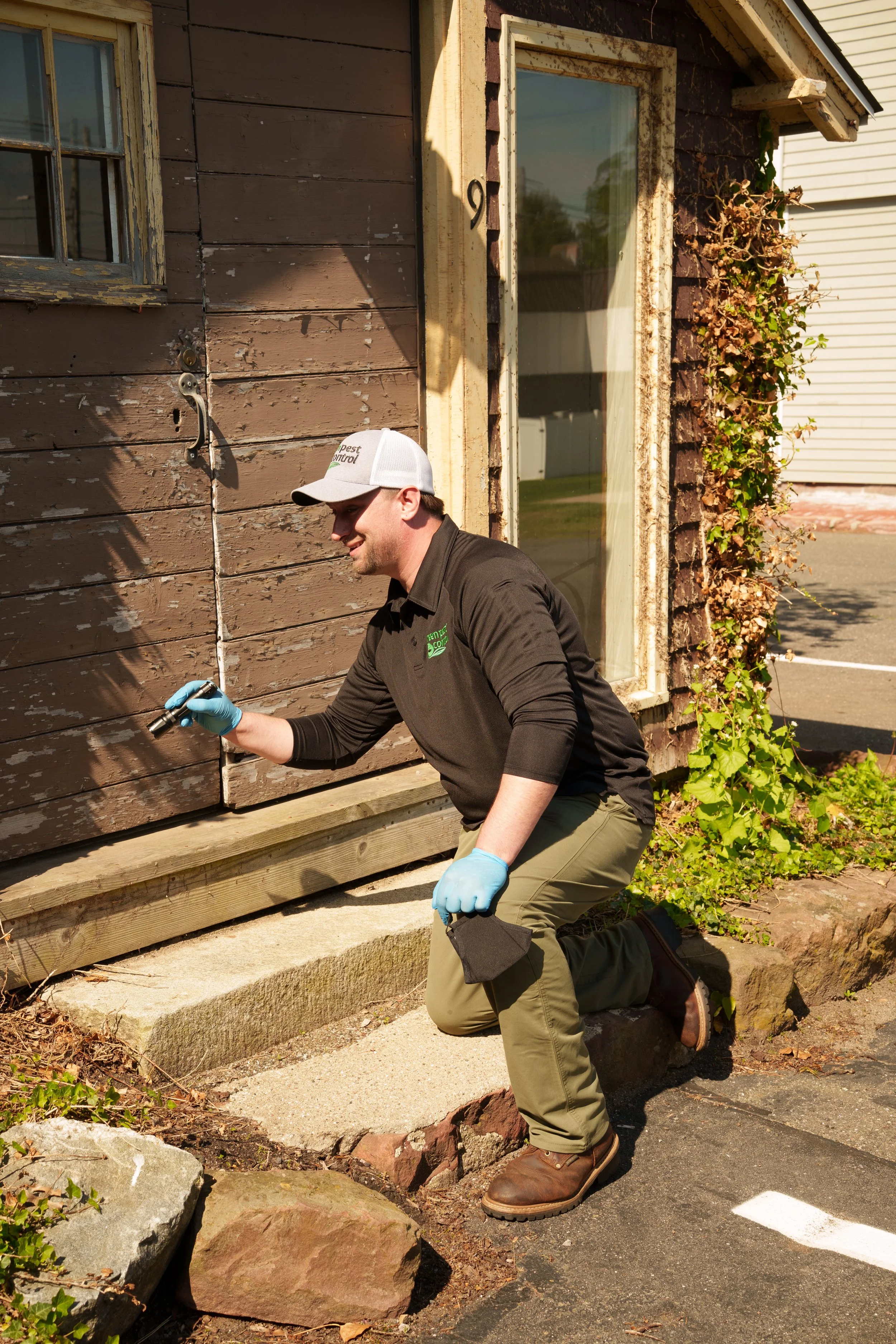
Rat Control in Farmington, CT
Our office is on Farmington Avenue, so we work in this town daily. Rat activity in Farmington and Unionville has been climbing for twenty years, and on a good share of the properties we visit, the thing sustaining it is sitting in a barn, a feed bin, or a run behind the house.
Rat or mouse? Photograph the droppings or the burrow before you clear anything, and we will confirm which animal you have.
Reading the Evidence
Telling rats from mice
- Open burrows in the ground, commonly at a shed skirt, a woodpile, a manure pile or a feed shed
- Chewed corners on feed sacks, grain bins and stored bedding
- Broad gnaw marks, including on plastic, wire and soft metal
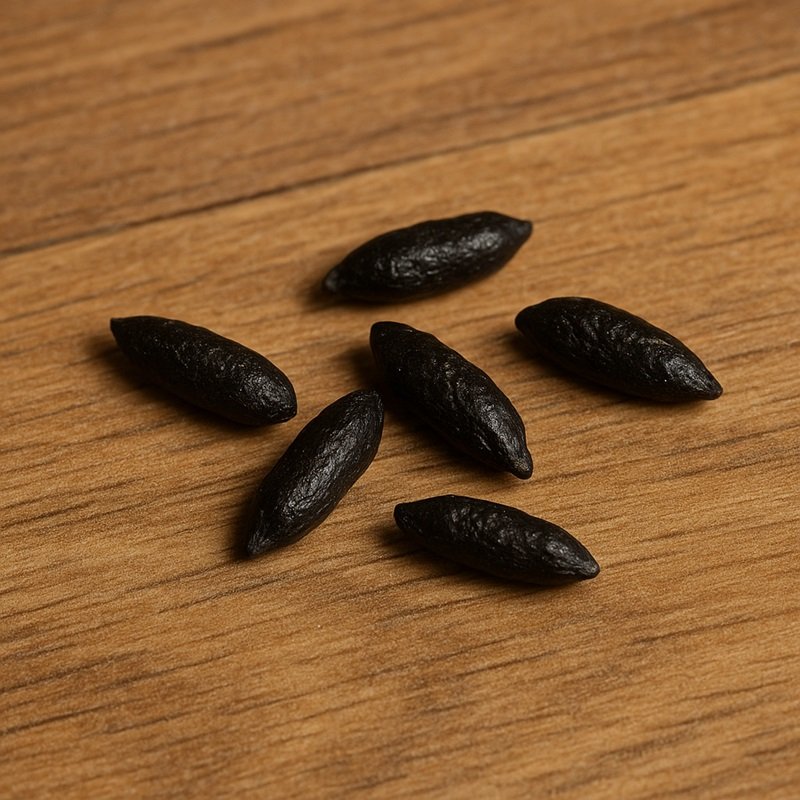
- Droppings in a tack room, a feed room or along a stall wall, capsule-shaped and well beyond mouse size
Where an agricultural property loses the argument
- The feed room door, almost always the least sealed door anywhere on the place
- Board siding on an older barn, which parts at the seams as the building moves
- The gap under a barn sill where the framing meets a slab or a stone pier
- Waste and bedding storage, which supplies food and heat in the same pile
- Only then the house, which is usually the last building a population reaches rather than the first
What we handle
- Active indoor infestations with droppings, sounds or sightings
- Outdoor burrow systems working toward the house or the barn
- Properties with coops, runs, paddocks or feed storage
- Multi-unit and commercial properties needing ongoing rodent control, though not restaurants or food facilities
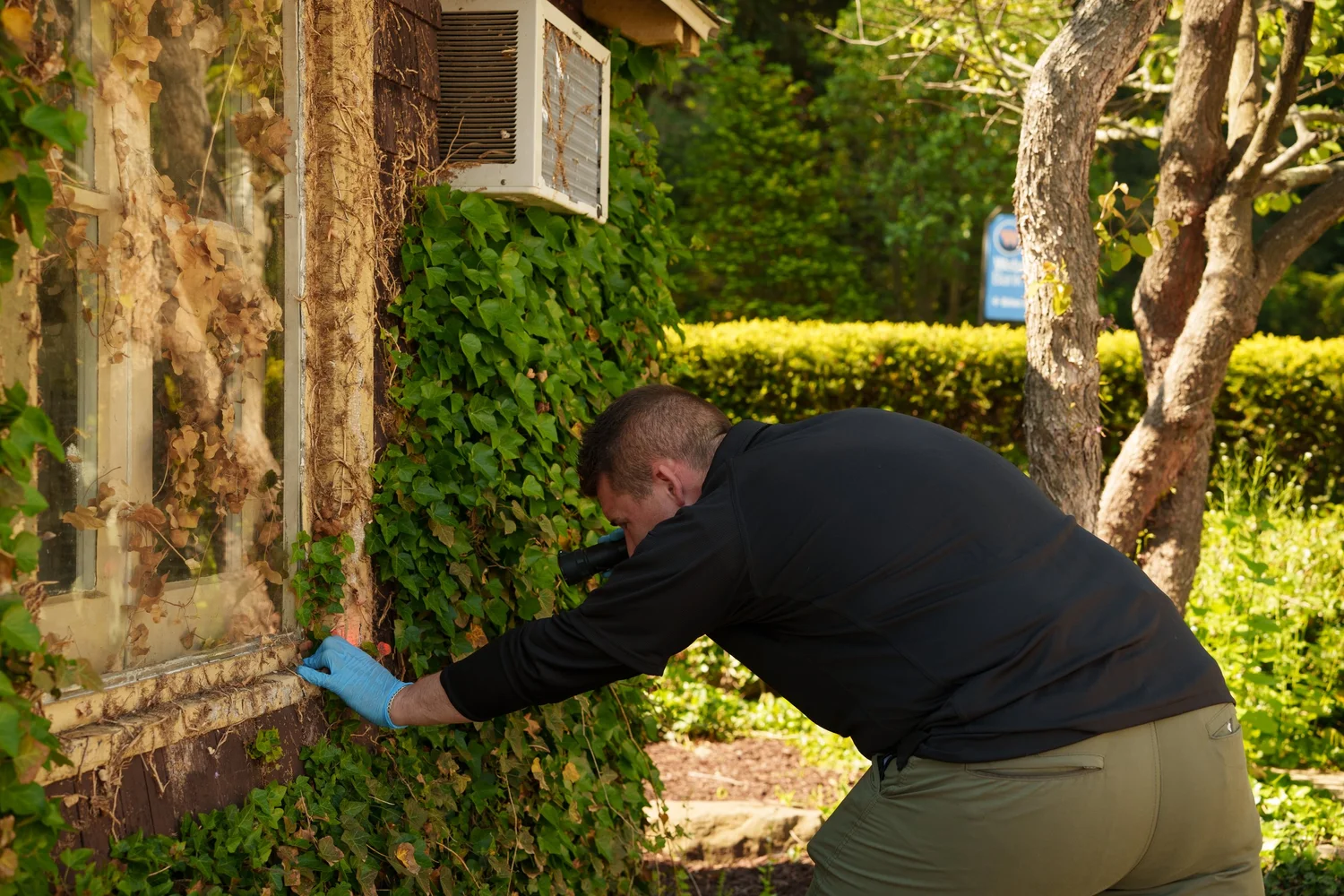
Three Things That Make Rats Harder Than They Look
The first is arithmetic. A rat population sits at whatever size its food supply will carry. Take out some of the animals and leave the supply untouched, and the survivors breed back into the space within a season, which is why a property can be worked over every year and be no further ahead each Spring.
The second is patience, and it is counterintuitive. Rats treat unfamiliar objects with real suspicion, so equipment dropped into an established run frequently sits ignored while they decide about it. Hurrying that stage is what turns a two-week job into a two-month one.
The third is scale. A rat will work a few hundred yards from where it sleeps, so on a property with several buildings, the nest, the food, and the sightings are often in three different places. Finding which is which is most of what the first visit is for.
Feed Is What Keeps Resupplying Them
Farmington maintains a working-horse culture that most towns its size have lost. The Polo Club and its equestrian center are here, boarding barns operate around them, and the feed, hay, and bedding that supply all of it move through ordinary residential properties as well. On the homes we visit in this town, we regularly find a bin, a run, a coop or a compost pile.
That matters for one reason. Rats are limited by food more than by shelter, and feed is the most reliable food a rat will ever find. Grain in a bin, scratch spilled around a coop, hay with seed heads in it, a bag leaning against a wall in a tack room, a trough that never fully empties. It stays put, it stays stocked, and it is there every single night of the year, including the ones when nothing else is.
Shelter travels with it. A manure pile holds heat through the Winter. A haystack is dense, dry, and undisturbed in the middle. A run with a skirt has soft, protected ground beneath it, ideal for a burrow system.
Put those together, and a property with animals is hosting a rat habitat rather than suffering a passing rat problem. The population there is capable of rebuilding faster than one living on scavenged food, which is exactly why owners tell us the same thing over and over: they beat it down every year, and it comes straight back.
We are not going to tell anyone to give up their hens. We will tell you, specifically, where the food and the harborage on your property are doing the most work, because on these jobs the management side carries as much weight as anything we apply.
Working a Property Like Yours
A conversation, or a photo
No phone tree and nobody working on commission. Rat and mouse evidence differ enough that an image is usually sufficient.
A free evaluation of the whole property
Free to everyone in our service area, with day-before confirmation and a twenty-minute arrival update. On a property with animals that walk takes in the outbuildings as well as the house.
We find the burrows
Smooth, worn openings with fresh soil tell us the system is active and tell us how established it is. That information does not exist inside the house.
We map the food and the harborage
Storage, spillage, waste, water and cover. This decides whether a result holds.
We build a plan around their caution
Placement, timing and familiarity, sequenced so the population accepts the equipment rather than avoiding it.
We work the numbers down, then seal
Sealing first would close rats inside, so it follows. The openings are larger than a mouse job needs, and the materials have to survive heavy gnawing.
We keep it from rebuilding
Where feed and cover stay on site, the outside pressure stays too. Ongoing prevention is how the property stops starting over each season, with no contract attached.
Why This Town Calls Us
- Based at 769 Farmington Avenue, which keeps response windows tight and follow-up quick
- Twenty years of watching this trend develop in Farmington and Unionville
- Property-wide evaluation including barns, coops and outbuildings, which is where these jobs are usually won
Every Service We Offer in Farmington
Reviews From Your Neighbors
Farmington Rat Questions
Are rats genuinely increasing here?
We keep chickens. Does that mean we will always have rats?
Do rats slow down in Winter?
Where are they actually living?
Will one visit do it?
Can you treat the barn and the house together?
Let's Walk the Property Together
Bring us out, and we will walk the coop, the feed store, the barn, and the house in one visit, then tell you which of them is actually feeding the problem.
Take away the supply, and the rest of the work holds.