
Carpenter Bee Control in Simsbury & the Farmington Valley
Stopped Before They Riddle Your WoodEco-Friendly & Low-RiskNo Contracts, No SalesmenCT Licensed B-3361
Those big, shiny black bees drilling round holes in your eaves rarely sting, but they return to the same tunnels year after year, and the damage quietly compounds. We stop the drilling.
Seeing round holes in your trim? Send us a photo. Carpenter bee or bumblebee, we'll confirm in a minute.
Three Things That Make Carpenter Bees Worth Treating
Carpenter bees are easy to dismiss until you understand how they work. Here's what matters.
Shiny and Black Means Carpenter Bee, and the Scary Ones Can't Sting
The big bees that dive-bomb you near the eaves are usually males: territorial, intimidating, and entirely stingless. The females do the drilling and rarely sting. The drama is at eye level; the damage is overhead, where a female is quietly boring into the rake board.
They Reuse and Expand the Same Tunnels Every Year
A homeowner who shrugs off two holes one Spring is often looking at a dozen three years later, with the original tunnels branched and deepened behind the surface. Each season looks minor enough to ignore, right up until the fascia needs replacing.
Woodpeckers Turn a Small Problem Into a Big One
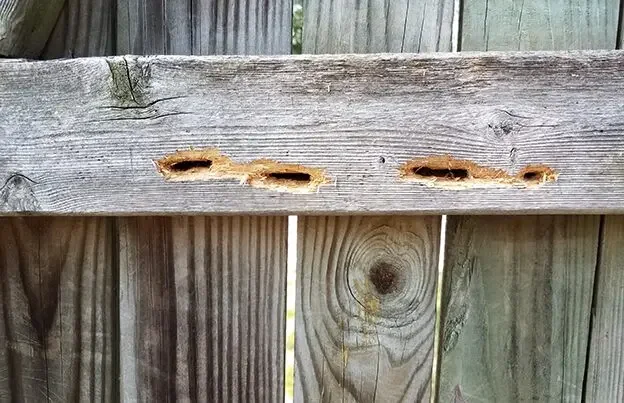
Carpenter-bee tunnels attract woodpeckers, which hammer into the wood to eat the larvae. We've seen neat little bee holes turned into shredded, foot-long gashes in a single week, and at that point you're paying for carpentry, not pest control.
What We Look For, and What We Treat
Signs of carpenter bees
- Large, shiny black bees hovering around the roofline and trim
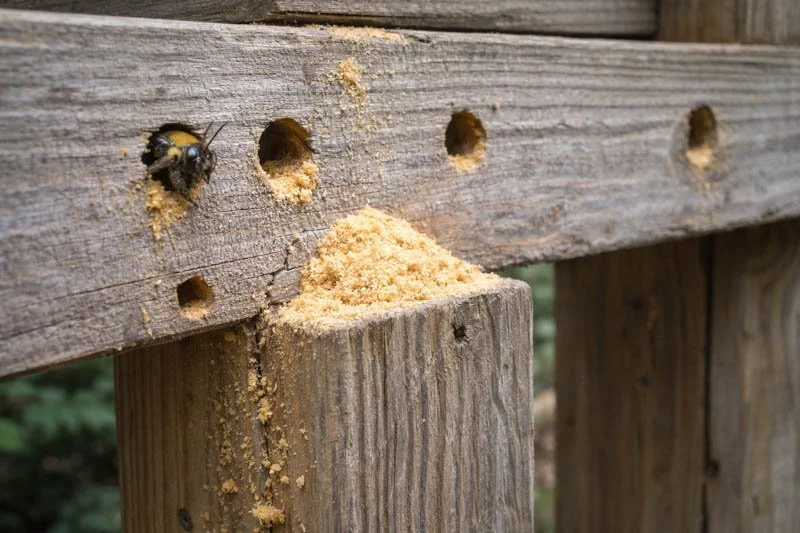
- Perfectly round holes, about the size of a dime, in wood
- Coarse sawdust below the holes, and yellowish staining on the wood
- Fresh holes appearing near last year's holes, tunnel reuse
- Woodpecker damage opening up around the bee holes
Where they drill on Valley homes
- Roof-rake boards: their number-one target here
- The underside of wood soffits and overhangs
- Porches, porch ceilings and exposed beams
- Vertical columns and support beams
- Decks, railings, fascia and weathered softwood
What homeowners confuse them with
- Bumblebees: fuzzy, not shiny; they don't bore into wood
- Wasps and hornets: different nests, different treatment
- Powder-post beetles: also wood-damaging, but tiny exit holes
Situations we handle
- Active drilling on eaves, decks, porches or trim
- Recurring carpenter-bee pressure that returns every Spring and Summer
- Homes with weathered or unfinished softwood drawing them in
- Properties already attracting woodpeckers to old bee holes
How Our Carpenter Bee Control Works
You Reach a Real Person or Send Us a Photo
Tell us where you're seeing the bees and the holes. Confirming carpenter bee versus bumblebee is the first step.
We Schedule a Free Evaluation
It may be worth looking into matters on-site for the benefit of our recommendations. Free to residents and businesses within our service areas.
We Find the Active Tunnels and the Targets
Roof-rake boards, soffits, overhangs, porches and beams are where we identify the active galleries, not just the bees flying around.
You Get a Clear Recommendation and Price
The treatment and cost up front, including whether seasonal prevention makes sense for your home. No pressure, no contract.
We Can Complete Our Recommendations Same Day
We almost always have the materials necessary for our recommendations. If you want to start with the elimination or prevention services, you shouldn't need to wait.
We Advise on Sealing the Old Holes
Filling and finishing old holes keeps next year's bees from reusing them. We'll point out which holes to address; the carpentry itself is a job for you or your contractor.
We Keep Them From Coming Back
Carpenter bees scout for roughly six months a year, Spring through Summer, so prevention is typically twice-yearly applications timed to exactly that window.
“I had a terrible experience with carpenter bees, but after Green Pest Control sprayed I'm able to sit on my deck again! I'm so pleased with this company!”
— Noreen Claffey · Google reviewWhat Affects the Price and What Interests Us First
Carpenter-bee jobs vary with how widespread the drilling is and how much of the home is involved. We evaluate free, then quote exactly what's needed. You've already spotted the holes, so it's an evaluation to scope the drilling, not a paid inspection to go looking for it.
- How many active tunnels there are and how widespread the drilling is
- Which areas are affected: roofline, soffits, decks, porches, beams
- The height and access of the affected wood
- Whether the problem is established from previous years
- One-time treatment versus seasonal, twice-yearly Preventative Maintenance
- Conditions drawing them in, such as light-colored siding or weathered wood
- Preventative Maintenance Service clients receive standing Discounts
Only a Look Tells Us Which One You've Got
A first-year problem on one rake board is a very different job from a long-established gallery system across the whole roofline, even though both start with the same complaint.
The free evaluation gets you a firm price and an honest read on whether one treatment or seasonal prevention is the better value.
Real Carpenter Bee Results From Your Neighbors
Where Carpenter Bees Drill on Farmington Valley Homes
Roof-Rake Boards First
Those long, exposed boards running up the roof edge are easy to reach, often softwood, and frequently weathered, exactly what a female carpenter bee wants. The holes are out of casual sight, so by the time a homeowner notices, the bees have usually had a few uninterrupted seasons up there.
Soffits, Overhangs and Porches
Shaded, sheltered surfaces give the bees a protected place to nest. A homeowner standing on the porch rarely looks straight up at the ceiling boards, which is exactly why these nests get a head start.
Columns, Beams and Decks
Deck complaints are some of the most common carpenter-bee calls each Spring. People stop using the space they built to enjoy, and that loss of the outdoor room is usually what finally prompts the call, more than the damage itself.
Unfinished and Weathered Softwood
Carpenter bees strongly prefer bare softwood over painted or sealed surfaces. When we see a freshly painted front and a weathered back deck, we already know which side the bees are working before we walk around.
The Late-Spring and Summer Peak
Activity peaks when the bees are chasing one another in territorial dogfights. Acting during that window doesn't just clear the current bees. It interrupts the egg-laying that would seed next year's emergence from the very same boards.
Woodpeckers as the Second Wave
Once woodpeckers commit to a board, they'll keep returning as long as there are larvae to find. The only way to move them along for good is to take away what they came for: treat the bees.
The Technical Side of Real Carpenter Bee Control
Why treating the gallery beats swatting the bee
Killing the bees you can see does nothing about the eggs and larvae developing inside the wood. Our treatment targets the active galleries with materials the bees move through, so the next generation doesn't emerge to reuse them. You can win every duel with the males and still lose the war, the females and their galleries were never the target.
Carpenter bee versus bumblebee, and male versus female
Shiny, hairless black abdomen = carpenter bee; fuzzy yellow-and-black = bumblebee. And the bee buzzing your head is almost always a stingless male defending territory, while the female (the one that actually drills) is far less interested in you.
The reuse-and-expand cycle
An early gallery is a short, simple tunnel; a five-year-old one is a branched system with multiple generations invested in it, and far more wood already compromised around it. Catching it after one or two seasons is so much easier than after five.
Why timing and twice-yearly prevention work
Carpenter bees scout for nesting sites roughly six months of the year. A one-off treatment in July helps that month, but does nothing for the scouting females arriving in May the following year. The twice-yearly plan covers the whole window, not a single afternoon of it.
We treat the bees, your contractor closes the wood
Our job is stopping the bees. Replacing a chewed rake board is aesthetic and can be a contractor's job when called for. We'd rather tell you that plainly than pretend a pest treatment fixes wood damage, and we'll give you the punch list to hand your carpenter.
Carpenter Bee Questions We Hear Most
How do I know if it's carpenter bees or bumblebees?
Look at the abdomen: carpenter bees are shiny and hairless black; bumblebees are fuzzy yellow-and-black. Carpenter bees also hover around wood and leave perfectly round, dime-sized holes. Send us a photo if you're not sure.
Will they sting me?
Rarely. The bees that buzz aggressively near the eaves are usually stingless males defending territory. The bigger concern is the wood damage, not the bee dive-bombing your hat.
Do carpenter bees really damage my house?
Yes, gradually. They tunnel into wood to nest and reuse and expand those tunnels year after year. Over time that weakens decks, railings, soffits and eaves, and the galleries attract woodpeckers, which cause even more damage.
Where do they usually drill?
On Valley homes: roof-rake boards first, then soffits, overhangs, porches, columns, beams, decks and fascia. They prefer bare or weathered softwood over painted surfaces.
Can you treat it the same day?
Often, yes. Most treatments can be done the same day as the free evaluation once you authorize the work, if there's urgency.
Do you fill or repair the holes?
We develop strategy and implement tools to eliminate the threat, but the wood repair is a carpentry job. We’ll give you a clear list of what we recommend you address.
Are the treatments safe for kids, pets and pollinators?
Yes. We use low-risk materials targeted to the galleries, not broadcast across the yard, and we keep products off flowering plants and beneficial bees. Treated areas are safe once dry.
Why do they keep coming back every Spring and Summer?
Possibly more than one reason. They reuse old tunnels and scout for new wood Spring through Summer. Your property may also be in a densely-populated area with trees nearby that are supporting the activity. If vulnerable areas aren’t treated and the wood stays attractive, new bees find your home each year.
How do I keep them from coming back?
Reduce contributing factors, treat the active infestation, and consider seasonal prevention timed to the nesting window.
How much does carpenter bee control cost?
It depends on how widespread the drilling is and which areas are affected, so we quote after a free evaluation rather than over the phone. Our prices are at or below market average and always reflect our desire to earn long-term relationships with clients. Our materials and techniques remain superior to the alternatives.
Tell Us What You're Seeing, We'll Take It from There
Stop the carpenter bees before the tunnels (and the woodpeckers) turn a few round holes into real damage. A real person, a free evaluation, and an eco-friendly treatment timed to the season.
Your deck back, the drilling stopped. That's the Green Pest Control difference.