
Termite Control in Farmington, CT
Termites are methodical and slow, which is genuinely good news: caught early and treated properly, a termite problem in Farmington is routine work. What makes parts of this town worth a closer look is how little vertical distance there is between the ground and the wood on properties down on the river terrace.
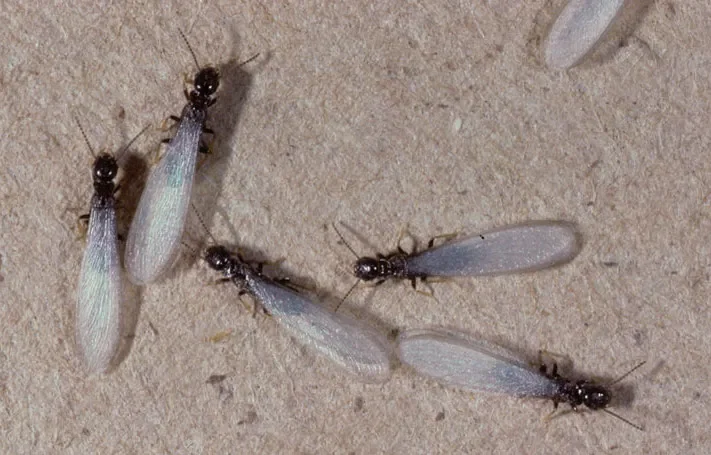
Winged insects or shed wings on a sill this Spring? Photograph them before clearing, then send it over.
Why Liquid, and Why It Lasts
Termidor High-Efficiency is a non-repellent liquid termiticide, meaning termites cannot detect it. They move through the treated soil zone normally and carry the active ingredient back through ordinary contact, which works the colony down, reaching well past the foragers currently in the wood. Applied around the structure, it spreads roughly six times faster by direct contact than a bait system spreads by feeding.
The useful consequence is that the work does not expire when the current colony does. Because the material stays bound where it was placed, the same application that solves today's problem is still standing between the soil and your framing years from now, and there is nothing to renew or keep paying for in the meantime.
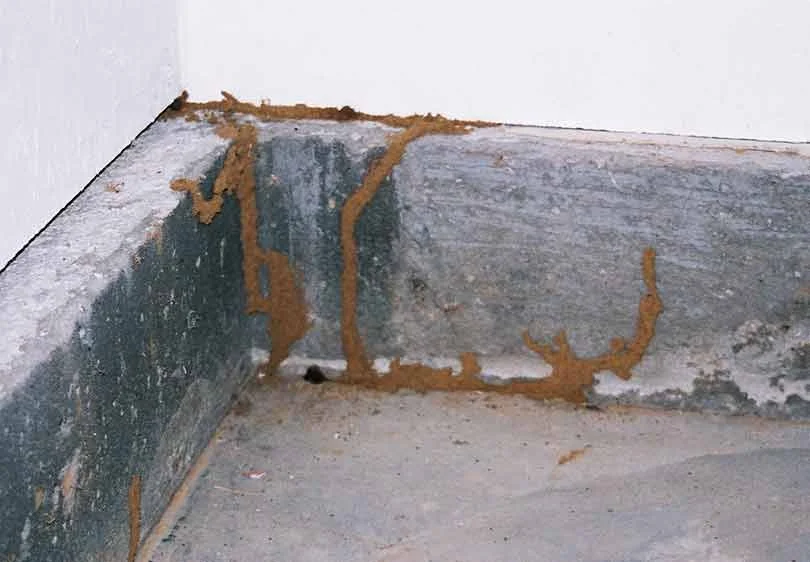
What sends people looking in the first place is nearly always one of five things: winged swarmers indoors in Spring, shed wings on a sill or caught in a web, mud tubes climbing a foundation or a porch pier, wood that sounds hollow when it is tapped, or termites turned up in soil during gardening or by a contractor mid-renovation.
Bait stations work differently and depend on termite workers finding them, which can take months, years, or not happen. If there is an active problem in the structure now, that uncertainty is the part worth weighing.
Terrace Grade, and How Close the Wood Sits
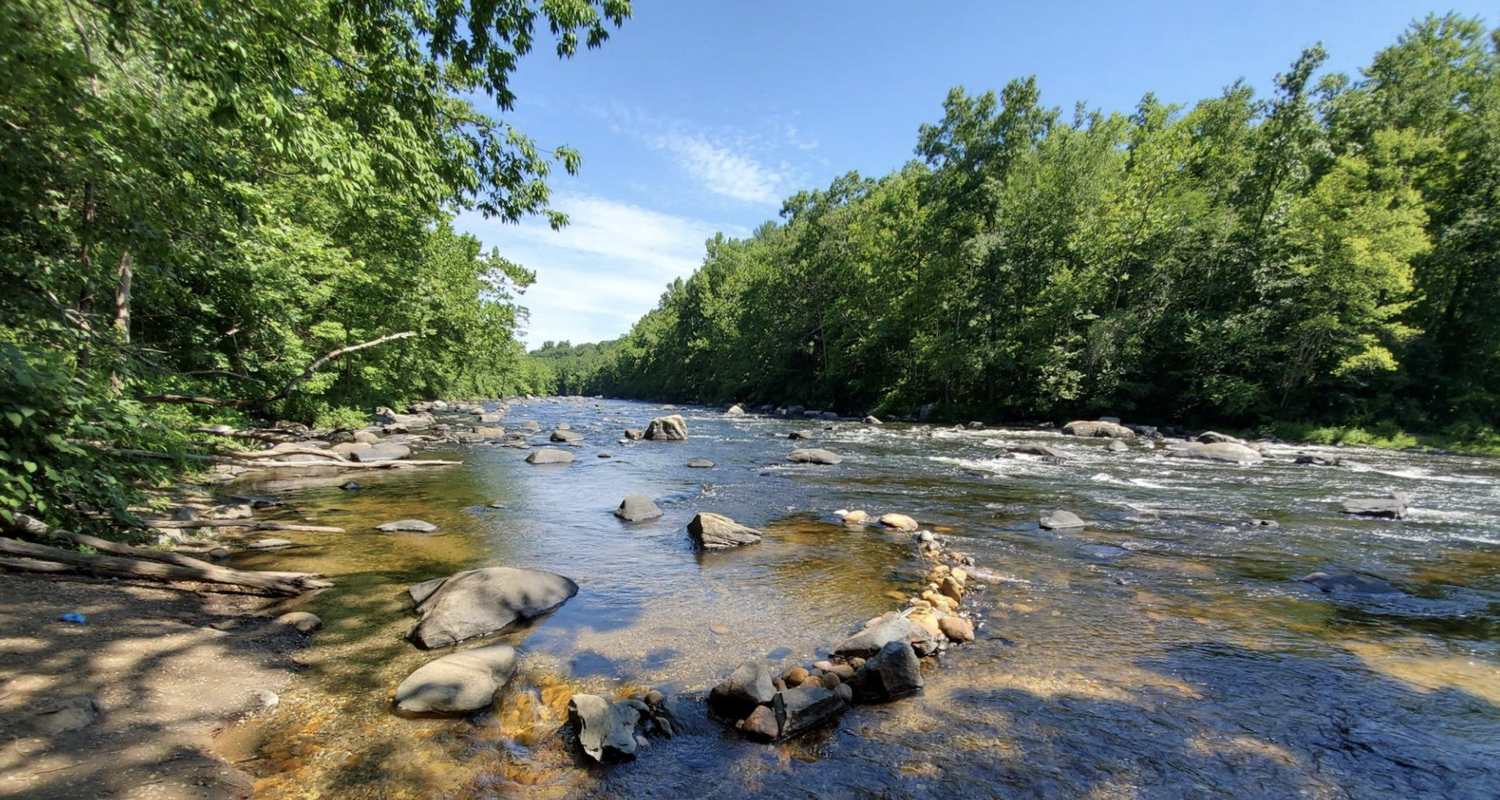
Farmington occupies the floor, and the edges of a river valley, and that difference shows up in termite work. Properties on higher ground generally have a comfortable gap between finished grade and the bottom of the framing. Down on the terrace and the lower flats, including a good deal of what we service around Unionville and along the riverside of town, the ground is flatter, and we routinely measure framing sitting close to the level of the land around it.
The consequence is straightforward. Termites live in the soil and have to reach wood, so the shorter that trip, the easier a structure is to colonize. Add a masonry porch built tight to the foundation, a slab poured against it, or a walkway laid at grade, and the last stretch is concealed as well as short.
Lengthening that trip again is often simple once somebody has measured it: pulling grade back, correcting a wood-to-soil contact, opening up a concealed seam so it can be seen.
The corollary is worth saying too. A Farmington property up on the higher ground is not exempt, and we treat plenty of them. It means the evaluation starts elsewhere on those houses, usually at the porch and the garage slab, because the easy route in has to be somewhere, and on a well-set foundation, it is rarely the perimeter.
Why This One Rewards Experience
- More than 2,500 termite problems resolved by our owner personally, who is licensed for termites and has probably put down more liquid treatments than anyone else working in this state
- Termite work is done in-house with Termidor High-Efficiency and never subcontracted
- Twenty years of reading how homes in this valley are built, where they fail, and how local colonies behave through wet years and dry ones
- Treatments carry a one-year service guarantee including inspections and re-treatments in that period, renewable annually and transferable if you sell
- Our office is at 769 Farmington Avenue, so termite matters, which we treat as a priority, get moved on quickly
What the Treatment Day Looks Like
Photograph it and send it
Termite matters get priority handling. Insects, wings, tubes, or damage all work.
We confirm the species
Termites colonize in the soil while most other wood-destroying insects live in the wood. That difference changes the entire remediation approach, so it gets settled first.
We establish where the wood sits
Grade, wood-to-soil contact, porches, slabs, and the routes between them.
You hear the number before anything starts
What is needed and nothing more, in plain language, with no contract and no pressure.
Liquid soil treatment around the structure
Applied to create a continuous treated zone at the points termites actually use to reach the building.
Minimal, clean drilling where it is needed
Small five-eighths-inch holes to reach soil beneath slabs, driveways, and against the foundation, almost entirely outdoors, sealed by hand immediately afterward.
The treatment stands as the prevention
One correct application keeps protecting the soil zone for years, and we remain a phone call away throughout.
Termite Questions from Farmington
My house sits low. Should I be worried?
Is it safe with children, pets or a vegetable garden nearby?
Can I treat before I ever see one?
We are in a flood-prone spot. Does water affect the treatment?
Does the treatment need to go all the way around the house?
I am planning an addition. Should I wait?
How much does termite treatment cost in Farmington?
Reviews and Ratings
Every Service We Offer in Farmington
Found Swarmers, or Want Them Never to Matter?
Whether you have found swarmers or you simply want the house protected before you do, the first step is the same: a look at where your framing sits relative to the soil, at no cost to you.
Measure the distance, treat the soil, and get years of not thinking about it.