
Eco-Friendly, Low-Risk Pest Control in Simsbury & the Farmington Valley
Tough on Pests, Gentle on the PlanetLimited-Indoor, Exterior-Barrier IPMKid- & Pet-Safe Once DryCT Licensed B-3361
The “Green” in Green Pest Control isn't a marketing color. It's how we work. We defeat the root cause of your pest problem without dousing your home, your yard, or the ecosystem around it.
Safe for the family, tough on the pests, no eco upcharge, ever.
Three Things That Make Our Approach Genuinely Green
"Eco-friendly" is an easy phrase to print on a truck. Here's what it actually means in how we treat your home.
Limited Indoor Treatment, Robust Exterior Barrier
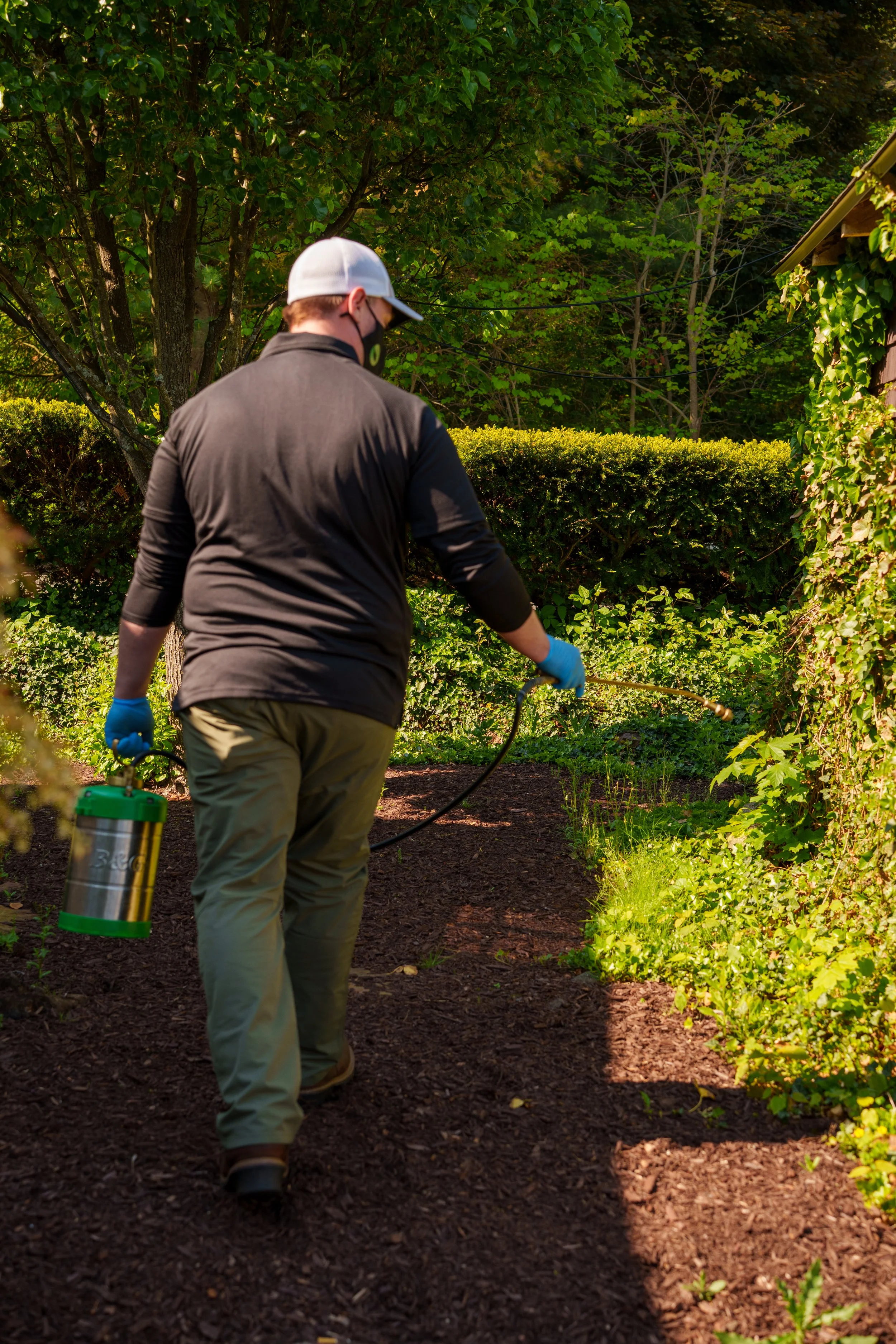
For the most common pests, the durable solution lives on the outside of the home, not sprayed through your kitchen. Heavy indoor treatment offers a false sense of relief while raising exposure for the people and pets who actually live there. A homeowner can usually tell the difference between a company that wants to spray every baseboard and one that treats your home the way it would treat its own.
IPM: We Consider Alternative Causes, Lessening Chemical Intervention
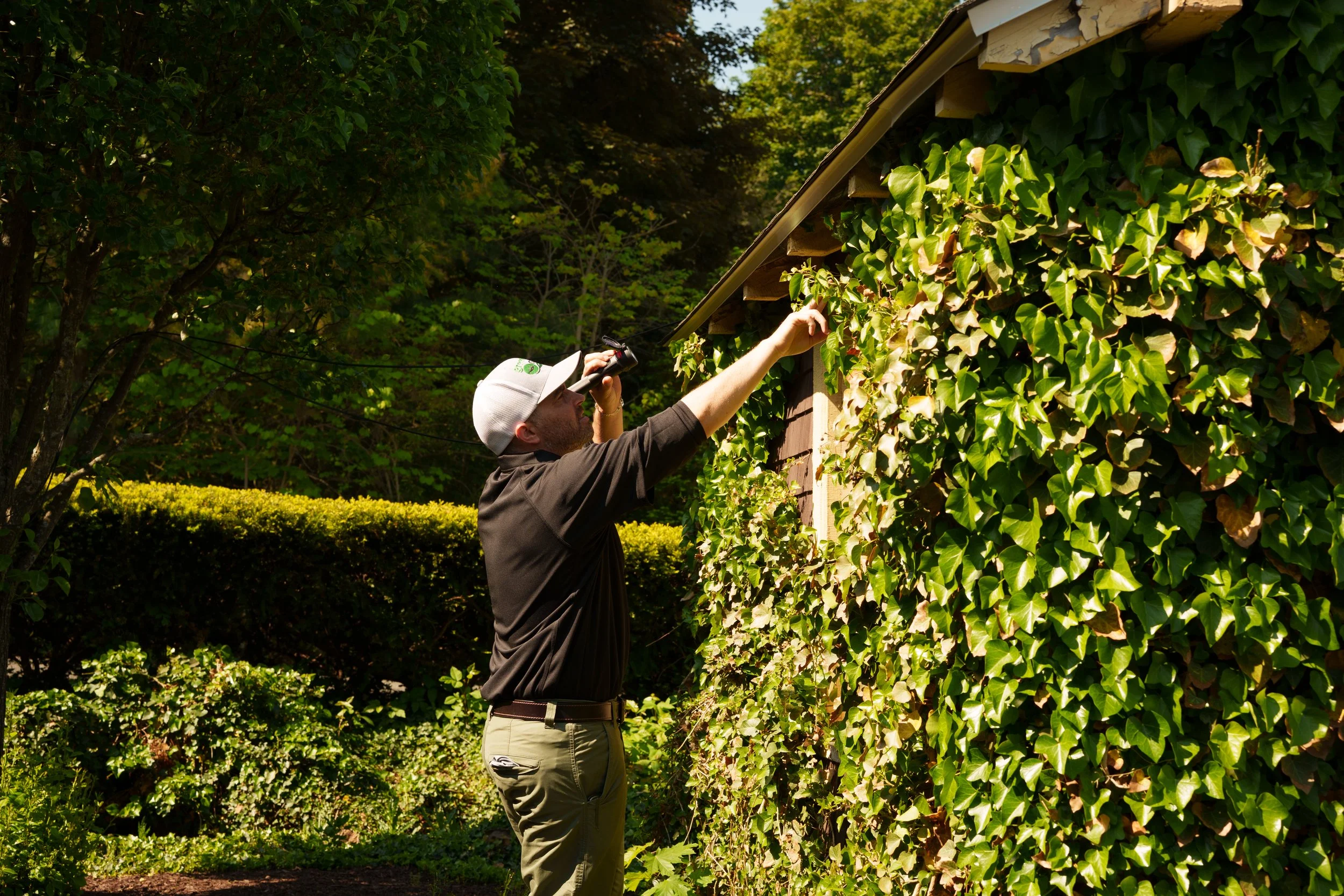
We look for what's drawing pests in: moisture, entry points, landscaping, food sources, and correct it. A downspout corrected, a gap sealed, mulch pulled back from the foundation: those small fixes can noticeably improve long-term deterrence.
Top Quality, Low-Hazard Materials Only
Being green doesn't mean being timid. When we say "low-risk," we mean it in more than one sense: the materials are lower in toxicity and hazard, we apply them in fewer places instead of treating the whole home, and we take care to protect the non-target, beneficial insects like pollinators that belong in your yard. Cheap product means more applications, weaker results, and more total chemistry in your environment over time, the exact opposite of green. Investing in the best low-risk materials up front is genuinely the greener path, not just the more effective one. We only apply where needed in order to protect people, pets and the beneficial insects like pollinators that belong in your yard.
What Our Eco-Friendly Method Actually Involves
How we keep it low-risk
- Limiting indoor pesticide use to what's genuinely necessary
- Leading with a targeted exterior barrier instead of broad indoor spraying
- Low-risk, professional-grade materials placed where only pests contact them
- Industry-leading techniques and materials, applied with precision, not volume
- Treating in the volume needed to solve the problem, no more, no less
- Treated areas safe for re-entry as soon as they dry (under 20 minutes)
How IPM reduces what we use
- Identifying structural causes: gaps, soft wood, moisture intrusion
- Identifying environmental causes: landscaping, food sources, harborage
- Recommending corrections that make the home naturally less hospitable
- Solving the root cause so less product is needed over time
How we protect what you love
- No materials applied to flowering plants or active beneficial bees
- Pollinator protection that matches the state's own strict standards
- An approach designed around homes with young children and pets
What green does NOT mean here
- NOT organic products, they don't last long enough for real control
- NOT weak, we aggressively defeat the root cause
- NOT a premium "eco" upcharge, it's simply how we work
- NOT a refusal to treat indoors when a pest truly requires it
The Eco-Friendly Process, Start to Finish
A Free Evaluation
Giving you the appropriate recommendations may require a free visit from us, we're there to understand the pest, the structure and the conditions before we provide a formal opinion.
We Find the Causes, Not Just the Pest
The IPM step: what's drawing the pest in and making conditions favorable. Correcting those factors lets us use less product and get a longer-lasting result.
We Recommend the Least-Invasive Effective Plan
Typically an exterior barrier plus targeted correction, with indoor treatment only where the pest's biology requires it. Clear scope and price, no pressure.
We Treat Precisely, Not Broadly
Low-risk materials where they'll contact the target pest and nowhere they shouldn't. Never on flowering plants or active bees. Safe as soon as it dries.
We Treat Indoors Only When the Pest Demands It
Bed bugs, cockroaches and pantry moths complete their life cycle indoors, for those, interior treatment is the only way to eliminate the source. When that's the case we say so; when it isn't, we keep the work outside.
We Keep It Green Over Time
Prevention uses far less material than reacting to a full infestation, an ongoing, no-contract Preventative Maintenance Service is itself the eco-friendly choice.
“I really appreciate their concern for the environment while providing choices that I can live with to make my home critter-free. I love nature, and it was hard finding a company that respected that.”
— Susie Eblen · Google reviewWhat Green Costs, and What It Doesn't
We don't charge an "eco premium." The low-risk, IPM-driven approach isn't a pricier add-on. It's simply how we do every job. Here's what genuinely affects the price.
- The pest and how established the problem is
- The size and construction of the home
- Structural or environmental corrections that will improve the long-term result
- Whether interior treatment is required by the pest's biology
- One-time service versus ongoing, discounted Preventative Maintenance
What We Will Not Do
Cut costs by buying cheaper, lower-quality materials. Our prices are at or below market average and always reflect our desire to earn long-term relationships with clients. The value is in the thoroughness, the communication and the results, not in skimping on what goes on your home.
Only the best is found in our wheelhouse.
Families Who Chose Us for the Green Difference
Why a Low-Risk Approach Fits the Valley
Pollinators and the State's Protections
We never apply materials to flowering plants or active bees, full stop. We'd rather time a treatment around when bees are active, or skip a flowering shrub entirely, than take a shortcut that harms the pollinators the whole Valley depends on.
Wells, Wetlands and the Watershed
Plenty of Valley homes sit near wetlands or draw from private wells. Applying only what's needed, where it's needed, keeps the broader environment out of the equation, exactly the right instinct in a watershed like ours.
Homes With Young Children and Pets
Kids on the floor, dogs in the yard, the exact households our approach is built for. Limited indoor use, and treated areas safe as soon as they dry, gives those families effective pest control without the trade-off they're most worried about.
Gardens, Orchards and Ornamental Plantings
A gardener who has spent years building healthy soil and a thriving pollinator patch shouldn't have to undo it to deal with ants at the foundation, and with a precise exterior approach, they don't.
Indoor Air for the People Who Live There
Older, tighter Valley homes hold indoor air, one more reason we keep interior treatment to a minimum. Less product indoors means less for your family to breathe and contact, every day, not just on treatment day.
A Four-Season Calendar That Rewards Prevention
Whether you've just noticed ants in the Spring, or rodents in the Winter, pests infest with every season and our prevention factors this in. A maintained low-impact plan over the year puts far less total product into your environment than a series of panicked, heavy-handed treatments, the quiet math that makes prevention the genuinely greener choice.
The Thinking Behind a Genuinely Green Approach
Why we don't use organic products
This surprises people, and it's worth being honest about: organic products simply don't last long enough to deliver real, long-term control. An organic treatment can look appealing on paper and then fail the customer a few weeks later. Limited use of genuinely low-risk professional materials that actually work, paired with IPM, beats a feel-good label that doesn't hold.
The case against heavy indoor treatment
Spraying the inside of a home offers immediate visual relief, but it raises exposure for the occupants, it's usually unnecessary to eliminate the source, and it risks staining and damage. For the common pests, the source is reached far more effectively from the exterior.
Why the exterior-driven approach is the eco move
A well-thought exterior plan means our materials are contacted almost exclusively by the target organisms (the ants, mice and invaders trying to get in) rather than broadcast across spaces where your family lives. (The specifics of our techniques are our own, refined over decades.)
Low-risk chemistry, used correctly
Anyone can empty a tank; knowing the smallest effective amount, the exact spot it belongs, and the right product for that pest and that home is the craft, and it's the difference between green-by-accident and green-on-purpose.
Knowing when indoors is unavoidable
Pests that complete their full life cycle indoors (bed bugs, cockroaches, pantry moths) can only be eliminated with interior treatment. A dogmatic "never indoors" rule would fail those customers. Honesty about the exceptions is part of what makes the rule trustworthy.
Green means thoughtful, not weak
The biggest myth we fight is that eco-friendly means ineffective. Plenty of homeowners came to us skeptical that "green" could really work, after years of heavier-handed treatments elsewhere, and stayed because it did. The results speak more convincingly than any claim we could make on a web page.
Green Pest Control Questions We Hear Most
Does "green" mean it's weak or less effective?
Not at all. Green, to us, means thoughtful, we put the thinking in up front so the treatment is both gentle and decisive. We defeat the root cause aggressively, just without dousing your home or the environment.
Are your treatments really safe for kids and pets?
Yes. We limit indoor use, rely on low-risk professional materials placed where only pests contact them, and treated areas are safe as soon as they dry, usually under 20 minutes.
Do you use organic products?
Honestly, no, and we'll tell you why. Organic products don't last long enough to provide real, long-term control. Our approach uses limited amounts of genuinely low-risk professional materials that actually work, paired with IPM to use as little as possible.
Will you protect the bees and my garden?
Yes. We never apply materials to flowering plants or active beneficial bees. Our targeted approach solves the pest problem without harming the garden or the beneficial insects in it.
Do you ever treat indoors?
Only when the pest requires it. Bed bugs, cockroaches and pantry moths complete their life cycle indoors, so interior treatment is necessary there. For the common pests, we do our best to keep the work outside where it's more effective and safer.
Does eco-friendly pest control cost more?
No. There's no "eco upcharge." The low-risk, IPM approach is simply how we do every job. Our prices are at or below market average and always reflect our desire to earn long-term relationships with clients. Our materials and techniques remain superior to the alternatives.
How is this different from a regular pest company?
Most conventional pest control sprays broadly and indoors on a schedule. We limit indoor use, fix the causes through IPM, choose low-risk materials, and protect pollinators, longer-lasting results with a far smaller footprint.
Is the prevention plan part of the green approach?
Very much so. Prevention uses a fraction of the materials that reacting to a full infestation does, staying ahead of pests with a no-contract Preventative Maintenance Service is itself the eco-friendly choice.
How do I get started?
Call Now for a free evaluation. We'll identify the pest and the conditions, then recommend the least-invasive plan that actually solves it.
Tell Us What You're Seeing, We'll Take It from There
If you want pest control that solves the problem without compromising your family, your pets or the environment, you've found it. A real person, a free evaluation, and the least-invasive plan that actually fixes it.
Tough on pests, gentle on the planet. That's the Green Pest Control difference.