
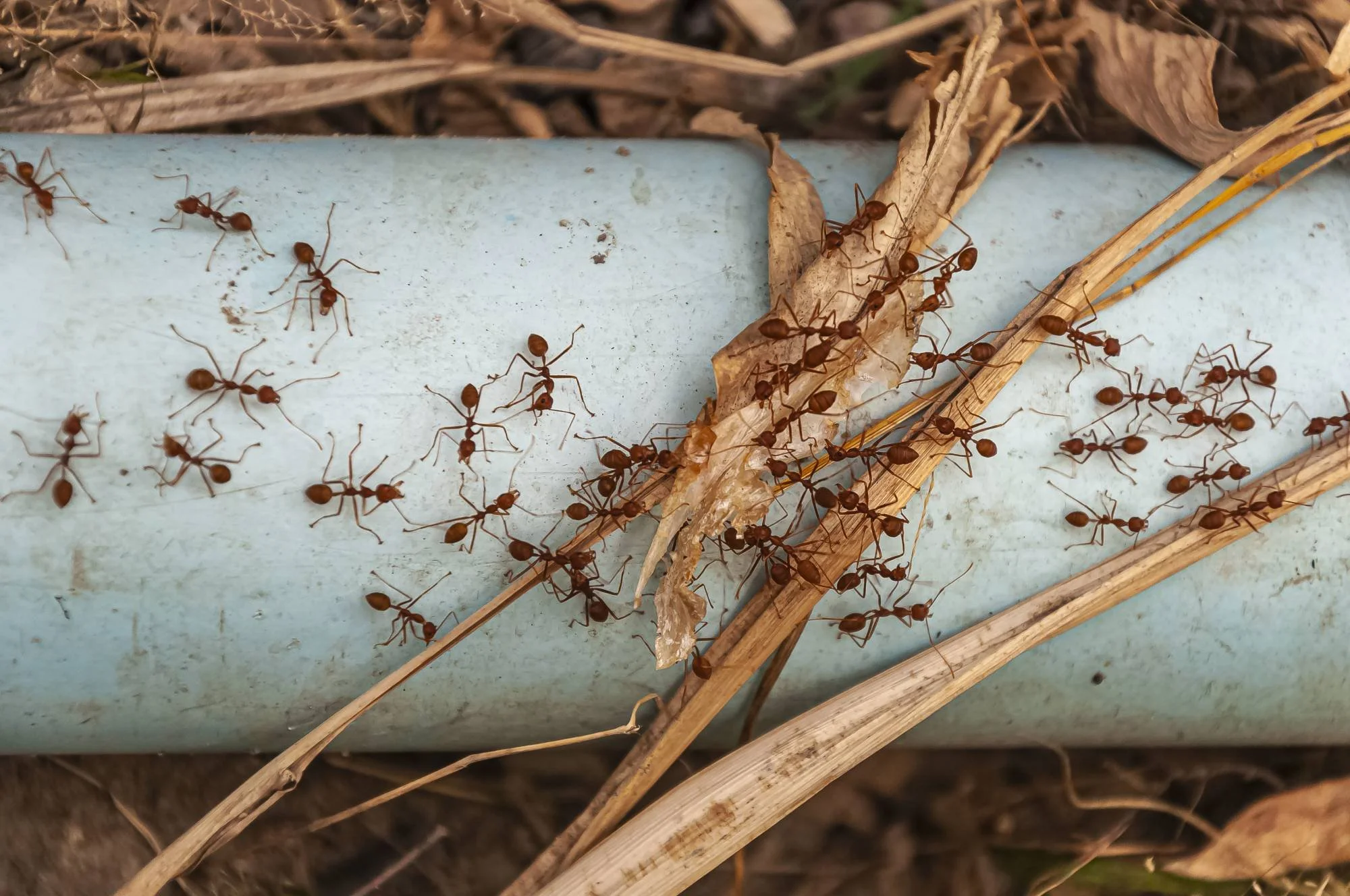
Ant Control in Simsbury & the Farmington Valley
Treated at the Colony, Not Just the TrailEco-Friendly & Low-RiskNo Contracts, No SalesmenCT Licensed B-3361
Ants are the number-one call we get across the Valley. We treat them at the colony level, tough on the nest, safe for your family and pets.
Not sure it's ants? Send us a photo for a fast ID.
The Three Mistakes That Make Ant Problems Worse
Most people call us after months (sometimes years) of fighting ants the hard way. These are the three things we see most often, and why they backfire.
Spraying the Foundation with Store-Bought Repellents
Over-the-counter sprays are repellents. Instead of killing the colony, they scatter its members to nearby locations (a process called budding) which spreads the problem rather than ending it. Each year the ants come back in higher numbers and from more directions. And if you treat after we've put a plan in place, it can counteract our materials, and prolong the wait for relief.
Squishing Ants on Indoor Surfaces
Crushing ants on the floor, wall or counter spreads pheromones across the surface. Those chemical trails actually attract more colony members, as ants come to collect their dead, increasing scouting in the exact spot you were trying to clear. The right move: a clean pickup with a tissue and a flush, or a quick pass with the vacuum.
Expecting Instant Results, Then Giving up
Colony-level control may not be a one-effort fix. A colony that's been building for two or three seasons takes longer to bring down than one caught early. Re-treating with store-bought products mid-process can counteract our materials and set everything back. We'll tell you honestly what to expect on the timeline so you're not guessing.
The Ant Problems We Solve Across the Valley
Ant Species We Treat
- Odorous house ants, the most common kitchen-counter ant, smell faintly sweet when crushed
- Pavement ants: along driveways, patios, walkways and slab edges
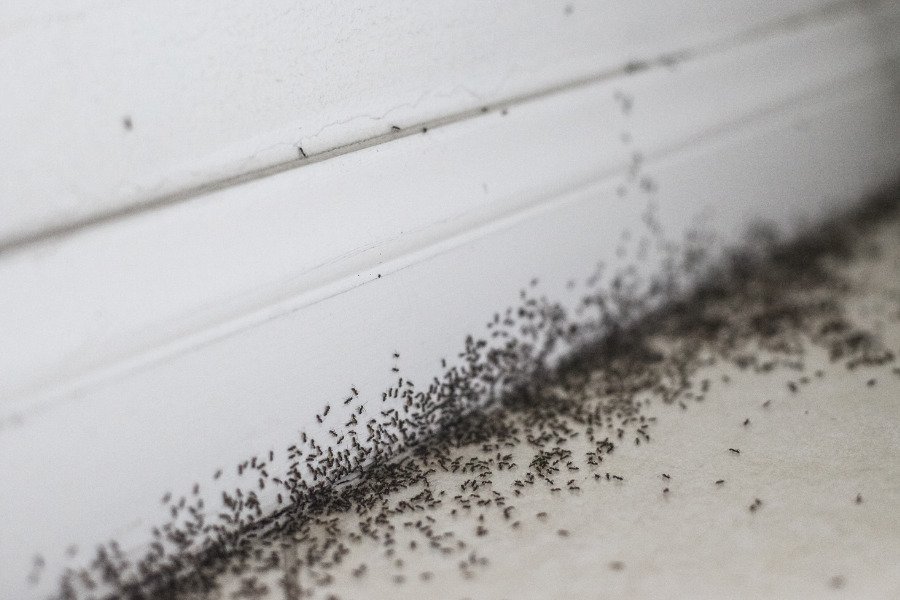
- Little black ants: fine trails along baseboards and counters
- Carpenter ants: large, wood-nesting ants (their own discipline, see below)
- Field and other outdoor ants drawn to foundations, mulch and landscaping
Where We Find Them
- Kitchen counters, sinks, pantries and around appliances
- Bathrooms and other damp interior areas
- The junction of the foundation and siding
- Mulch beds, landscaping and firewood stacked against the house
- Patios, driveways and slab cracks · wall voids near doors and windows
Signs You're Dealing with a Real Colony
- Persistent trails that return after cleaning
- Winged swarmers appearing indoors, often a mature colony
- Surges that get bigger year over year
- Ant activity at night (mature colonies are largely nocturnal)
- Aphids being farmed on plants in the yard, feeding ant numbers
Situations We Handle
- Recurring infestations that store-bought products never finished
- Sudden reproductive swarms inside the home
- Homes on wooded or damp lots with constant outside pressure
- Multi-unit and commercial properties needing ongoing prevention
How Our Ant Control Works
You Reach a Real Person or Send Us a Photo
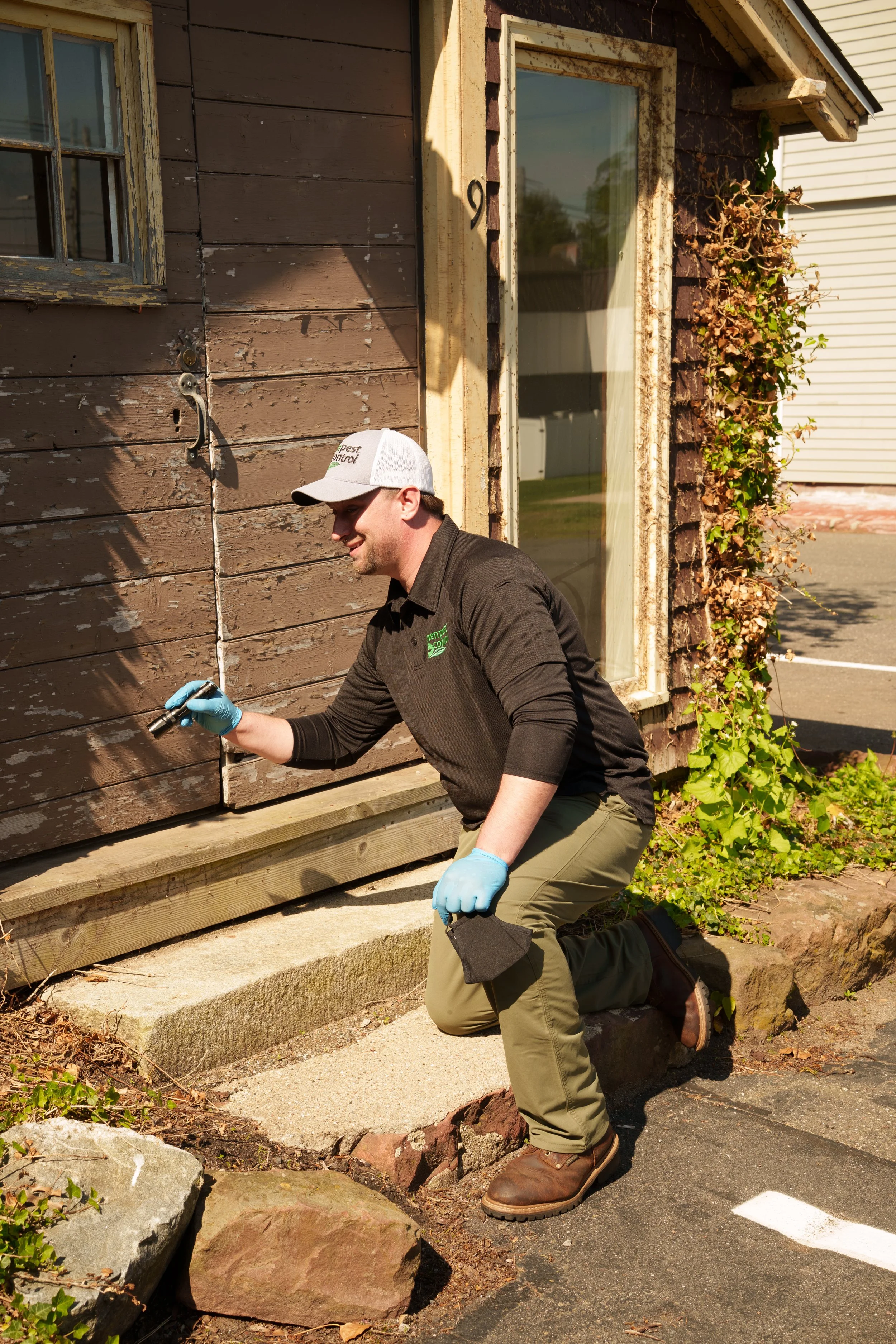
No phone tree, no salesman. Not sure it's ants? Send us a photo of the insect or trail (before you clean it up) and we'll identify it.
We Schedule a Free Evaluation
Free to everyone nearby, done from the exterior. We confirm the day before and again within 20 minutes of our arrival.
We Find the Contributing Factors
The heart of our eco approach: moisture, landscaping against the foundation, entry points, food sources. Correcting those is what keeps ants gone long-term.
You Get a Clear Recommendation, Scope and Price
Plain language, up front. No pressure, no contract. Our prices are at or below market average and always reflect our desire to earn long-term relationships with clients. The decision is yours.
We Treat, Often the Same Day
Low-toxicity, and only the top materials available in our industry; applied where only the ants will contact them. Ready to take care of your ant problem the same day
We Keep Them Gone with Prevention
Valley colonies stay active year-round, so many clients choose a no-contract Preventative Maintenance Service through the seasons.
“They explain the entire lifecycle, the conditions that are favorable for ants to come into the home, and along with treatment what can be done, e.g. cut back vegetation to help mitigate future problems.”
— MBS Network · Google reviewWhat Affects the Price and What Interests Us First
We don't post a flat ant price: quoting before we've seen the situation creates gray areas and wrong recommendations. We evaluate free, then give a firm price for exactly what's needed. It's an evaluation to scope a problem you've already spotted, not a paid inspection to search for one.
- Size and layout of the home
- Number of structures you wish to protect
- Treatment method best suited for your unique set of circumstances
- Structural or environmental corrections that help the long game
- One-time treatment, or ongoing Preventative Maintenance
- Discounts for homes already on a Preventative Maintenance Service
A Note from Our IPM Approach
During an evaluation we commonly find factors that matter to long-term prevention: a downspout dumping against the foundation, mulch piled to the siding, a gap where a utility line enters, soft wood at a door threshold. We'll point those out, because correcting them is often as important as the treatment itself, and it's the part the spray-on-a-schedule companies skip.
Our goal is fewer ants next year, not a standing appointment forever.
Real Ant Results from Your Neighbors
A Colony with Company
On one Farmington Valley evaluation we opened up a wall and found a carpenter ant nest living right alongside a termite infestation, two wood pests sharing the same void. It's the kind of thing you only catch by inspecting the structure rather than spraying the trail. The most satisfying calls, though, are simpler: clients who finally stop using store-bought sprays indoors and tell us a few weeks later that activity has dropped off on its own, exactly as we said it would.
What Makes Ants Worse in the Farmington Valley
Heated Homes Keep Colonies Active All Winter
Colonies that find the warmth and resources of a Valley home don't go dormant. They stay active and reproducing year-round, unnoticed in wall voids. That's why a problem you thought you'd beaten in November comes roaring back in Spring: it never stopped, it just stayed out of sight.
Older Housing Stock and Damp Wood
Wall voids near exterior doors and windows are prone to small leaks and softened wood: damp, easy-to-excavate areas that ants (carpenter ants especially) favor. Finding these weak points is a standard part of our evaluation.
Wooded Lots and Constant Moisture
Homes backing up to woods, wetlands or the river corridor sit under constant outside ant pressure. These properties often require ongoing attention rather than a one-and-done treatment.
Mulch and Landscaping Against the Foundation
Deep mulch beds and thick vegetation hold moisture and give colonies a protected highway right up to the structure. Pulling back mulch, branches and leaves a few inches from the siding is one of the simplest changes a homeowner can make.
Patios, Driveways and Slab Edges
Pavement ants nest in the sand and soil beneath concrete, then push indoors along the slab edge. Rarely a structural threat, but persistent, and a frequent source of basement and garage trails.
Aphids Quietly Feeding the Colony
Ants farm aphids for honeydew, livestock in your landscaping. A heavily planted yard can support a far larger ant population than the few you see indoors would suggest, which is why we look at the whole property.
Spring and Summer Swarming
Winged ants indoors usually mean a mature colony producing reproductives. Carpenter ants swarm in the warmer months; termite swarmers show up earlier in Spring, and the two are easy to confuse. Send us a photo before you dispose of the evidence.
The Technical Side of Real Ant Control
Why repellent sprays scatter colonies
Most over-the-counter ant products are repellents: ants detect and avoid them. When a colony is stressed by a repellent barrier, many species respond by splitting off satellite groups that relocate and start new nests, budding. You don't kill the colony; you multiply its addresses. Professional non-repellent materials do the opposite: ants move through them undetected, pick up the active ingredient, and carry it back into the nest, reaching members that never leave the wall.
Why gel baits alone often give a false sense of security
Gel baits work through trophallaxis (ants sharing food) so a bait can knock back nearby members for a while. The catch is speed: on their own, baits are frequently too slow to outpace a healthy colony's reproduction, so activity quietly rebuilds. We may use baiting as one tool inside a complete plan, but not as the entire answer.
Colony-level thinking versus chasing trails
The trail on your counter is the symptom; the colony in or around the structure is the cause. Our objective is to make the structure and its perimeter inhospitable (closing the conditions that feed and shelter the colony) rather than treating the same trail again next week. That's the difference between management and elimination.
The year-round biology that surprises homeowners
Outdoors, ants slow with the cold. Indoors, the same colony with heat, humidity and food keeps foraging and reproducing straight through a Connecticut Winter. Because indoor colonies stay productive in the off-season, we ensure prevention is in place through the cold months instead of only reacting when numbers explode in the warm ones.
The limited-indoor, exterior-barrier philosophy
Heavy indoor spraying delivers fast visual relief and very little durable benefit. It raises exposure for the people and pets who live there while rarely reaching the source. The lasting fix is a well-built exterior barrier plus targeted correction of environmental and structural conditions. That's the core of what “green” actually means in practice.
Carpenter ants are their own discipline
Carpenter ants carve galleries in wood rather than eat it, favor damp wall voids, and are often seen on the outside framework of the structure they infest. With the right protocol we don't have to locate every satellite nest, a structure managed correctly simply won't support them. If your ants are large and have been observed inside or outside of the structure, see Carpenter Ant Control.
Daytime ant activity generally means a colony is nearby
All ant species are nocturnal by nature, so seeing them in or near the home during the day indicates a colony is usually closer than you'd want.
Ant Control Questions We Hear Most
How did I get ants?
Ants come inside searching for food, water and shelter, and they can slip through cracks as small as a millimeter. A few crumbs, a little moisture, or landscaping touching the house is often all it takes.
Will store-bought spray fix it?
Usually not, and it can make things worse. Most retail sprays are repellents that scatter the colony instead of killing it. Many clients call us after years of DIY only to see the ants come back bigger each season.
Are your treatments safe for kids and pets?
Yes. We limit indoor use, rely on low-risk professional materials, and place them where only the ants contact them. Treated areas are safe as soon as they dry, usually under 20 minutes.
How fast will I see results?
It depends on how large the colony grew before we arrived. You'll typically see activity drop over the days after treatment; large colonies can take longer, which is why prevention matters.
Is one visit enough, or do I need a plan?
That’s entirely your call. Most situations are resolved in one visit, a select few may require extended effort. A large share of our Preventative Maintenance clients say they just don’t want the hassle and uncertainty again. Fact is, most of the pests we come across are ever-evolving right outside of our homes and buildings. We will give our best recommendations, and leave it to you to give the ok.
Do I have to sign a contract?
No. We never require contracts. Ongoing prevention continues at a discounted rate for as long as it's working for you, and you can stop anytime.
How much does ant control cost?
Every situation is different, so we usually start with a free evaluation before quoting: the recommendation and price fit your actual problem. Our prices are at or below market average and always reflect our desire to earn long-term relationships with clients. Our materials and techniques remain superior to the alternatives.
What's the difference between regular ants and carpenter ants?
Carpenter ants are larger, nest in wood (carving galleries rather than eating it), and are often seen crawling on the outside framework of structures. If that sounds like yours, see Carpenter Ant Control.
I found winged ants indoors. What should I do?
Winged ants usually mean a mature colony nearby. Don't spray or scatter them; do a clean pickup with tissue paper or a vacuum for the time being. Send us a photo before disposing of them so we can confirm whether they're ants or termites.
Why do I see ants every single year?
Almost always because a colony has been overwintering in or against the warm structure and becomes visible again when conditions permit, not always because a brand-new colony marched in. That's the case for treating through the off-season.
Can you treat just the outside?
For most ant situations, an exterior-only approach is exactly what we prefer. It solves the problem at the source while keeping indoor pesticide use to a minimum. We only recommend interior treatment when the situation genuinely calls for it.
Do you treat ants at commercial and multi-unit properties?
Yes. Offices, retail and property-management/multi-unit housing. Ongoing prevention minimizes customers and tenants from contacting you.
Tell Us What You're Seeing, We'll Take It from There
A real person, a free evaluation, and an honest, colony-level plan that's safe for your family and pets. No contract, no salesman, no pressure.
Tough on ants, gentle on your home. That's the Green Pest Control difference.