
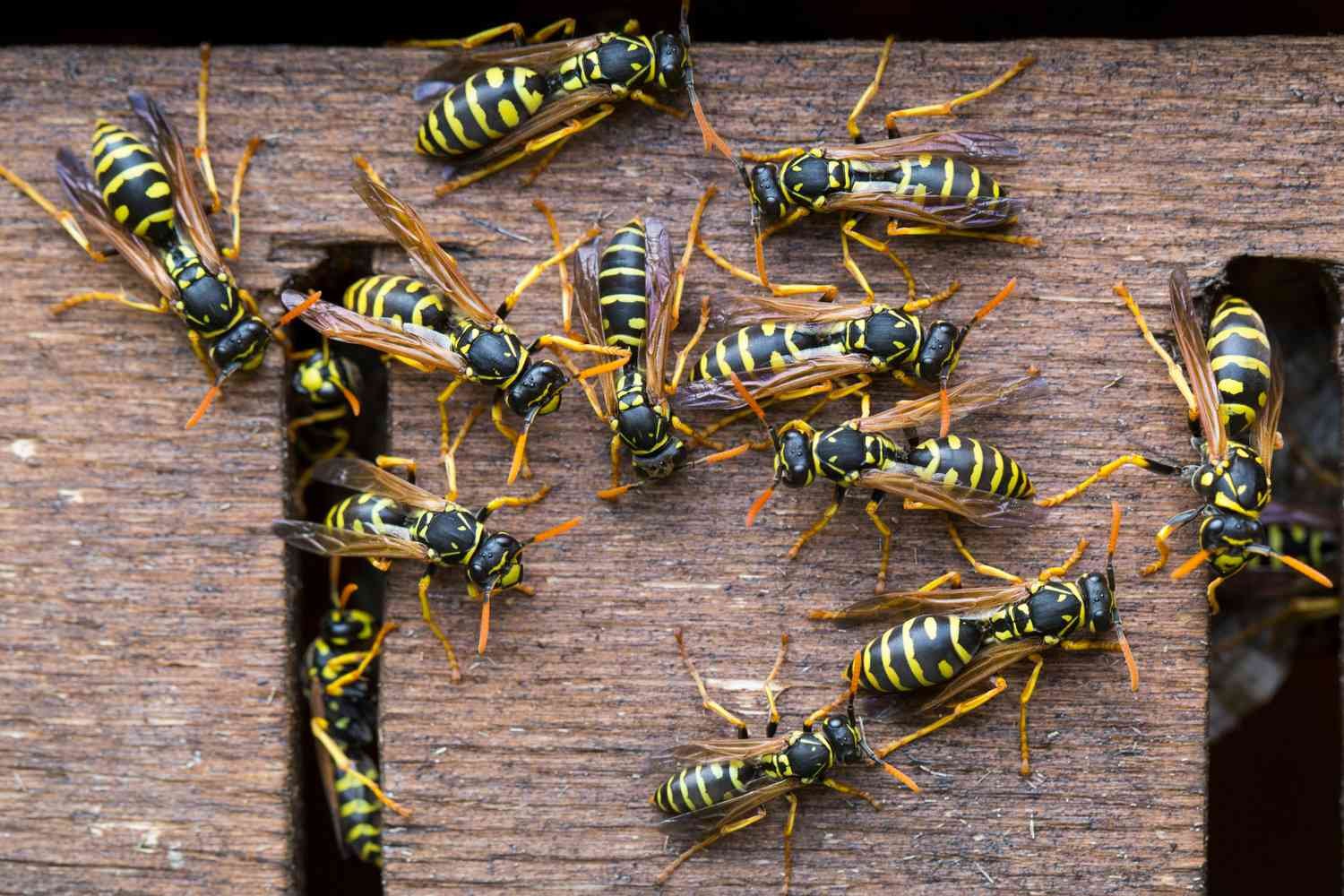
Wasp, Hornet & Yellow Jacket Control in Simsbury & the Farmington Valley
Safe and Effective EliminationEco-Friendly & Pollinator-ConsciousNo Contracts, No SalesmenCT Licensed B-3361
By Fall a single colony can hold thousands of workers, and when the nest is hidden in your siding, the wrong move drives it into your living space. This is not a job to improvise.
Found a nest? Don't spray it or plug the hole. Call us, and send a photo from a safe distance.
Three Things to Know Before You Touch That Nest
Stinging insects punish mistakes. These three points are why we'd rather you call than try it yourself.
The Hidden In-Wall Nest Is the Dangerous One
Queen yellow jackets commonly build inside the layers of a home's siding, with just a small gap where workers come and go. Spraying the entry or plugging it typically drives the colony deeper into the wall, and toward the inside of the house. Two days later, yellow jackets are coming through a light fixture or a baseboard. By then the job is harder and the household is genuinely unsafe.
DIY Removal Is Genuinely Dangerous
Every year we get called after someone tried to knock down a nest themselves and got swarmed. More than once, they were hospitalized. Wasps sting repeatedly, and their venom releases pheromones that rally the colony to attack. The cost of being wrong with a hornet nest is measured in stings and emergency-room visits, not dollars saved on a service call.
The Nest Is Biggest and Most Defensive in Fall
Colonies start with a single overwintered queen in Spring and build all season, peaking in early-to-mid Fall, when nests are most populous and workers most aggressive. Knowing the seasonal arc helps us treat at the right time and prevent the repeat next year. After the initial problem is handled, phobic clients and those with steady annual pressure often hand prevention to us, a twice-yearly plan at the same scope as our carpenter bee service.
What We Treat, and Where We Find It
Stinging insects we handle
- Yellow jackets: including hidden nests inside siding and old underground burrows
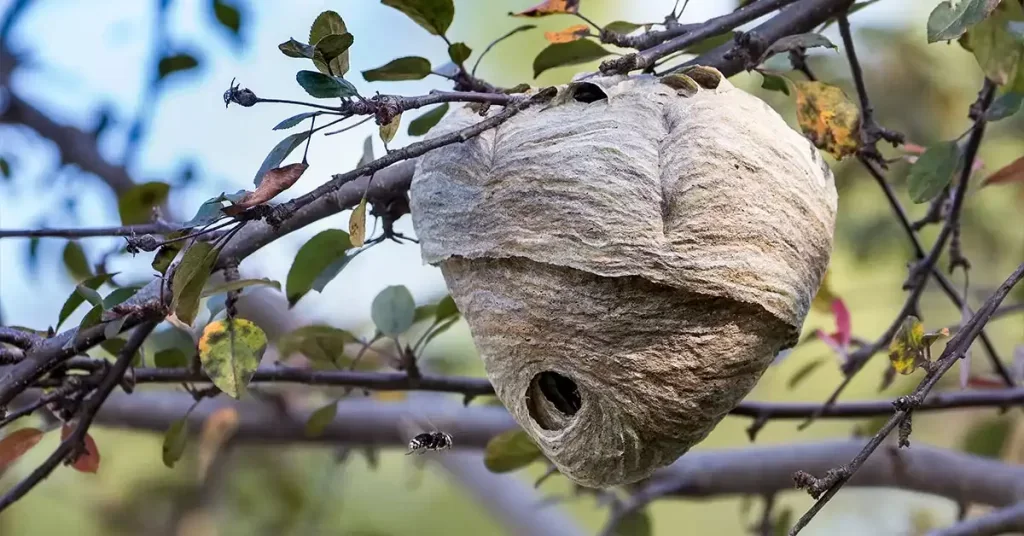
- Bald-faced hornets: the large gray football-shaped aerial nests
- Paper wasps: open, umbrella-shaped nests under eaves and rails
- European hornets and other wasps that nest on or in the structure
- Ground bees and ground-nesting yellow jackets in the yard
- Cicada killers: over-sized wasps zig-zagging above their underground nests
Where we find nests
- Inside layers of siding, hidden yellow-jacket nests
- Under eaves, overhangs, soffits and around gutters
- On light-colored (white and yellow) parts of the building
- In warm brickwork and upper corners of the structure
- Underground in old, abandoned chipmunk or rodent runs
Signs you have a nest
- Steady wasp traffic in and out of a single gap or hole
- A visible paper or football-shaped nest under an eave or in a shrub
- Wasps appearing indoors in Spring, last year's pupae hatching
- Lost workers indoors in Summer or Fall, a large attached nest nearby
- Being repeatedly buzzed in one area of the yard while mowing
Situations we handle
- Active nests that need to go fast, remediation without repelling them to adjacent areas
- Hidden in-wall nests that store-bought spray made worse
- Recurring stinging-insect pressure season after season
- Homes where someone has a sting allergy and can't risk it
How Our Wasp & Hornet Control Works
You Reach a Real Person, Fast
Stinging-insect calls get prompt attention, especially with an allergy in the house. Send a photo from a safe distance if you can, but never get close to take one.
We Schedule a Free Evaluation, Quickly
We move fast on stinging insects. We confirm the day before and again within 20 minutes of our arrival.
We Confirm the Species and Find the Nest
Paper wasps, hornets or yellow jackets (and exposed or hidden in the wall) determines the safe approach.
You Get a Clear Recommendation and Price
What we found and what it will take, with a firm price up front. No pressure, no contract.
We Eliminate the Threat, Quickly and Safely
We treat hidden nests in a way that resolves the colony without forcing it indoors or stirring them up, and any materials used are kept off of flowering plants and beneficial bees.
We Make Sure It's Actually Done
Some nests may decline over days due to their location and size. Once workers are not observed entering or exiting their entry point, it's safe for the removal of the nest without the risk of getting stung or the colony relocating and rebuilding.
We Can Keep Them From Coming Back
The same eaves, gutters and walls attract nests year after year. Seasonal prevention keeps protection active through the months when queens are scouting.
“They answered the phone on a Sunday and were at my home the next afternoon. After they applied the solution to the yellow jacket nests, within two days the insects were gone.”
— Lauren V · Google reviewWhat Affects the Price and What Interests Us First
Nest removal varies with the insect, the location and the access, so we evaluate free, then quote exactly what's needed. And fast, because stinging insects don't wait. You've already spotted the nest, so this is an evaluation to scope it, not a paid inspection to go looking for one.
- The species: hornets and yellow jackets are more involved than paper wasps
- Whether the nest is exposed or hidden inside the structure
- Location and height: eaves, gutters, soffits, in-wall or underground
- How large and established the colony is: Fall nests are bigger
- Any sensitive circumstances, like allergies or access difficulty
- One-time removal versus seasonal Preventative Maintenance
- Discounts for keeping a Preventative Maintenance Service in place
Why We Won't Quote a Nest Blind
A visible paper-wasp nest under a rail and a hidden yellow-jacket colony three courses up inside the siding are very different jobs, even if they look similar from the driveway.
The free evaluation gets you a firm number and the right plan.
Real Wasp & Hornet Results From Your Neighbors
Where Stinging Insects Nest on Farmington Valley Homes
Hidden Nests Inside the Siding
The most troublesome problem we treat: from outside you only see workers slipping in and out of a small gap; the colony is concealed in the wall. The instinct to spray or plug the hole forces the colony toward the inside of the house, the opposite of what you want.
Light-Colored Homes and Trim
Wasps gravitate toward light-colored surfaces when scouting nest sites. If your house is light-colored and backs up to woods, a little seasonal prevention goes a long way. You're simply a more attractive address than the brick colonial down the street.
Overhangs, Soffits and Gutters
The upper levels of the house are prime nest real estate, and wasps are drawn to standing water in clogged gutters. These high, sheltered spots are exactly where you don't want to be balancing on a ladder with a spray can.
Underground Nests in the Yard
Yellow jackets commonly take over abandoned chipmunk burrows, a mower passing over a hidden ground nest can trigger a swarm in seconds. Stung in the same spot in the yard more than once? There's likely a nest underfoot. We'll locate and treat it safely.
Spring Emergence From Last Year's Nest
Wasps indoors at the start of Spring are usually pupae deposited in the structure the previous year, now hatching. Many residents think a new infestation has started when they're really seeing the tail end of last year's.
The Fall Surge and the Late-Fall Indoor Push
By early-to-mid Fall, colonies hit maximum size. As nights turn cold, yellow jackets nesting in the framework are often forced indoors, a wave of late-season calls that repeats the following Spring unless the nest is addressed.
Wooded Lots and Abundant Nesting Cover
A queen scouting in Spring has dozens of viable sites within feet of a wooded-lot house, which is why some homes get a fresh nest every single year while a neighbor a block away rarely does.
The Technical Side of Safe Stinging-Insect Control
Why you never spray or plug a hidden nest
With a hidden in-wall yellow-jacket nest, applying a store-bought repellent to the entry hole, or sealing it shut, almost always backfires: the colony pushes deeper into the wall and frequently breaks through to the interior of the home. The correct approach treats the colony where it lives without trapping it against your living space.
Reading the nest before touching it
Paper wasps, bald-faced hornets and yellow jackets nest in different places and carry different levels of risk: hornets and yellow jackets are far more dangerous to remove than paper wasps. We evaluate first rather than walking up and swinging at it.
The colony lifecycle, and why timing matters
A colony begins each year with a lone overwintered queen and peaks in early-to-mid Fall, when a single nest can hold thousands of workers. A small Spring nest is far easier to handle than the same nest in October.
Why they appear indoors, Spring versus Fall
In early Spring, indoor wasps are usually adults emerging from pupae left in the structure last year. In Summer and Fall, they typically mean a large nest is attached to the home and lost workers are wandering in. Treating the strays does nothing; finding and resolving the nest is the only thing that ends it.
Protecting pollinators while solving the problem
We don't apply materials to flowering plants or active beneficial bees. Targeting the specific pest nest, rather than broadcasting product, solves your problem while leaving the honeybees and native pollinators unharmed.
Why speed is the whole game
A nest that's a nuisance today is a bigger, angrier colony next week. More than one family has told us they'd avoided a whole side of the yard for a Summer before they called, and getting it handled gave them their outdoor space back.
Seasonal prevention beats yearly emergencies
The same warm, sheltered spots attract nests year after year. Seasonal prevention keeps protective materials on those spots through the queen-scouting months, so colonies never get established. For a household where a single sting is a medical event, that peace of mind is the entire point.
Stinging-Insect Questions We Hear Most
I see them going in and out of my siding. Is that normal?
It usually means a hidden nest. Please don't spray the hole or plug it. That drives them toward the interior of the house. Call us and we'll handle it correctly.
Can I just treat the nest myself?
We strongly recommend against it, especially for hornets and yellow jackets. Not only are store-bought materials repellents which will drive colony members and/or nests to nearby areas, people also get swarmed and sometimes hospitalized doing this. If anyone in the home has a sting allergy, it's absolutely not worth the risk.
Can I just remove an active nest?
Apart from being a misstep away from being a real safety hazard, it also doesn't ensure the concern won't resurface. Similar to treating with repellents, any workers outside of the nest may remain active nearby for some time. Some species of stinging insects also rebuild their colony when the queen has been removed. The best bet is a professional evaluation considering the species and site, followed by a strategy that is time-tested to work the first time.
How fast can you come out?
Stinging-insect calls are a priority. The evaluation is free, and most nests can be treated the same day once you authorize the work. Call Now.
Why are wasps appearing inside my house?
In early Spring, they're usually adults hatching from pupae left in the structure last year. In Summer or Fall, it typically means a large nest is attached to the home and lost workers are wandering in.
Where do wasps usually build nests?
Light-colored parts of a building, the upper levels around overhangs and gutters, and warm brickwork. Yellow jackets also nest underground in old chipmunk burrows. Be careful when mowing.
Is the treatment safe for my family, pets and the bees?
Yes. We use low-risk, industry-leading materials and target the pest nest specifically, keeping our products off flowering plants and active beneficial bees. Solving your wasp problem doesn't mean harming pollinators.
Will one treatment take care of it?
We guarantee our efforts will work. Some nests decline over a few days depending on size and location. We set clear expectations based on our experiences and stay with it until the activity has been resolved, the right way.
Do you treat bald-faced hornets and ground nests too?
Yes. Bald-faced hornets, paper wasps, yellow jackets (including hidden and underground nests), and ground bees. Send a photo from a safe distance and we'll confirm what you have.
How do I keep them from coming back every year?
A no-contract seasonal Preventative Maintenance Service keeps protection active during the months queens are scouting and building, popular for wasps, hornets and carpenter bees, the insects most likely to return to the same eaves season after season.
How much does nest removal cost?
It depends on the species, the location and whether the nest is hidden, so we quote after a free evaluation rather than over the phone. Our prices are at or below market average and always reflect our desire to earn long-term relationships with clients.
Tell Us What You're Seeing, We'll Take It from There
Don't risk a sting, or a hidden nest pushed into your walls. A real person, a free evaluation, and safe, often same-day removal from a licensed local team. Eco-conscious and pollinator-friendly.
Your yard back, the pollinators unharmed. That's the Green Pest Control difference.