
Carpenter Ant Control in Simsbury & the Farmington Valley
Colony Elimination and PreventionEco-Friendly & Low-RiskNo Contracts, No SalesmenCT Licensed B-3361
The big black ants seen trailing a home or office nest inside your wood, carving it, not eating it. We make the whole structure inhospitable, no wall-tearing nest hunt required.
Big black ants or swarmers? Send a photo before you clear the evidence. Ant vs. termite matters.
Three Things That Make Carpenter Ants Different
Carpenter ants aren't just big ants, and they aren't termites. Understanding the difference changes how worried you should be, and what actually fixes it.
They Carve Wood, They Don't Eat It
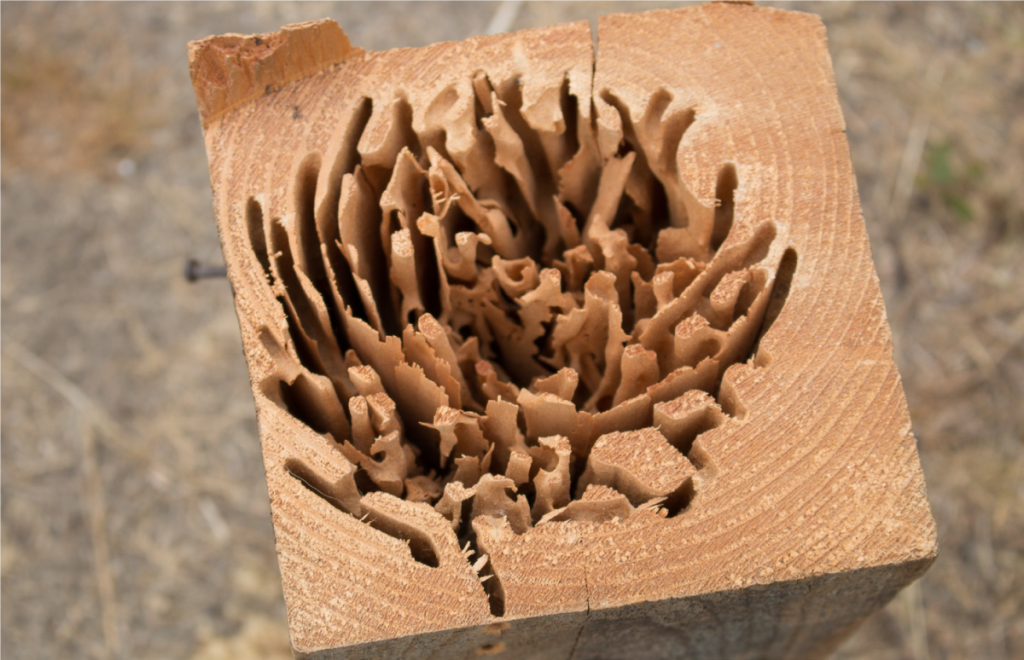
Carpenter ants excavate wood to create smooth, hollowed-out galleries for their nest, but they don't consume it. Early damage tends to be cosmetic, and it often leaves a tell-tale pile of sawdust-like shavings (frass) below the nest. Termite galleries are packed with mud; carpenter-ant galleries are clean, smooth and dry.
They Target Damp, Softened Wood
We most often find them in wall voids near exterior doors and windows, spots prone to small water leaks. The worst infestations usually trace back to something small and fixable: a window that leaks in heavy rain, a downspout that wets a corner of the framing. The ants are simply following the water to the easiest wood.
Caught Early, It's Manageable; Ignored, It Isn't
Early damage is usually cosmetic, and there's no need to panic. The risk only becomes real when an infestation is repeatedly ignored, or mistreated with store-bought products that scatter the colony. We don't manufacture panic to push a sale. Address it correctly when you notice it, and it stays a small problem.
What We Look For, and What We Treat
Signs of carpenter ants
- Large black (sometimes reddish) ants seen active on the outside or inside of a structure
- Winged swarmers indoors, usually in the Summer months
- Piles of sawdust-like shavings (frass) below baseboards, sills or trim
- Faint rustling in wall voids on a quiet night
- Hollowed, smooth galleries in wood, unlike the mud-packed look of termites
Where they nest in Valley homes
- Wall voids near exterior doors and windows
- Exterior wall insulation, which they gnaw for its soft texture
- Damp or water-damaged framing and sill areas
- Roof lines, soffits and areas of elevated humidity
What homeowners confuse them with
- Termites: the most common and most important mix-up to get right
- Regular ants (odorous house, pavement) seen on counters
- Carpenter bees, which drill round holes rather than trail in numbers
Situations we handle
- Active carpenter-ant trails in or around the home
- Summer swarmer events indoors
- Recurring infestations that DIY sprays never finished
- Homes with chronic moisture or damp wood feeding the problem
How Our Carpenter Ant Control Works
You Reach a Real Person or Send Us a Photo
Send us a photo of swarmers or shavings if it's not the ant you see. With carpenter ants, the first job is making sure they aren't termites.
We Schedule a Free Evaluation
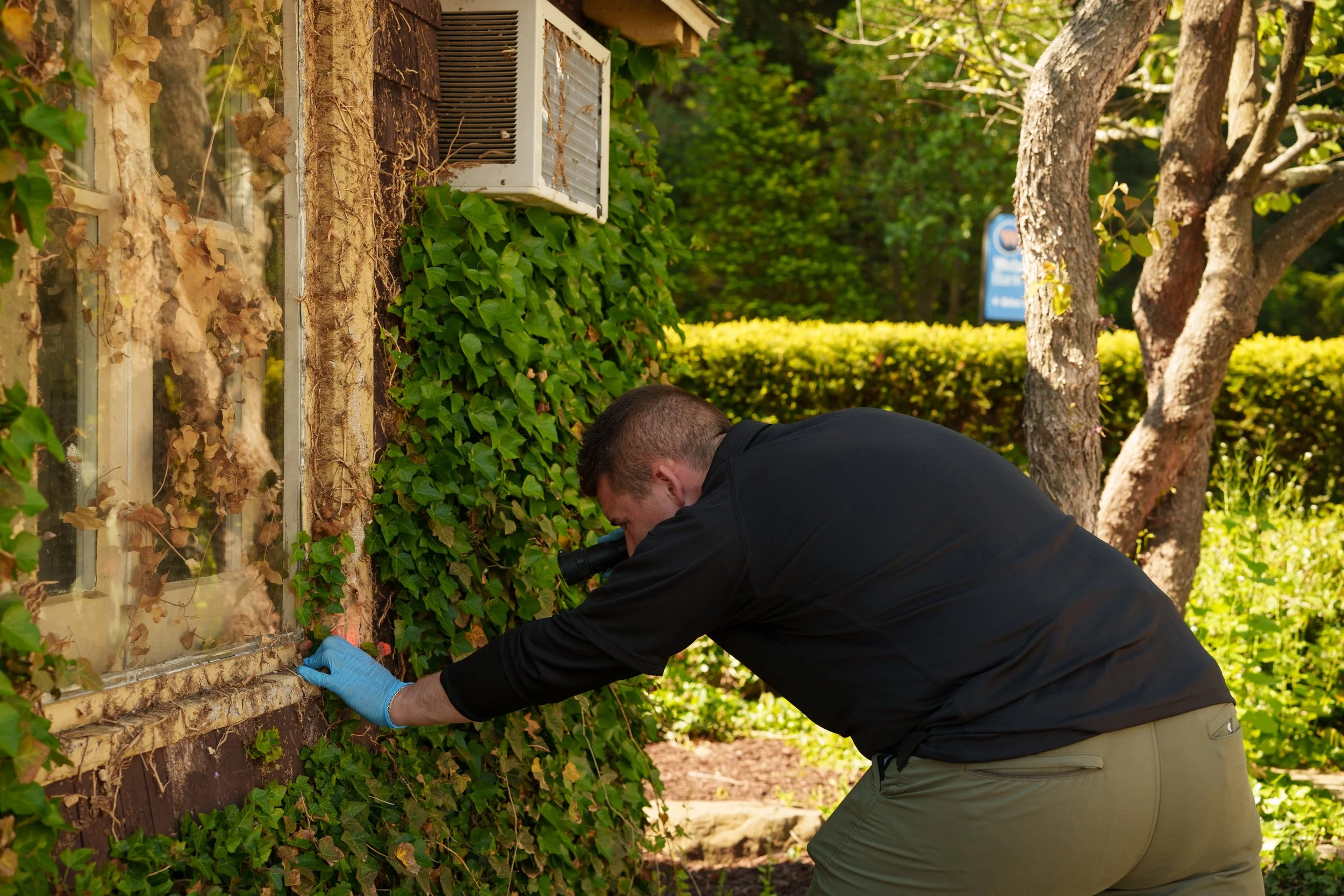
Free to everyone nearby, done from the exterior. We confirm the day before and again within 20 minutes of our arrival.
We Find the Conditions
We look for what's drawing them: moisture, soft or damaged wood, leak-prone doors and windows.
You Get a Clear Recommendation, Scope and Price
Plain language, up front, including an honest read on how far along the damage is. No pressure, no contract.
We Treat the Whole Structure, No Demolition Nest-Hunt
The demolition approach damages your finishes and often misses satellite nests anyway. Treating the structure as a whole sidesteps that problem. No contractor's repair bill attached.
Most Work Can Be Done the Same Day
The person who evaluates your home is the person who treats it, the same day if you want to move.
We Keep Them Out With Prevention
Carpenter ants are highly populated and always nearby, a no-contract Preventative Maintenance Service keeps the protection active.
“They immediately came out, answered our questions and took care of our ant invasion.”
— Roxanne Trujillo · Google reviewWhat Affects the Price and What Interests Us First
The right scope depends on the structures of concern and the environment surrounding them. We evaluate free, then quote exactly what's needed. That's an evaluation for a concern that's already clear, not a charged inspection to go looking for one.
- How many structures with concern there are
- The size and layout of the home, and how much of the exterior is involved
- Moisture or water-damage conditions that need to be addressed
- Whether unremedied damage or leak-prone areas will compound our efforts
- One-time treatment versus ongoing Preventative Maintenance
- Discounts when a Preventative Maintenance Service is already in place
The Moisture Story Matters
During the evaluation we frequently find the structural or moisture issues that invited carpenter ants in the first place. A company that just treats the trail and drives off leaves the wet, soft wood exactly as inviting as it was. The colony you paid to remove is replaced by the next one that finds the same easy spot.
Fixing the conditions is often what keeps them from returning.
Real Carpenter Ant Results From Your Neighbors
What Makes Carpenter Ants Worse in the Farmington Valley
Damp Wall Voids Near Doors and Windows
Small, slow water leaks soften the wood over time: exactly the damp, easy-to-carve material carpenter ants prefer. Part of our value is connecting the ants you see to the water problem you didn't, so the fix actually lasts.
Exterior Wall Insulation They Love to Gnaw
Its soft texture is easy to excavate, giving ants a comfortable medium to expand a nest. It explains a pattern homeowners notice but can't place: ants appearing reliably at the same window or door, season after season.
Humidity That Supports Reproduction
Damp basements, poor drainage, or chronically humid wall cavities give colonies what they need to thrive. Activity often rises in a wet Spring or after a roof or gutter issue goes unrepaired: the humidity and softened wood arrive together.
Wooded and Damp Lots
Carpenter ants are abundant in the dead wood around the Valley's tree lines, and those colonies send foragers toward nearby homes. A home just has to be the most appealing structure within range, which is why prevention makes sense before any ants appear.
Summer Swarming Season
Carpenter ants tend to swarm in Summer, later than the termites people confuse them with. Winged ants indoors usually mean a mature nest nearby. Those few swarmers are the clearest diagnostic clue you'll get all year, so photograph before you sweep.
Trees and Limbs Touching the House
A single overhanging limb can carry a steady stream of foragers onto the roof and into the soffit, bypassing any ground-level treatment, so we always look up, not just down, during an evaluation.
The Technical Side of Real Carpenter Ant Control
Why we don't have to find every satellite nest
Colonies often include a parent nest plus satellite nests, and chasing each one down is where a lot of treatments turn into wall demolition. With the right techniques and materials applied to the structure from start to finish, the building simply can't support a carpenter-ant nest anymore. We change the conditions for the whole colony rather than playing whack-a-mole.
Carving versus consuming, and why it matters
Termites eat wood for the cellulose; carpenter ants only excavate it, pushing the debris out as frass. That single biological difference changes everything about diagnosis and treatment: the damage looks different and progresses the same way.
The moisture connection
Carpenter ants and water problems travel together. A colony treated without addressing the wet wood that drew it in is a colony with a standing invitation to return, the difference between solving the problem and renting a pause from it.
Carpenter ants versus termites, getting it right
Carpenter ants are larger, with a pinched waist and bent antennae, and swarm in Summer with unequal wings; termite swarmers are smaller, straight-bodied, and swarm in Spring with equal wings. Guessing wrong wastes months while the real problem continues. The few seconds it takes to identify correctly is the highest-leverage moment in the entire job.
Why store-bought products backfire
Repellent sprays tend to scatter a carpenter-ant colony into satellites and spread the problem; baits will just unsettle it, all the while giving a false sense of progress and delaying true control. The durable fix isn’t a bigger can of store-bought spray. It is a structure made inhospitable to the colony, supplemented with the use of industry-leading products having different modes of action.
Caught early, the damage stays cosmetic
The clients who call at the first Summer swarmer almost never end up with a structural problem; the difficult cases are the ones where the ants were written off as harmless big black ants for years. Calling early is the cheapest insurance there is against carpenter ants.
Carpenter Ant Questions We Hear Most
How do I know it's carpenter ants and not termites?
The fastest way is to send us a photo. Carpenter ants are larger with a pinched waist and leave sawdust-like shavings; termites are smaller, straight-bodied, and produce mud rather than shavings. Carpenter ants swarm in Summer, termites in Spring.
Do carpenter ants actually damage my house?
They can, but slowly. They carve galleries rather than eat the wood, so early damage is usually cosmetic. It only threatens the structure when an infestation is ignored or mistreated for a long time.
Where are they nesting?
Most often in wall voids near exterior doors and windows, in damp or water-damaged wood, and in exterior wall insulation. They like elevated humidity, so moisture areas are prime spots.
Do you have to open my walls to find the nest?
No. We make structures unable to support the colony, so we don't need to locate and tear into every satellite nest. It's thorough without the demolition.
Why do I keep getting them every Summer?
Carpenter ants swarm and expand in the warmer months, and if there's damp, soft wood drawing them in, a new colony keeps finding your home. Addressing the moisture and keeping protection active breaks the yearly cycle.
Have my DIY efforts helped?
A bit, repellent sprays tend to scatter the colony into satellite nests and spread the problem, while gel bait formulations are too slow against reproduction. Colony-level attention to the structure is what actually works.
Are the treatments safe for kids and pets?
Yes. We limit indoor use and rely on low-risk professional materials placed where only the ants contact them. Treated areas are safe once dry, usually under 20 minutes.
Can you fix the wood damage too?
We handle the ants and will flag the damaged or moisture-prone wood that drew them in, but carpentry and leak repair are jobs for a contractor. We'll tell you exactly what to address.
How fast can you treat?
Most carpenter-ant treatments can be done the same day as the free evaluation once you authorize the work, if there's urgency.
How much does carpenter ant control cost?
In most cases, an evaluation is required for us to provide confident recommendations for your specific instance. Evaluations are free of charge for residents and businesses within our service areas. Our prices are at or below market average and always reflect our desire to earn long-term relationships with clients. Our materials and techniques remain superior to the alternatives.
Tell Us What You're Seeing, We'll Take It from There
Carpenter ants are manageable when they're handled correctly and early. A real person, a free evaluation, and a full-structure plan that's safe for your family and pets, without tearing your home apart.
We make the whole structure inhospitable. No demolition, no guesswork.