

Mouse Control in Simsbury & the Farmington Valley
Whole Building ControlIndustry-Leading Techniques and MaterialsNo Contracts, No SalesmenCT Licensed B-3361
By the time you hear scratching in the wall, the problem has been building quietly for a while. We eliminate the population first, then seal the entry points, in the right order.
Hearing scratching? Let's talk today, or send us a photo of what you found.
The Three Things That Let Mice Win
Almost everyone tries to handle mice themselves first. These are the three assumptions that let the problem keep going.
Thinking Mice Are Only a Winter Problem
Mice don't move indoors when it gets cold. They live indoors year-round because it's warm, safe and resources are nearby. The seasonal shift when you see them creates the illusion that they’ve 'just arrived'. In the Winter after a dusting of snow, you'll often see footprints around the foundation; proof that these critters are right where they intend to be.
Sealing the House Before the Inside Population Is Gone
Sealing first sounds smart, but if you close the openings while mice are still living in the walls, you've blocked their only route back outside. The result is more sightings indoors, and dead mice inside the structure. Eliminate first, then seal. Order matters.
Setting a Few Traps and Assuming It's Handled
Females can gestate roughly every two months with eight to twelve pups at a time. A handful of traps rarely outpaces the colony. Mice generally nest safely in exterior walls and dead spaces, protected from predators and the elements year-round but still able to access their resources nearby as-needed. Indoor concerns almost always start here; hidden pockets of unrestricted population growth.
The Mouse Problems We Solve Across the Valley
Where mice get into Valley homes
- The junction where the foundation meets the siding, the most common entry point
- Utility and conduit penetrations, the highways mice follow inside
- Pipe holes for baseboard heating systems
- Garage doors that don't seal flush to the concrete
- Gaps as small as an eighth of an inch, all a juvenile mouse needs
Signs you have mice
- Scratching or scurrying in walls, ceilings or the attic at night
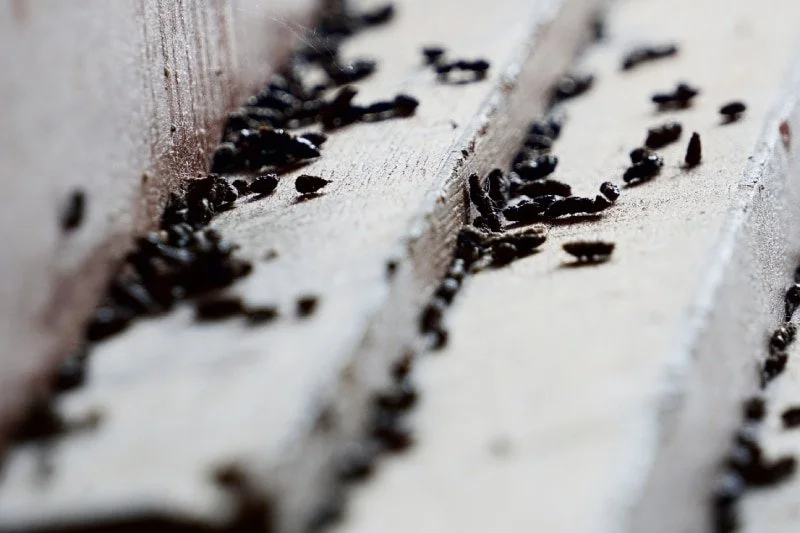
- Small dark droppings about the size of a grain of rice
- Chewed packaging, paper or fabric used for nesting
- Greasy, dark smudge marks along travel routes
- Gnaw damage on wiring, HVAC lines, or alarm wiring
Where they nest and reproduce
- Interior and exterior wall voids and insulation
- Above drop-ceiling tiles
- Inside and behind appliances
- Attics, basements and other quiet, hidden spaces
- Free-standing sheds, garages, barns, and outside-equipment
Situations we handle
- Active infestations with daily sightings or sounds
- Homes that "get mice every Winter", usually a population that never left
- Older homes with fieldstone foundations and many small gaps
- Clients who prefer zero-secondary or non-lethal prevention
- Multi-unit and commercial properties needing ongoing prevention
How Our Mouse Control Works
You Reach a Real Person or Send Us a Photo
No phone tree, no salesman. Unsure what you're hearing? Send a photo of the droppings or damage and we'll help you read it.
We Schedule a Free Evaluation
Free to everyone nearby, done from the exterior. We confirm the day before and again within 20 minutes of our arrival.
We Read the Structure and the Conditions
How they're getting in and what's drawing them: the foundation-siding junction, utility penetrations, garage gaps, landscaping and moisture.
You Get a Clear Recommendation, Scope and Price
Plain language, up front, including whether sealing is warranted now or after the population is controlled. No pressure, no contract.
We Eliminate the Interior Population in the Right Order
Before entry point sealing is even considered, eliminating adults and their reproductive activity inside the whole of the building is essential.
We Seal the Entry Points
Durable, rodent-appropriate materials at the base of the structure, where these rodents enter and exit the most.
We Keep Them Out With Prevention
Outside pressure is constant here, with nightly surges of rodents locating hidden openings and creating their own over time. When left up to us, we suggest the pairing of our Preventative Maintenance Service with re-sealing every 3–5 years to take back your serenity.
“We called and they came the next day! A very nice and knowledgeable guy came and looked all around our home, he explained the situation and offered to start that day.”
— Bill Daum · Google reviewWhat Affects the Price and What Interests Us First
We don't post a flat mouse-control price: quoting before we've inspected the home creates gray areas and wrong recommendations. We evaluate free, then provide a confident scope and cost for exactly what's necessary. Because you've already spotted the signs, this is an evaluation to scope the problem, not a paid inspection to confirm one.
- Severity and how long the infestation has been established
- Home age and foundation type: fieldstone and older construction have more gaps
- Size and layout of the structure (and number of units, for multi-family)
- Structural or environmental factors that invite rodents in
- Whether zero-secondary or non-lethal measures are used
- One-time service versus ongoing Preventative Maintenance
- Ongoing Discounts for clients with a Preventative Maintenance Service
A Note on Exclusion Timing
Because sealing is most effective after the interior population is controlled, we scope it in the right sequence rather than sealing everything on day one. Population size is always an unknown at the onset, and also a crucial variable in how long our initial efforts will take once in place.
You get a recommendation built around your house, not a one-size package.
Real Mouse Results From Your Neighbors
The Standoff Under the Stove
During an evaluation, a mouse darted out from under the kitchen stove right in front of our technician and the homeowner, and the two of them fainted at the exact same moment (the mouse, we suspect, was playing dead; the homeowner, not so much). We tell it because it captures the real reason people call: mice are unnerving, and a big part of our job is calmly getting them out of your space so your kitchen feels like yours again.
What Makes Mice Worse in the Farmington Valley
A Dense Rural-Suburban Mouse Population
Water run-offs, marshes, woods and heavy foliage support a high mouse population per acre, and mice don't hibernate. Homes near low spots and wet ground feel it most, because those areas push the outdoor population toward the nearest warm, dry structure: yours.
Older Homes and Fieldstone Foundations
Older construction simply has more small gaps. A juvenile mouse needs about an eighth of an inch, and can gnaw anything that isn't metal or concrete to widen it. Historic homes get extra care. Decades of settling create dozens of subtle entry points.
The Foundation-Siding Junction and Corners
On most Valley homes, mice enter right where the foundation meets the siding and along the siding corners. Predictable, and easy for a homeowner to miss, because they're low, shaded and hidden by landscaping.
Baseboard Heating Means More Travel Routes
The pipe holes cut through floors for baseboard systems give mice easy vertical access between levels, which is why homeowners with baseboard heat often see mice in more rooms of the house.
Garage Doors That Don't Seal to the Slab
A garage door that doesn't sit flush against the concrete is a direct path into the walls, basement and attic. Once a mouse is in the garage, the framework of the home gives it routes almost anywhere.
Wooded Lots, Farms and Outbuildings Nearby
Properties bordering woods, fields or farms face heavier rodent pressure. The more mice living around the home outside, the more important exclusion and ongoing prevention become.
Footprints in the First Snow
One genuinely local tell: after a light snow, look around the foundation. Tiny footprints tracing the perimeter are evidence that mice have been living in or against the structure, not arriving fresh with the cold.
The Technical Side of Real Mouse Control
Why we eliminate before we seal
Sealing a home with live mice still inside is the classic backfire: you remove their access to outside food and water, so they range deeper into living spaces, and any that die do so within the walls. The correct professional sequence is to reduce adult and juvenile populations within all levels and spaces of the building first, then inhibit outside pressures through exclusion.
Why store-bought products fall short
Retail baits lack the palatability to compete with the food already around them, and they rarely come in the volume needed to clear a population living in the walls and dead spaces. DIY entry-point sealing materials are usually the kind rodents can chew through, which often makes proper exclusion harder later.
An eighth of an inch, and a mouth built to gnaw
The word "rodent" comes from the Latin for "to gnaw." A juvenile mouse squeezes through an eighth-inch gap and can chew almost any material that isn't metal or concrete to enlarge it. That's why durable sealing uses the right materials in the right spots.
The reproduction math that makes speed matter
A female can gestate roughly every two months with eight to twelve pups each time, exponential growth if reproduction isn't interrupted. Once reproduction is controlled, the only remaining concern is outside pressure, which prevention manages. Acting at the first sign beats waiting.
Gnaw damage you don't see coming
Over the years we've been called in after mice compromised electrical lines, HVAC components and alarm-system wiring. The risk isn't only contamination. It's the chewing. Catching an infestation early protects more than your peace of mind.
The limited-indoor, eco approach to rodents
We keep indoor material use limited, lean on exclusion and structural correction, and use industry-leading low-risk techniques thoughtfully where needed. Zero-secondary poisoning or non-lethal alternatives are available for our Preventative Maintenance Service clients.
Mouse Control Questions We Hear Most
Why do I only see mice in Winter?
You probably don't only have them in Winter. You only notice them then. Mice live indoors year-round; they are just prone to search for resources outside in the warm months, and inside during the cold.
Where are the mice nesting?
In hidden areas away from predators and weather: wall voids, insulation, above drop-ceiling tiles, inside or behind appliances, and close to the building outside. Once inside the framework, mice move at will from level to level and room to room, so where you see them is usually not where they are most active or getting in.
Why do you eliminate before sealing?
If we seal first while mice are still inside, we cut off their outside route to food and water, leading to more indoor sightings and dead mice in the walls. Eliminate first, then seal: that's the order that works.
Do you guarantee you'll seal every hole?
No company honestly can. As rodents migrate toward the structure outdoors, they will gnaw new openings and locate those that we humans just can't access. Good sealing dramatically reduces how easily the next mouse gets in, especially paired with ongoing prevention and periodic re-sealing.
How fast will the mice be gone?
It depends on how established the infestation was. Activity typically drops in a few weeks, then may resurge for one or two more generations if pups or juveniles are wide-spread. Reproduction control is our #1 goal, and a heavily weighted variable to initial and long-term success.
Are the materials safe for kids and pets?
Yes. We keep indoor use limited, favor exclusion, and place any materials where your family, neighbors, and pets won't access them. We also provide zero-secondary poisoning or non-lethal alternatives for our Preventative Maintenance Service clients.
Do I need a contract or ongoing service?
No contract, ever. Many clients choose a no-contract Preventative Maintenance Service plus re-sealing every 3–5 years, but it's always your choice, and you can stop anytime.
How much does mouse control cost?
Every home is different, so we start with a free evaluation to reach a confident scope and cost. Our prices are at or below market average and always reflect our desire to earn long-term relationships with clients. Our materials and techniques remain superior to the alternatives.
Do mice really damage the house?
Yes. Beyond contamination, they gnaw, and we've seen them compromise electrical, HVAC and alarm wiring. That's why early action matters and why exclusion is worth doing properly.
Do you handle mice in older or historic homes?
Absolutely, and we treat them with extra care. Older Valley homes have more small gaps from decades of settling, so finding and sealing entry points is both more involved and more valuable.
Tell Us What You're Seeing, We'll Take It from There
A real person, a free evaluation, and an honest eliminate-then-seal plan that's safe for your family and pets. No contract, no salesman, no pressure.
Tough on mice, gentle on your home. That's the Green Pest Control difference.