
Rat Control in Bloomfield, CT
Do you feed the birds? It is the first question we ask on a Bloomfield rat call, and homeowners are frequently annoyed by it, which is fair. It is also the question that most often explains the problem.
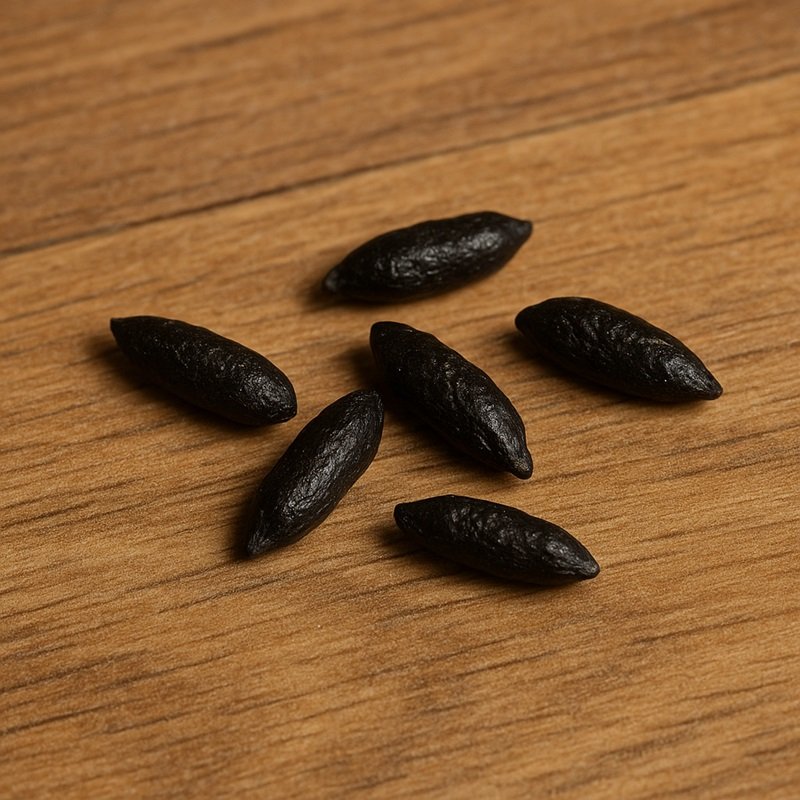
Not sure whether it is rats or mice? A photograph of the droppings usually settles it.
What We Are Looking For
Signs it is rats
- Capsule-shaped droppings, well past the rice-grain size a mouse leaves
- Broad gnaw marks on wood, wire, plastic and soft metal
- Greasy rub marks along a foundation, a beam or a fence rail
- Burrows in the ground, commonly under a shed, a deck or a dense shrub
- One seen in daylight, which usually means the population has run out of room
Where they get in
- Pipe, conduit and utility penetrations, where a quarter-size gap is enough
- Garage thresholds that no longer meet the slab
- Rooflines and soffits reached by climbing
- Crawlspace vents, bulkheads and foundation gaps
Attractants people do not think of as food
- Seed under a feeder, and the spill that accumulates in the grass below it
- Suet, and the fat that drips and stays
- Pet food left out, or stored in the garage in its original bag
- Fallen fruit under an ornamental or an old orchard tree
- An open compost pile, particularly one taking kitchen waste
Why a Rat Job Is a Grounds Job
Rats are limited by food. That sounds obvious, and it has a consequence people miss: reduce the animals and leave the supply, and the survivors breed back into the space within a season. It is why a property can be dealt with every year and be no further forward each Spring.
They also range, working a few hundred yards from where they sleep, so the nest, the food and the sightings are frequently in three different places and occasionally on three different properties. And they are careful, treating anything new in an established run with real suspicion, which is why the timing and placement of equipment matters more than the quantity of it.
A Bird Feeder Is a Rat Feeder Left Running
Bloomfield is not a town we have flagged for increased rat activity, and we are not going to invent one. What Bloomfield does have is a southern boundary with Hartford and four state flood control reservoirs within its own borders, so pressure here comes from the edges rather than building up in the middle. Which makes what a household puts on the ground the deciding factor in whether that pressure settles in.
If you feed the birds, and a lot of households here do, it is worth knowing what a feeder looks like from a rat's point of view. This is not a lecture about bird feeding, which is a nice thing to do. But a feeder is, mechanically, a dispenser that puts high-calorie food on the ground at a fixed location, every day, in all weather, indefinitely.
It is a far more reliable supply than anything a rat finds naturally. It does not move, it does not run out, it requires no effort, and, critically, it is available through the Winter, which is exactly the season that would otherwise cap the population. A colony that would have been held down by a hard January instead goes into Spring at full strength.
The spill is the part that matters, not the feeder itself. Seed that hits the ground and sits in the grass is the bit that rats use, because they feed at night when the birds have finished. So a pole-mounted feeder over bare, swept ground is a very different proposition from the same feeder over a shrub bed that nobody rakes.
If you are seeing rats and you feed birds, take the feeders down for a few weeks before we arrive, and sweep what is underneath. On many properties, that single step does more than anything we put out, and it tells us quickly whether the feeder was the engine or just a bystander.
How the Work Runs
A real person, first call
No phone tree and nobody working on commission.
A free evaluation of the grounds and the building
No cost to you anywhere we serve, confirmed the day before and again twenty minutes out.
We find the supply before we find the rats
Feeders, spill, waste, water, and cover. This is the part that decides whether a result holds.
We give them time to accept the equipment
Placement and timing carry a rat job. Rushing that stage is what tips them off.
Numbers down first, then the openings closed
Sealing an active population inside makes it worse. What goes into the openings has to survive heavy gnawing.
Why Bloomfield Calls Us
- We tell you what we find on your property, including the part you may not want to hear
- Twenty years of watching regional rat activity climb, with our team interviewed by WTNH and CT Insider about it
- Evaluations that read the grounds, because on this pest the building is half the picture at most
- Limited indoor material use and placements chosen to keep material out of reach of children and pets
- A licensed family business under supervisory license S-6070, third generation in the trade since 1976
Reviews From Your Neighbors
Bloomfield Rat Questions
So, do I have to stop feeding the birds?
Are rats actually a problem in Bloomfield?
Do they slow down in Winter?
The neighbors feed birds too. Does my clearing up even help?
Are they a risk to my family and pets?
Will one visit take care of it?
How much does rat control cost in Bloomfield?
Every Service We Offer in Bloomfield
Take the Feeders Down, Then Call Us
If you do nothing else before we arrive, do that. It costs nothing, and it tells us a great deal.