
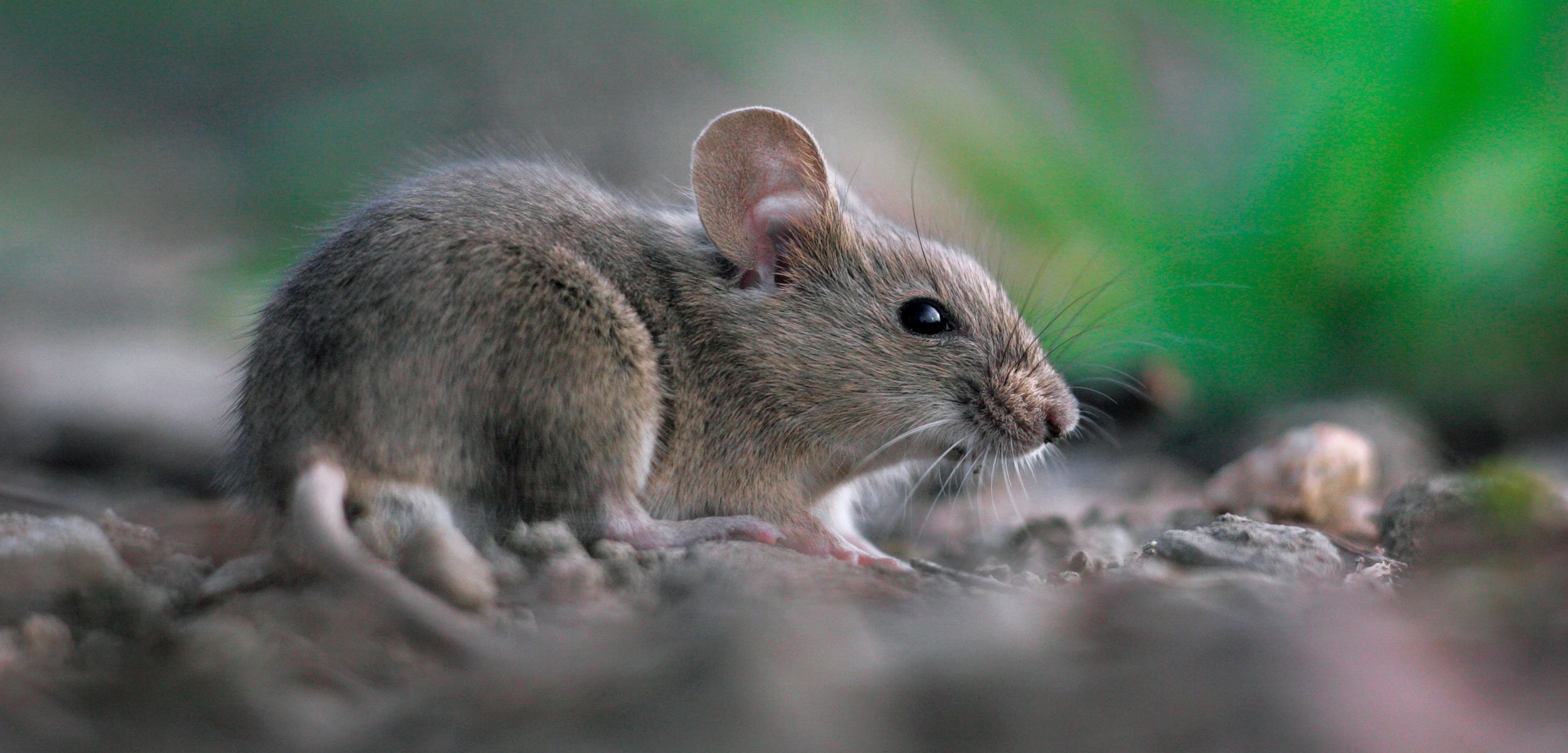
Mouse Control in Bloomfield, CT
A plastic vent flap does not last forever, and on an established house it has usually had decades to stop working. A vent hood that no longer closes is a mouse-sized door in the side of the building, at exactly the height a mouse is looking.
Found droppings you cannot place? Send an image, and we will read it with you.
The Vent Nobody Has Looked At Since It Was Installed
Bloomfield built more housing in the 1950s than in any other decade, and the town's own plan puts 52 percent of the stock ahead of 1970. Whatever else that means, it means a great many of these houses are on their third or fourth dryer, and the hood in the wall was cut for the first one.
Most houses push air out through the wall in several places: the dryer, the bathroom fans, the kitchen exhaust, sometimes a make-up air run. Each of those terminates in a hood with a flap or a louver, and that flap is the only thing between the inside of the duct and the outdoors. It is plastic, it lives in full sun and full frost, and it is rarely inspected.
What happens is predictable. The hinge stiffens, lint or grease builds up behind the blade, a wasp nests in it one Summer, or the whole hood sags a little as the caulk behind it fails, and the flap stops seating. Now there is a permanent opening, roughly the diameter of the duct, low on the wall. Behind it is a smooth metal or foil tube running straight into a floor or wall cavity, warm and dry, carrying the smell of a kitchen or a laundry. A mouse does not need to gnaw anything to use it. It is already a corridor.
Go and look at yours. Stand outside on a still day and check whether each flap is sitting flat and closed. A dryer hood is a common offender, because lint props it open and the warm exhaust draws attention to it.
Signs and Entry Points
What you notice
- Activity heard behind a kitchen or laundry wall, which is where these ducts run
- Lint or debris scattered below a vent hood that should be shedding it cleanly
- A flap that rattles in wind, meaning it is no longer seating
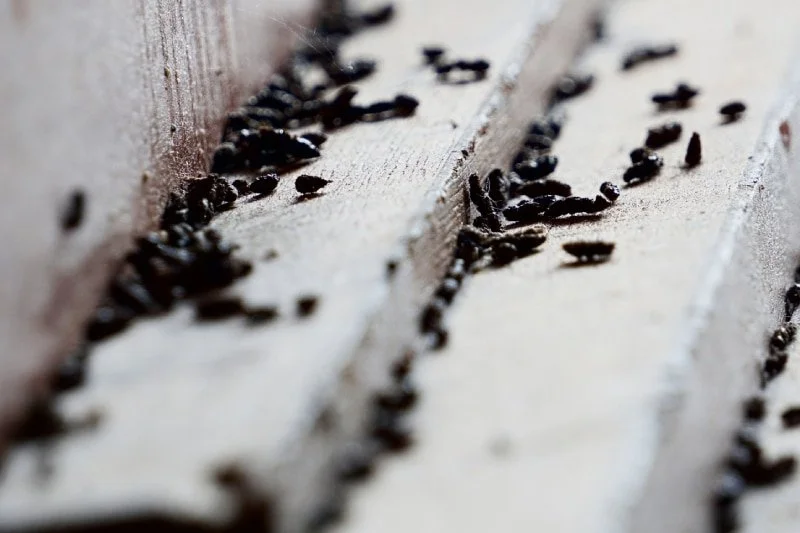
- Droppings around the size of a grain of rice, often first found on a basement shelf below a duct run
- Gnaw damage on wiring or flexible duct
Openings we check on established Bloomfield homes
- Dryer, bath and kitchen vent terminations whose flaps no longer seat
- The junction where the foundation meets the siding
- Utility and conduit penetrations
- A garage door that no longer seals flush to the concrete
- Any gap around an eighth of an inch
What Actually Ends a Mouse Problem
Very little, if the openings stay open. That is the awkward truth about mouse work, and it is why we spend the time we do on terminations rather than on the inside of the house.
The arithmetic runs against you otherwise. A female gestates roughly every two months with eight to twelve pups at a time, so a population with a way in and out replaces itself faster than devices remove it. Closing the route is what changes the equation; everything else buys a quiet couple of weeks.
Which is also why the order matters. Reduce the numbers inside first, then close the building. Do it the other way round, and you have trapped a live population in the walls with no route out to water.

The Sequence
Somebody picks up the phone
No phone tree, no salesman. Tell us what you are hearing and roughly where.
A free evaluation, worked from outside
Free in our service area, with a call the day before and another twenty minutes out.
We check the terminations
The vent hoods on the building, plus the junctions and penetrations lower down.
The scope and the number, plainly
Including whether sealing makes sense now or once the population is down. No pressure, no contract.
Population first, across the building
We are measuring whether the population can still breed.
Then we close the openings
Durable materials, including proper rodent-resistant treatment of vent terminations that still have to pass air.
Why Bloomfield Calls Us
- Exclusion is the part of this work we are known for, and vent terminations are easy to overlook
- We seal with materials chosen to survive gnawing, not to look finished
- No contract at any stage, and prevention continues only while it is working
- Third generation in the trade since 1976, operating under supervisory license S-6070
Mouse Questions from Bloomfield
Can you just block the vents?
Would mesh over the outside work?
Is this really how they got in?
Why not seal the whole house first?
Can you guarantee every opening?
Are the materials safe around children and pets?
How long until it settles?
How much does mouse control cost in Bloomfield?
What Bloomfield Clients Say
Every Service We Offer in Bloomfield
Go and Look at Your Dryer Vent
Genuinely. Two minutes outside on a still day, and you may well have your answer before we arrive.
The opening is usually somewhere nobody has thought to look.