
Carpenter Ant Control in Bloomfield, CT
Most people think of a woodpile as a fire-season convenience. To a carpenter ant colony, it is a nest site with a heated building attached, and where it sits against the house decides a surprising amount.
What Makes Them Their Own Problem
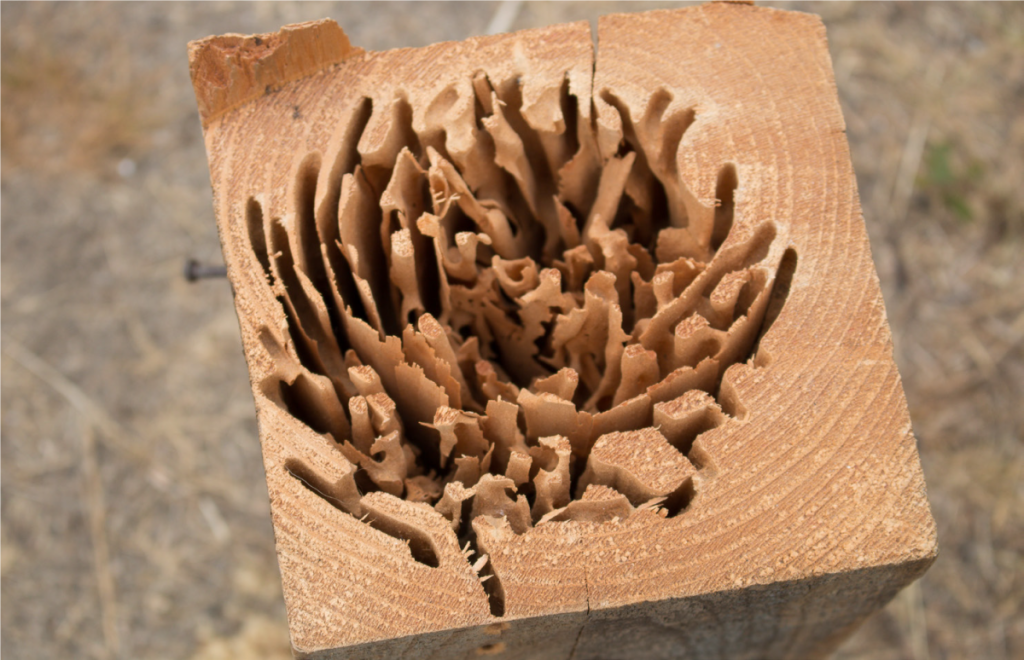
Carpenter ants carve wood and leave it behind; they do not eat it. The galleries come out smooth, clean, and dry, with the excavated material pushed out as frass, which is why a small cone of what looks like sawdust under a sill is such a useful find. Termites eat the wood and pack their galleries with mud, so the two problems look different, progress differently, and call for different work. We settle which one you have before recommending anything.
Which is why a stack is such a good nest site and such a bad neighbor for a wall. The logs are already going soft, so the ants are not starting from scratch, and nothing in a woodpile ever gets disturbed between April and November.
What To Look For
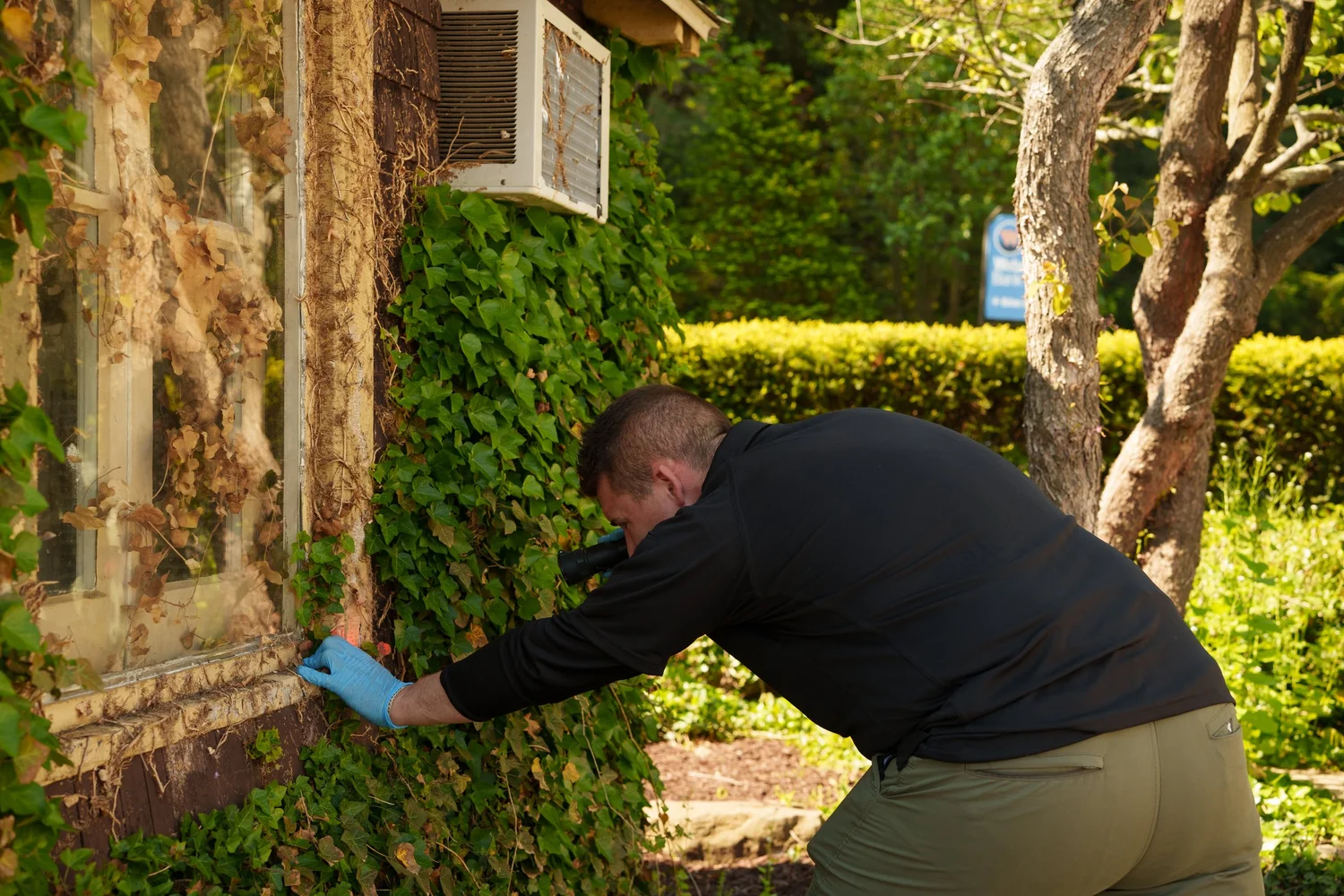
- Sawdust-like shavings under trim, a sill, a stack of logs or a door frame
- Winged swarmers indoors, most often in Summer
- Large black or reddish ants working a trail, indoors or out
- A faint rustle inside a wall at night
- Ants in noticeably higher numbers on the side of the house where wood is stored
How We Work It
Identification first
Send an image of the insect. Ant against termite changes the method and the urgency.
A free evaluation that starts outside
Free of charge in our service area, confirmed the day before with a twenty-minute heads-up on the day.
We look for the source, not only the trail
Stored wood, stumps, damaged framing, and anywhere else a colony has somewhere better than your wall to live.
We check what the wood is sitting on
Ground contact, splash-back and the damp strip of siding behind a stack are usually more informative than the logs themselves.
Whole-structure treatment, finishes intact
The protocol treats the building so it is a poor host for a colony, without chasing satellite nests through your walls.
Protection stays up between seasons
Foragers keep arriving from dead wood nearby. Ongoing prevention is what breaks the annual cycle, with no contract behind it.
Where the Woodpile Sits, and What It Is Sitting On
Bloomfield does not have a single kind of ground beneath it. On the Talcott Mountain side, the material is till over ledge, and it sheds water. Moving east, it grades through sand and silt toward the alluvial floodplain. The town's capital list names Hill Farm Road, Juniper Road, Kenwood Circle, Newport Drive, Partridge Lane and Alexander Road for drainage work, so a fair number of households here already know which half of town they are on.
If you burn wood, the stack is probably against the house, which is the sensible place to put something you carry indoors in February. Most of the ones we see are.
It is also the worst place for it, and it is worse on the wet side of town. A log pile is already partly decayed, which is exactly the softened material carpenter ants prefer, and stacking it tight to a wall does three things at once. It traps moisture against the siding, so the building's wood softens too. It bridges whatever gap exists between soil and cladding, giving ants a covered route up. And it creates a dark, undisturbed volume that nobody moves between April and November, which is the entire active season.
The result is a pattern we meet often: a colony established in the stack, foraging into the wall behind it, and a homeowner treating ants at a kitchen window on the far side of the house without ever connecting the two. Move the stack in Fall, and you frequently find the answer on the ground underneath it.
On a lot that already holds water, the damp strip of wall behind a permanent stack never gets a chance to dry, and the colony never gets a reason to leave.
Fall Is the Window
Fall is the right time of year to deal with a woodpile problem.
Move a stack in Fall and the colony is concentrated, sluggish, and in one place. Move it in high Summer, and you scatter foragers across the yard, into the wall you were trying to protect, and into the next stack along. It is the same principle that makes repellent sprays counterproductive: pressure applied to a carpenter ant colony tends to divide it rather than remove it.
So the useful sequence is to restack onto a rack away from the building before the weather turns, and to tell us what was underneath.

Recent Google Reviews
Why Bloomfield Calls Us
- We look for the source population outside before we treat anything on the building
- No demolition nest hunt, so your siding, trim, and interior finishes stay intact
- We will tell you the unwelcome practical thing, including where to move the woodpile
- Professional materials applied to label with limited indoor use, safe once dry, usually within twenty minutes
- Non-commissioned licensed technicians under supervisory license S-6070
- Third generation in the trade since 1976, and the same small team throughout
Every Service We Offer in Bloomfield
Carpenter Ant Questions from Bloomfield
Where should the woodpile actually go?
Will moving it fix the problem on its own?
Is the wood ruined?
Ant or termite?
Do you have to open my walls?
How much does carpenter ant control cost in Bloomfield?
Move the Stack, Then Call
Move the stack, then call us. In that order, ideally, because what is underneath it tells us most of what we need to know.
Find where the colony actually lives, and the wall becomes a much smaller conversation.