
Termite Control in Avon, CT
People assume termites are an accident of geology, and on a landscaped property they are frequently an accident of design. A timber edging a bed is wood, buried in soil, running toward a house. Every part of that sentence is what a termite is looking for.
Before anything else, take a screwdriver to the oldest timber in your beds and see how far it goes in.
Landscape Timbers Are Wood-to-Soil Contact by Design
Termites need three things, and the hardest for them to find is cellulose in contact with workable, moist soil. Ordinary construction goes to some trouble to avoid providing it, which is why construction generally keeps structural wood clear of the soil.
Two things about Avon ground are worth knowing before we get to the landscaping. When Avon adopted zoning in 1957, it placed 1,200 acres in an agricultural district; two parcels totaling 38 acres remain in it today. And the Avon Old Farms School, which once held thousands of acres, sold off more than two hundred in the 1960s to create the Stony Corners neighborhood and five hundred more in the 1980s. A great deal of this town is houses standing on ground that was field, pasture, or woodland inside living memory, and farm and forestry wood does not always leave when the use does.
Landscaping then frequently provides the same thing on purpose. Timber bed edging. Railroad ties on a terrace or a driveway edge. A raised vegetable bed built from untreated boards. Sleepers forming steps. Decorative posts set in the ground. Bark mulch piled deep and kept damp. Each of those is cellulose, at grade, in soil that gets watered, and where they run toward the house they form something close to a guided route.
The compounding problem is that this material is rarely considered part of the building, so it is not looked at. A rotting tie at the back of a border can carry an active colony for years with nobody giving it a glance, and the distance from there to the foundation is often only a few feet.
Treated lumber helps, but it's not a guarantee. Retention levels vary between products, and a cut end exposes untreated core. An old treated timber half-buried in a damp bed is worth a screwdriver test, and we find activity in them regularly.
What Sends Us Looking
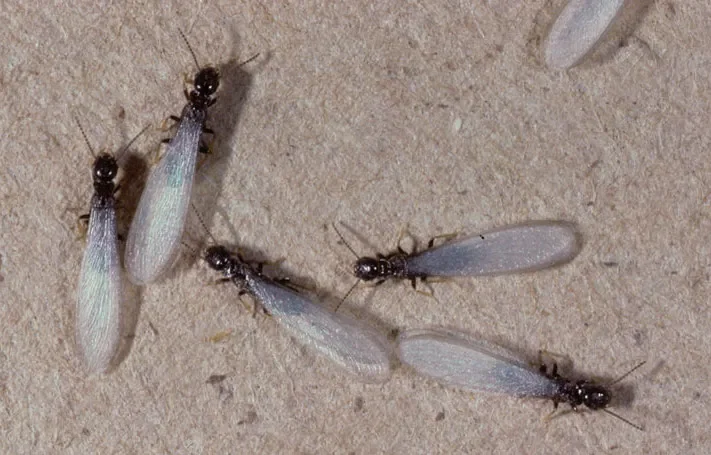
- Winged swarmers emerging indoors in Spring, the clearest signal of the year
- Shed wings on a windowsill, near a door, or caught in a web
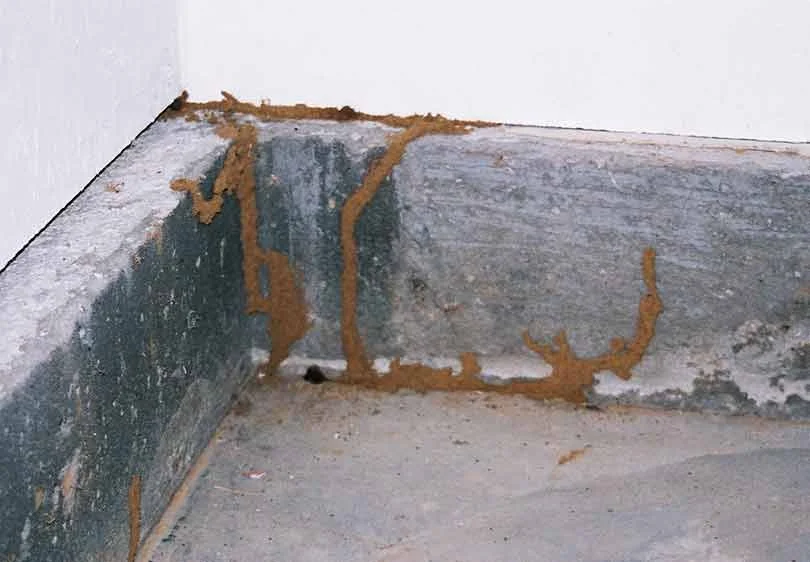
- Mud tubes on a foundation wall, a pier, or the side of a timber
- A timber, tie or post that crumbles when a screwdriver goes into it
- Termites turned up while gardening or planting
Mulch Is the Part People Argue With Us About
Deep bark mulch against a foundation does three things at once, and only one of them is decorative. It holds moisture against the siding. It hides the bottom few inches of the wall so nobody sees a mud tube forming. And it is itself cellulose in contact with soil, kept damp on purpose.
We are not going to tell anybody to give up mulched beds, which would be unrealistic. What is worth doing is pulling it back to leave a few visible inches of foundation, keeping the depth sensible rather than topping up over last year's, and choosing stone for the strip immediately against the house where the look allows it.
It is one of the more useful changes a homeowner can make, and it takes an afternoon.

How the Work Runs
Call, and we move
Termite matters get priority in our scheduling.
We confirm the species
Termites colonize in the soil while most other wood-destroying insects live in the wood, which changes the entire approach.
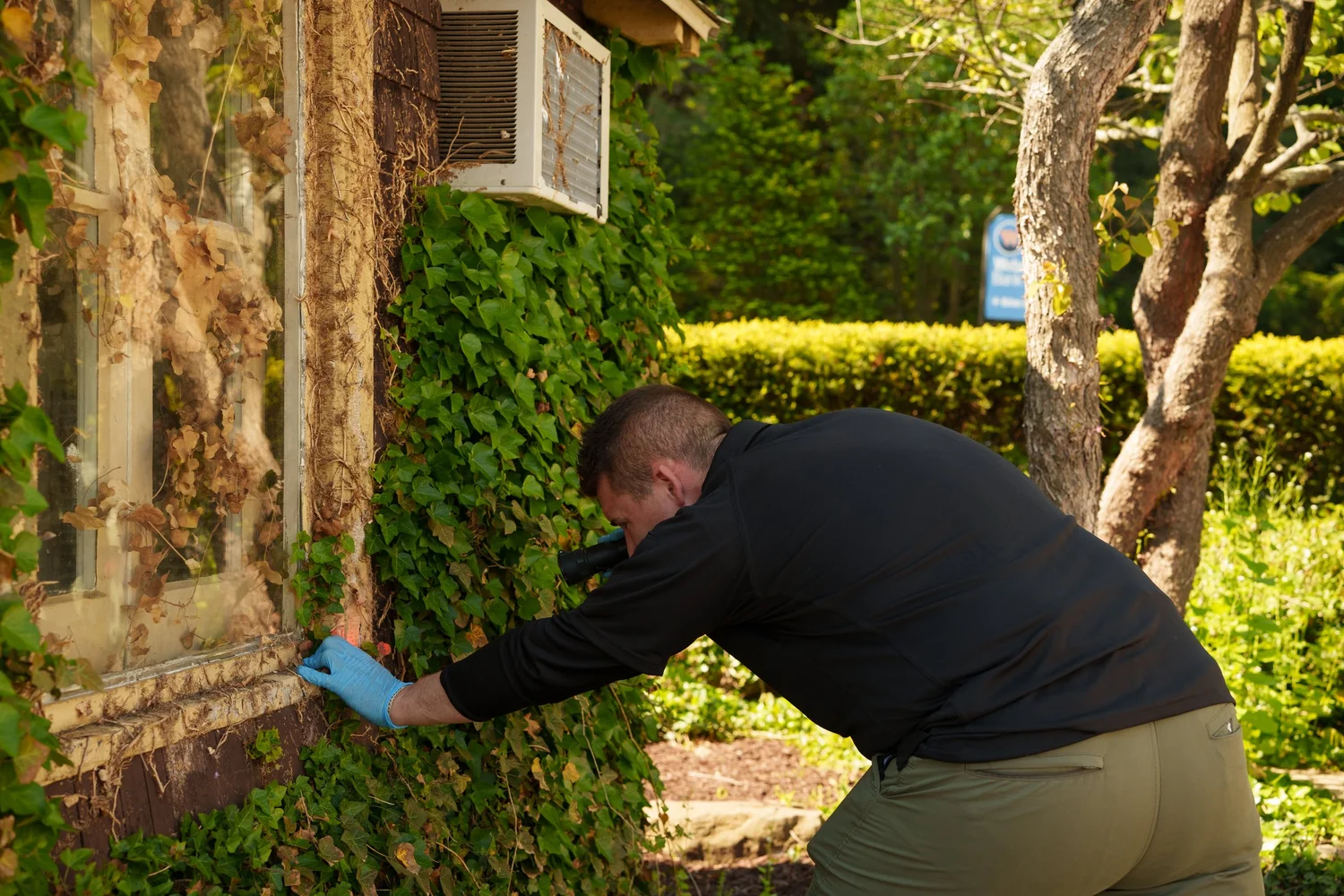
We walk the beds as well as the perimeter
Timbers, ties, posts, raised beds, and mulch depth, particularly anything running toward the house.
You hear the number before anything starts
Exactly what is needed and nothing past it, with no contract.
Liquid soil treatment around the structure
A continuous treated zone at the points termites actually use to reach the building.
We tell you which landscape features to deal with
What should be pulled back, replaced or separated from the house, and what is fine where it is.
Termite Questions from Avon
Do we have to take the landscaping out?
Our timbers are pressure treated. Are we fine?
Is the treatment safe around a vegetable garden?
Can I treat before I ever see one?
How much does a termite treatment cost in Avon?
Worth Doing Before You Ever See One
Termite treatment is unusual in this trade because the same application that resolves an infestation also serves as a preventive measure. We do not use a separate, reduced preventative product. It is the same application either way.
Which makes the timing question simpler than people expect. On a property with a lot of wood in the ground, the argument for treating before there is evidence is that you are buying the same protection either way, and buying it without also having a colony in the structure to deal with.
We will not push it. Plenty of Avon properties do not need it, and we will say so. But if you have timbers going soft, a heavily planted perimeter, and no treatment on record, it is a reasonable conversation to have, even if nothing is wrong.
Reviews and Ratings
Why This One Rewards Experience
- Twenty years and 2,500-plus termite problems resolved by our owner personally, who holds the termite license
- We walk the garden, because on a landscaped property that is where the wood-to-soil contact actually is
- Termite work done by our own licensed technicians, never subcontracted
- Specific, proportionate recommendations about landscaping rather than a blanket instruction to remove it
- Our Farmington office is in the next town south of Avon
Every Service We Offer in Avon
Take a Screwdriver to the Oldest Timber You Own
If it goes in easily, that is worth a phone call regardless of whether you have seen an insect.