
Carpenter Ant Control in Avon, CT
How often does your irrigation run, and does any head reach the house? Those two questions resolve a surprising number of Avon carpenter ant calls before we have looked at a single ant.
Before you sweep anything up, take a photo of the insect. It decides what happens next.
What Points to Carpenter Ants
- Activity concentrated on one elevation, usually the shaded one
- A bed along that wall that never quite dries out between cycles
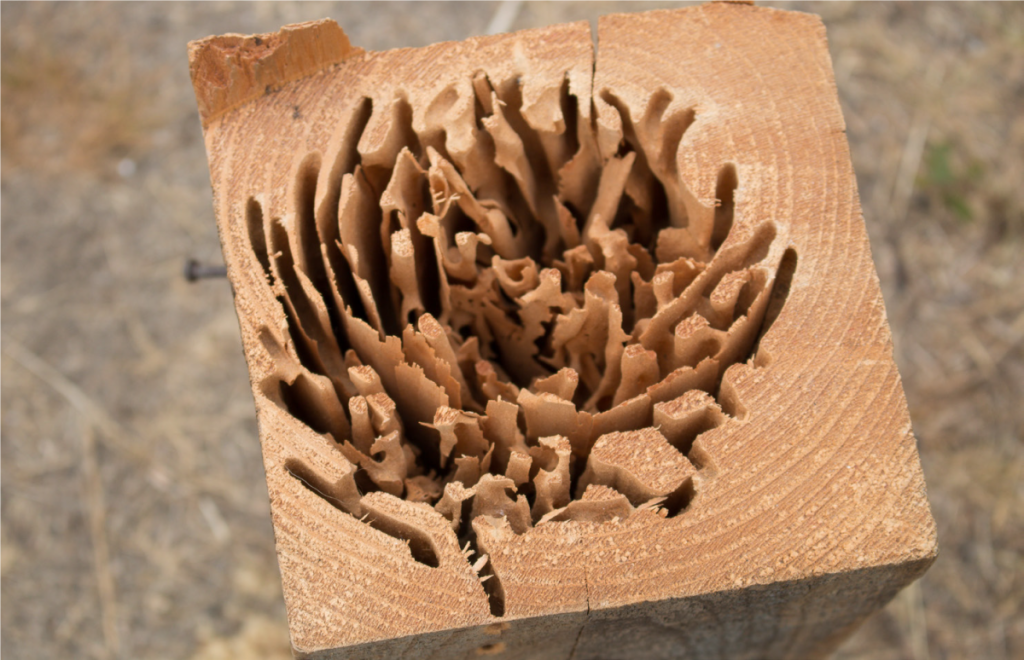
- Sawdust-like shavings under a sill, a casing, or a piece of trim
- Winged swarmers indoors, most often in Summer
- Paint lifting or siding discoloring low on the affected wall
Sprinklers Aim at Lawns, and Sometimes at Houses
Avon has no municipal water utility at all. The town's own plan puts it plainly: every public and private supply in Avon comes out of groundwater wells, and roughly one home in four draws from a well of its own. Nor is there a wastewater plant here; Avon contracts its sewage to Canton, Farmington and Simsbury, and its sewer authority ranks extensions by the age of a neighborhood's septic systems, the depth of the groundwater and the depth to ledge. 17% of the town is mapped as wetland. This is a wet town with a lot of water moving through shallow ground, and where a property adds automatic irrigation on top of that, the system is excellent at keeping turf green and entirely indifferent to what else it wets.
A rotor or spray head that clips the bottom courses of siding puts water on the building several times a week throughout the growing season, year after year. That is a very different exposure from rain. Rain arrives with wind and then stops, and a wall dries. Irrigation often runs before dawn, in still air, into a shaded north or east elevation, and the wall can still be damp when the next cycle starts. Over a few seasons, the bottom of the siding, the band joist behind it, and anything in ground contact nearby stay wet more or less permanently.
Two other things compound it. Beds close to the foundation are often the wettest zone on the whole system because they get both the bed head and the overspray from the lawn. And mulch piled against the siding holds that water against the wood rather than letting it drain away.
The pattern is easy to spot once you know it: ants concentrated on one side of the house, typically the shaded one, and a bed along that wall that never quite dries out.
Mulch Depth Is the Other Half of It
Irrigation puts the water on. Mulch is what stops it from leaving.
A bed that has been topped up every Spring for a decade without anything being removed can end up deep enough to sit against the siding, and once it does, the bottom courses never dry. The wood stays at a moisture content carpenter ants find acceptable, and the mulch itself provides a covered route so nothing has to cross open ground to reach the wall.
What matters here is the depth and where the edge of it sits, not the bed itself. Leave a few visible inches of foundation above the mulch line and the wall has somewhere to dry.

How the Work Runs
Identification first
Send an image of the insect. Ant against termite decides the method and the urgency.
A free evaluation that starts outside
Free in our service area, confirmed the day before with a twenty-minute heads-up on the day.
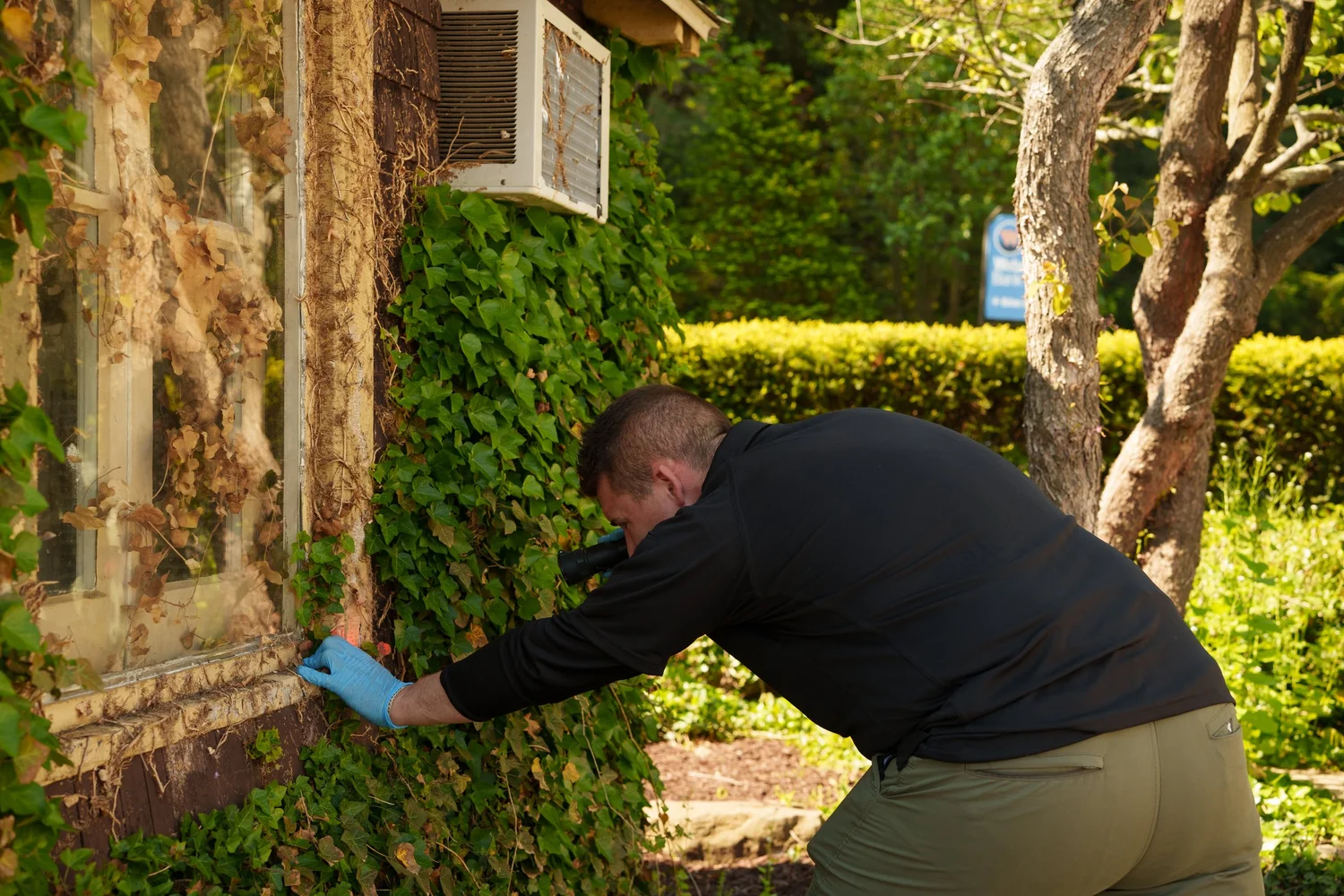
We look for the moisture before the nest
Irrigation throw, bed grade, mulch depth, downspout discharge, and anywhere else water is reaching the structure.
We tell you what to adjust
Head direction, run time, mulch pulled back off the siding. Small changes, and they are what make the treatment hold.
Whole-structure treatment, walls closed
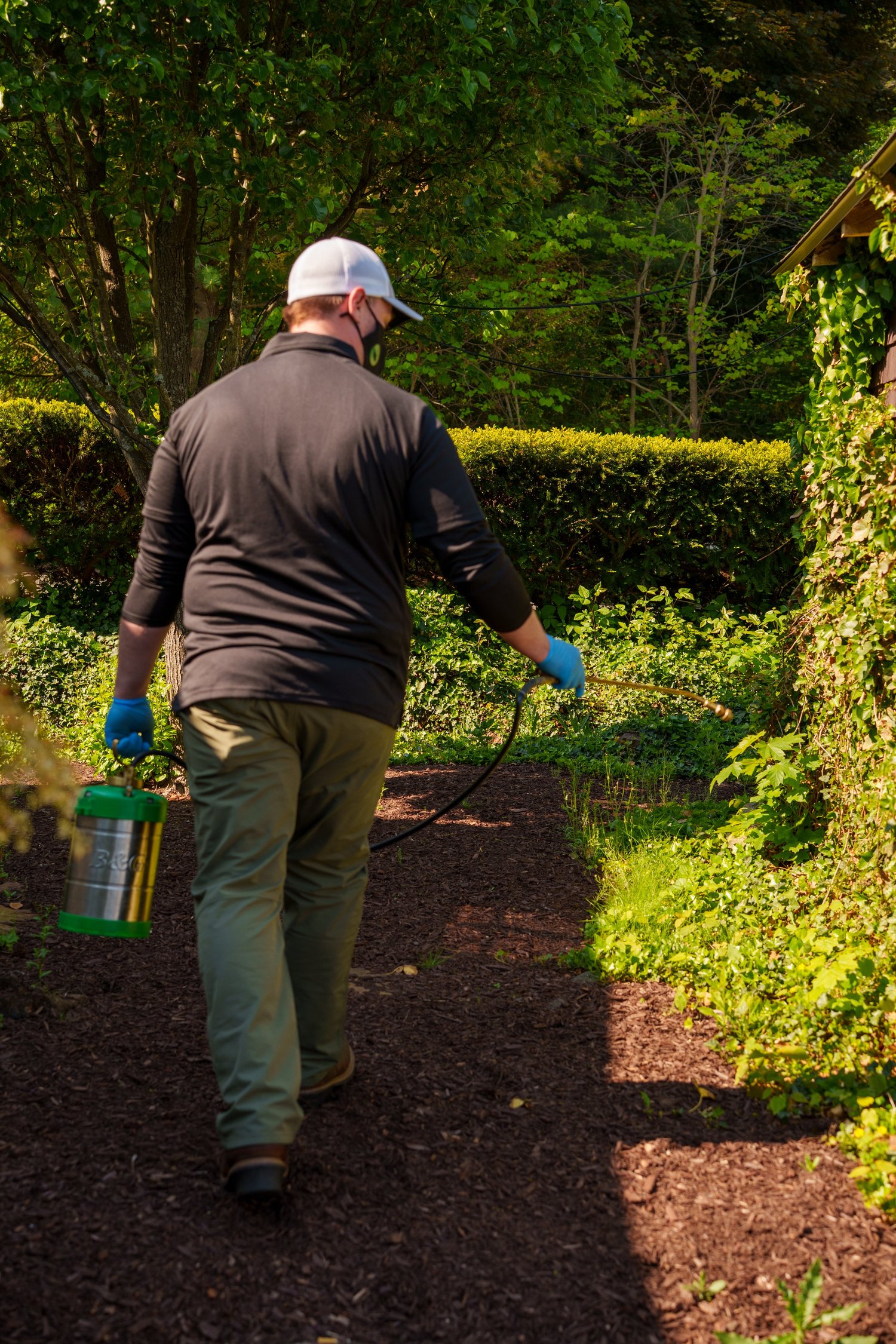
The protocol treats the building so it is a poor host for a colony, without chasing satellite nests through your finishes.
Protection stays up between seasons
Foragers keep arriving from dead wood nearby, so ongoing prevention breaks the annual cycle. No contract behind it.
While You Are Out There, Look at the Downspouts
Irrigation is the one people miss because it runs at four in the morning. Downspouts are the one people stop seeing because they have always been there.
A downspout that discharges at the base of the wall puts the entire roof area of that elevation onto one square foot of ground, repeatedly, and the splash comes back up onto the siding. An extension carrying it a few feet out makes a substantial difference, and it is about as simple a fix as a house offers. Just make sure the discharge is not directed onto a neighbor's ground.
The same goes for a gutter that has been overflowing at one corner for a few seasons. The ants are not interested in the gutter. They are interested in what the overflow has been doing to the trim underneath it.
Carpenter Ant Questions from Avon
Do I have to turn the irrigation off?
They are only on one side of the house. Is that meaningful?
Could this be termites instead?
Will you need to open the wall?
How much does carpenter ant control cost in Avon?
Recent Google Reviews
Every Service We Offer in Avon
Why Avon Calls Us
- We work out which water source is keeping the wood soft, because that is what decides next Summer
- Practical, specific advice about the irrigation rather than a blanket instruction to change how you garden
- No demolition nest hunt, so siding, trim and interior finishes stay intact
- Our Farmington office is in the next town south of Avon, so getting back out is quick if anything comes up
- Professional materials applied to label, limited indoors, safe once dry, usually within twenty minutes
- Non-commissioned licensed technicians under supervisory license S-6070
Watch a Cycle Run at the Hour It Actually Runs
Or just tell us the schedule and which side the ants are on. That is usually enough to know where to start.