
Rat Control in Granby & East Granby, CT
Almost every conversation about rats on rural property is a conversation about food. It is worth keeping the other one because a rat needs water daily unless its food supplies it.
Water Is the Variable Nobody Manages
On a property with animals, the food side gets attention sooner or later. Somebody puts the feed into bins, sweeps up the spillage, and tidies the storage. The water side almost never does, because on rural property water is everywhere and none of it looks like a resource anyone is providing.
A stock tank topped up daily. A leaking frost-free hydrant that keeps one patch of ground wet through a drought. A pond edge. A spring or a wet seep at the bottom of a field. Roof runoff from a barn with no gutters landing in the same spot every storm. A dripping faucet in a tack room. Condensation under a poly tarp on a round bale.
Each of those is a fixed, reliable water point, and in our experience, the water points on a property predict where the burrows sit at least as well as the feed room does, and they get a fraction of the attention.
The effect shows up most in a dry stretch. In a dry spell, seasonal water on surrounding land can disappear while permanent sources on a property with livestock do not, and the rat population concentrates on what is left. A farm that carried a tolerable background level all Spring can find itself with a visibly worse problem in late Summer without a single thing having changed about its feed storage.
Where a property sits changes which water points matter. Granby drains largely to Salmon Brook and its west branch. East Granby is cut down the middle by the Metacomet ridge, and the town's own plan notes that ground west of Peak Mountain drains to the Salmon Brook basin, ground east of it drains to Stony Brook, and the southern end of the town drains to the Farmington River. On the eastern side, the land flattens onto the outwash plain that Bradley sits on, and flat ground holds water in different places than a hillside does.
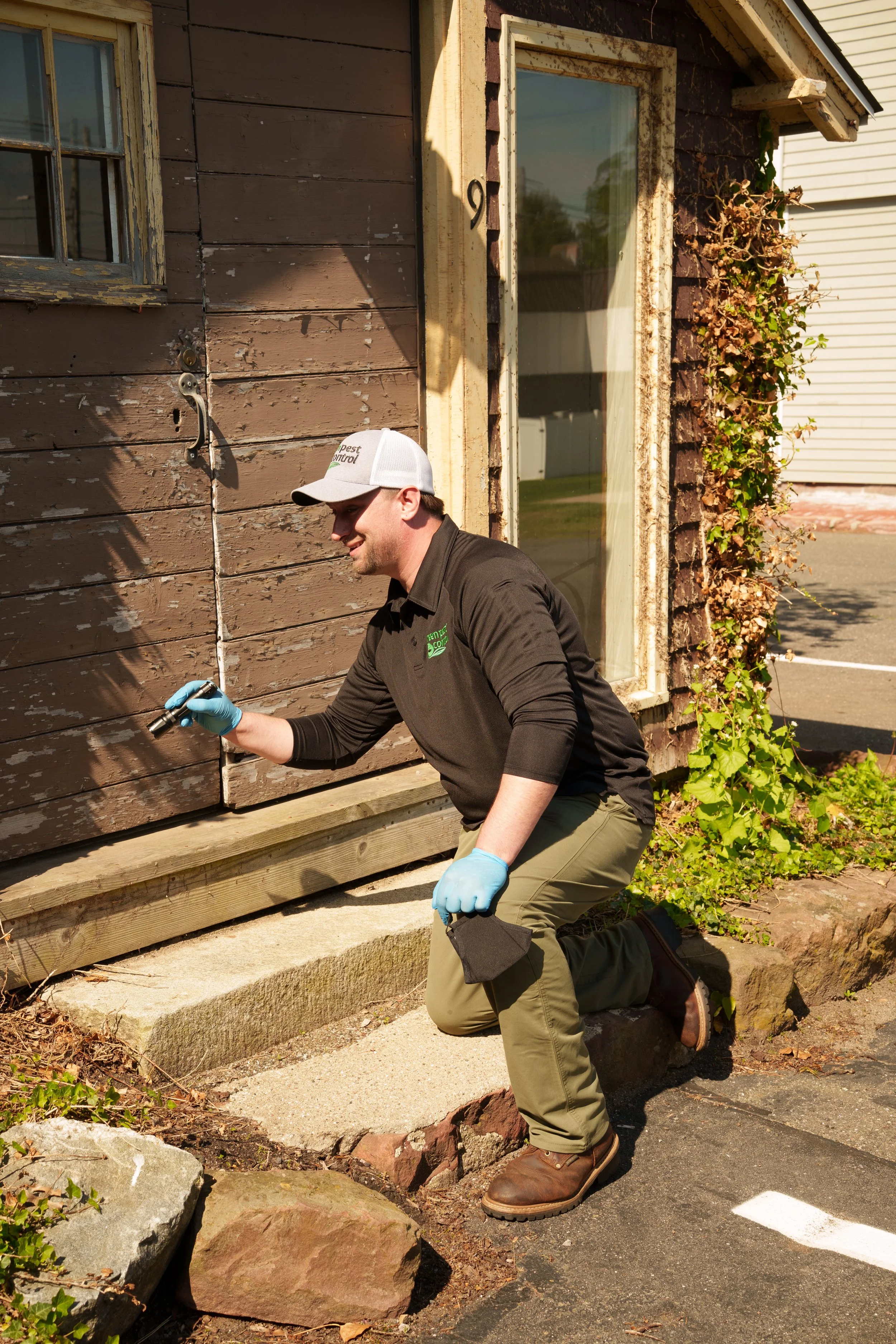
None of this makes a stock tank a mistake. It means that when we walk a property in either town, we map the water first, then look for burrows in relation to it, and that usually gets us to the systems faster than starting at the barn does.
Why a Rat Job Is a Whole-Property Job
Rats range a few hundred yards from where they sleep, so the nest, the water, and the sightings are frequently in three different places and occasionally across a boundary. They dig, which means much of the population lives outdoors in burrow systems that show how established things are. And they treat anything unfamiliar in an established run with real suspicion, so placement and timing carry the work rather than the quantity of equipment.
We treat barns, garages, storage buildings and coops alongside the house. We do not service restaurants or food facilities.
What We Read on a Rural Property
Signs it is rats
- Burrow mouths within a short walk of a tank, a hydrant or a wet patch of ground
- Runs worn into grass between a water point and a building
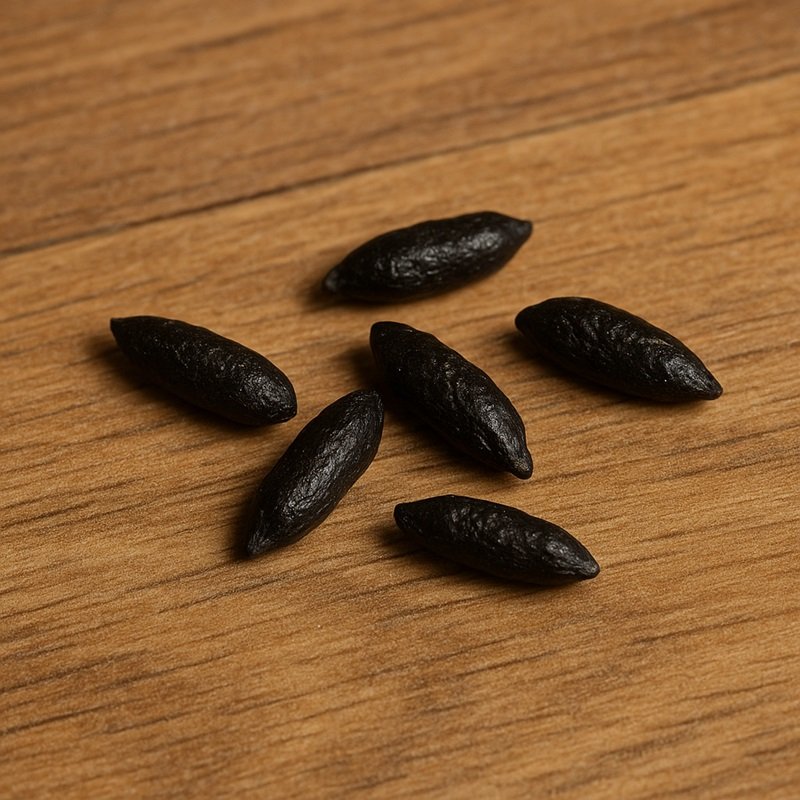
- Capsule-shaped droppings, several times the size of a mouse's
- Chewed corners on feed sacks, and gnawing on plastic tank fittings
- One seen in daylight, which usually means the system has outgrown its cover
Water points worth walking
- Stock tanks, troughs and automatic waterers
- Frost-free hydrants, taps and any hose bib that weeps
- Pond and stream edges, springs and wet seeps
- Roof runoff from a building without gutters
- Anywhere the ground stays damp when everything around it has dried
Working a Granby Property
A person answers
No phone tree and nobody on commission.
A walk of the whole place, at no cost
Confirmed the day before and again twenty minutes out. The walk takes in the outbuildings, the tanks and the wet ground.
The water map comes first
Every permanent source on the place, marked, before we look at a single building.
We read the burrow systems
Worn mouths with soil fanned out below them mean an active system, and the number of them tells us how long this has been going on.
We give them time to accept the equipment
Everything goes in on their timetable, not ours, because equipment they have not accepted does nothing.
Numbers down, then the openings closed
Sealing an active population inside makes things worse. What goes into the openings has to survive heavy gnawing.
Then we keep the property from refilling
Water and cover are not going anywhere, so neither is the pressure. Ongoing prevention is what stops the whole exercise repeating next year, and it carries no contract.
Why These Towns Call Us
- We walk the water, the outbuildings and the ground before we look at a single building interior
- Practical about what a working property can actually change, and clear about what it cannot
- Twenty years of watching rat activity climb across the region, with our team interviewed by WTNH and CT Insider
Reviews from Your Neighbors
Granby Rat Questions
We cannot exactly remove the stock tank
It got noticeably worse in August. Why?
Do rats slow down in Winter?
Can you treat the barn and the house together?
Is it safe around livestock, poultry and working dogs?
Will one visit do it?
Every Service We Offer in Granby & East Granby
Mouse Control in Granby & East Granby
Carpenter Ant Control in Granby & East Granby
Bed Bug Control in Granby & East Granby
Termite Control in Granby & East Granby
Rodent Exclusion
Vole and Mole Control
Commercial and Multi-Unit, excluding restaurants and food facilities
Pest Control in Granby & East Granby
Walk Us Around the Water
Tanks, hydrants, the wet corner of the field. Half an hour doing that tells us more than a morning in the barn.
On a property with animals, the water tells us more than the feed room does.