
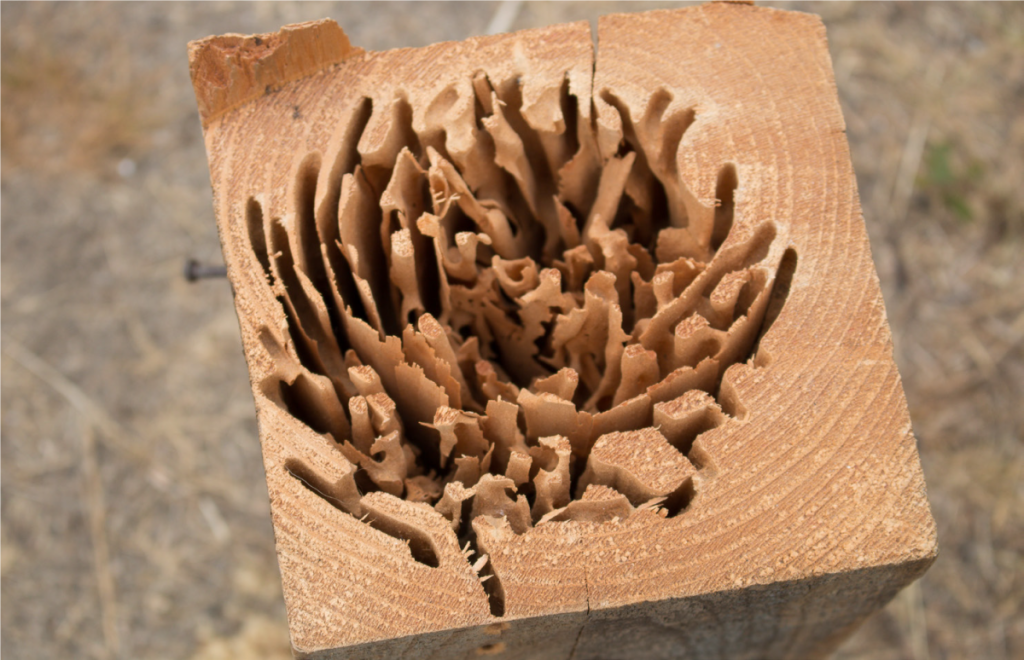
Carpenter Ant Control in Granby & East Granby, CT
On most properties, a carpenter ant problem is a question about the building. On land that has been cleared, logged, or farmed, it is usually a question about what is left standing in the ground fifty yards away.
Seeing a trail? Note which direction the loaded ants are heading before you disturb it.
What Points to Carpenter Ants
- A trail with a consistent direction, running between a treeline and a building
- Sawdust-like shavings under a barn plate, a sill or a beam
- A stump, post or log pile that crumbles under a screwdriver
- Winged swarmers indoors, most often in Summer
- Activity in an outbuilding before anything shows up in the house
How We Work It
Identification first
Send an image. Ant against termite decides the method and the urgency.
A free evaluation that starts at the treeline
Free to everyone we serve, confirmed the day before with a twenty-minute heads-up on the day.
We find the parent colony, or its likely location
Stumps, slash, standing dead wood, old posts, and anything the property has been carrying since it was cleared.
Whole-structure treatment on the buildings
The protocol treats each structure so it is a poor host for a colony, without chasing satellite nests through your finishes.
Protection stays up between seasons
With an established source population nearby, prevention is what stops the yearly repeat. No contract behind it.
The Colony Is Often Not in the House
Carpenter ants are forest insects that occasionally venture indoors, and across Granby and East Granby, that framing does real work. Most of Granby's residential land sits in a two-acre minimum zone, so the typical house here backs onto trees. East Granby is a different shape. The Metacomet ridge runs up the middle of that town and splits it, so a property on the Peak Mountain or Hatchett Hill flank has ledge, slope, and standing timber close to the foundation, where a property out on the eastern plain has none of that.
A mature colony wants a large volume of damp, decaying wood. A stump left after clearing. A pile of slash at the edge of a field. A standing dead tree. An old fence post rotted off at ground level. A log pile that has been there long enough to go soft underneath. Those are the sites a parent colony establishes in, and a single mature one can support satellite nests some distance away.
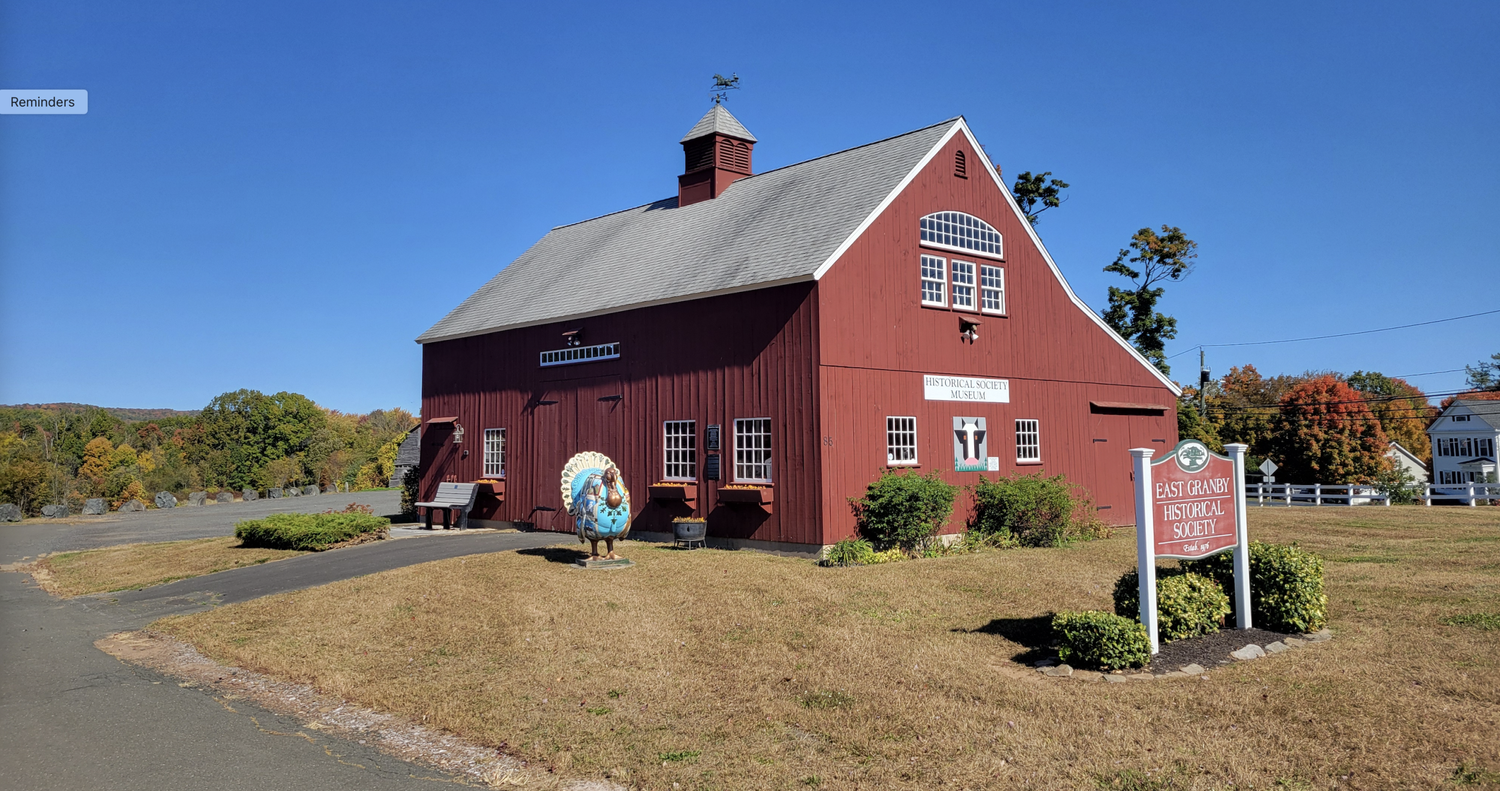
West Granby adds its own version of this. There was water-powered industry on the West Branch of Salmon Brook from the 1740s, and the historic district that grew up around it is largely residential today, with agricultural outbuildings still standing. Where old structures came and went, the wood did not always leave with them.
Which is where the house comes in, and it comes in second. A satellite nest is smaller, drier, and frequently sited in a structure: a wall void, insulation, a barn plate, a sill. The ants in your kitchen are usually an outpost rather than the whole operation, and treating the outpost while the parent colony sits untouched in a stump at the field edge is exactly why these problems recur every Summer with such reliability.
If we can identify the likely source, the plan changes. We are then protecting structures against a known and persistent pressure, which is a different objective from removing a colony that lives on your land regardless. Those two things deserve different expectations, and that is a conversation worth having at the start.
Outbuildings Are Where the Satellites Live
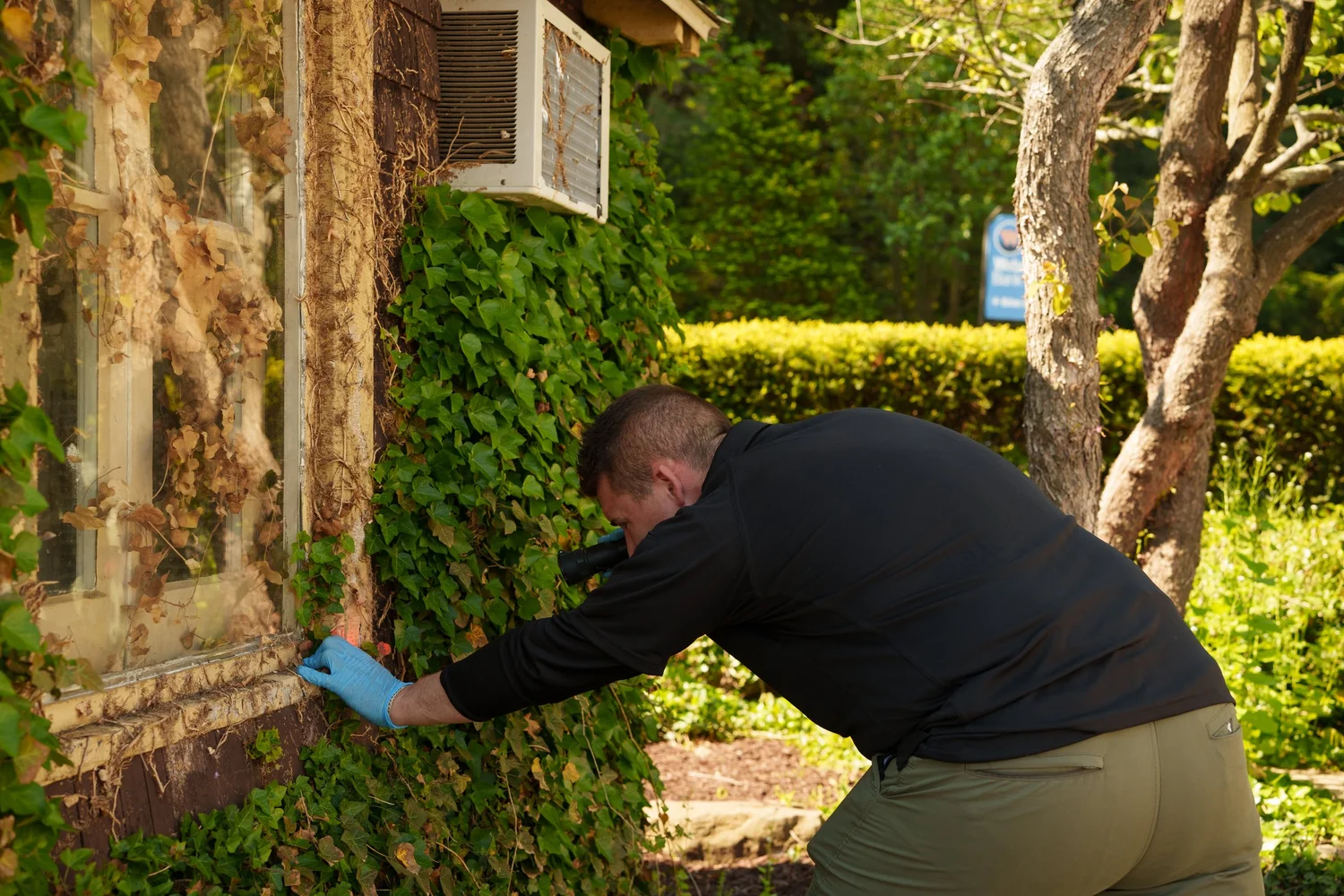
On a rural property, the house is rarely the structure a satellite nest picks first. A barn plate sitting on a stone foundation, a workshop sill in ground contact, a run-in shed post, the bottom rail of a board fence: all of that is wood at grade, unheated, undisturbed, and frequently already damp.
Which matters because the buildings talk to each other. A nest established in a barn thirty yards off is a short forage from the house, and a household that treats only the house removes the outpost and leaves the staging point exactly as it was.
So, we price and scope outbuildings as part of the job on properties like these, and we will tell you which of them genuinely need attention instead of billing for every structure on the deed. Often it is one building, and it is not the one anybody expected.
Why These Towns Call Us
- We look for the parent colony outside before treating anything on a building
- Realistic about what is achievable on wooded and cleared land, and clear about the difference between removal and protection
- No demolition nest hunt, so siding, trim, and interior finishes stay intact
- Third generation in the trade since 1976, operating under supervisory license S-6070
Reading a Trail
A trail is more useful than most people realize, because carpenter ants run reliable routes and a route has a direction.
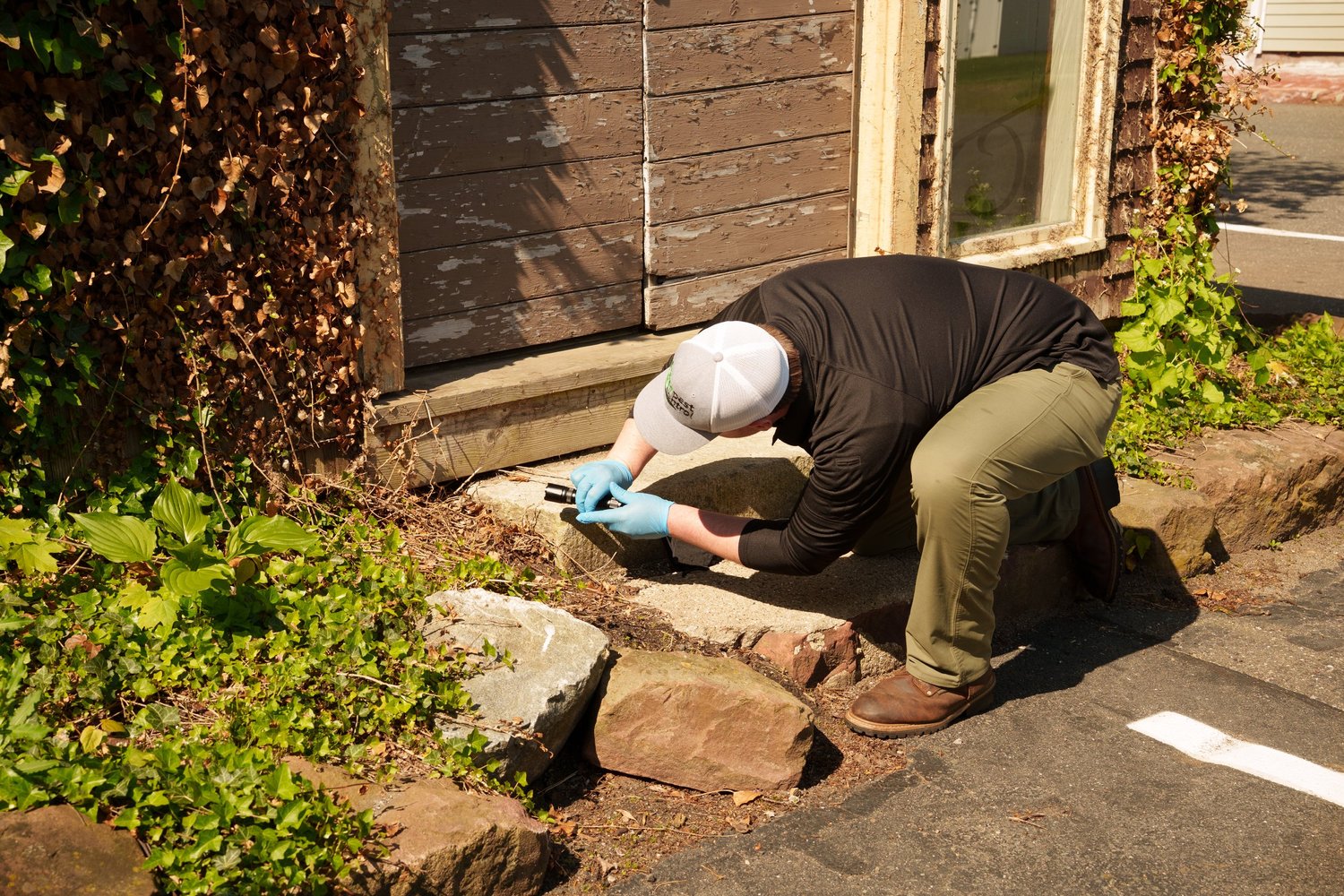
Watch one for a minute after dark with a dim flashlight, which is when they are most active, and note which way the loaded ants are going. Ants carrying something are heading home. That tells you which end of the trail the nest is on, and on a rural property it very often points away from the building rather than into it.
If you can tell us that before we arrive, it saves a genuine amount of time. A trail heading out toward a stump line is a different job from one heading up into a soffit.
Recent Google Reviews
Carpenter Ant Questions from Granby
Should I take the stumps out?
So this will keep happening?
Can you treat the barn too?
How do we know these are not termites?
Will you open my walls?
How much does carpenter ant control cost in Granby?
Every Service We Offer in Granby & East Granby
Show Us the Treeline
Where the land was cleared, what got left, and how close it is to the buildings. That is the conversation worth having first.
We protect the structures. The woods can stay the woods.