
Carpenter Ant Control in West Hartford, CT
Big black ants trailing along a West Hartford window casing in June are usually telling you about water before they are telling you about ants. Carpenter ants go where wood has softened, and on the older homes in this town, the water that softens it very often arrives from the roof.
Big black ants or winged swarmers? Send a photo before you sweep them up. Ant versus termite decides the whole plan.
What We Look For
Signs of carpenter ants
- Large black or reddish ants working the outside or inside of the structure
- Winged swarmers indoors, typically in Summer
- Small piles of sawdust-like shavings, called frass, below trim, sills or baseboards
- A faint rustling inside a wall on a quiet evening
- Galleries in wood that are smooth, clean and dry, unlike the mud-packed look of termite work
Where they nest in homes here
- Wall voids behind exterior door and window casings
- Exterior wall insulation, which is soft enough to excavate easily
- Damp or water-damaged framing, sills and headers
- Rafter tails, soffits and the cornice, wherever roof water has been sitting
What gets confused with them
- Termites, which is the mix-up that matters most
- Pavement and odorous house ants seen on a counter
- Carpenter bees, which bore round holes rather than trail in numbers
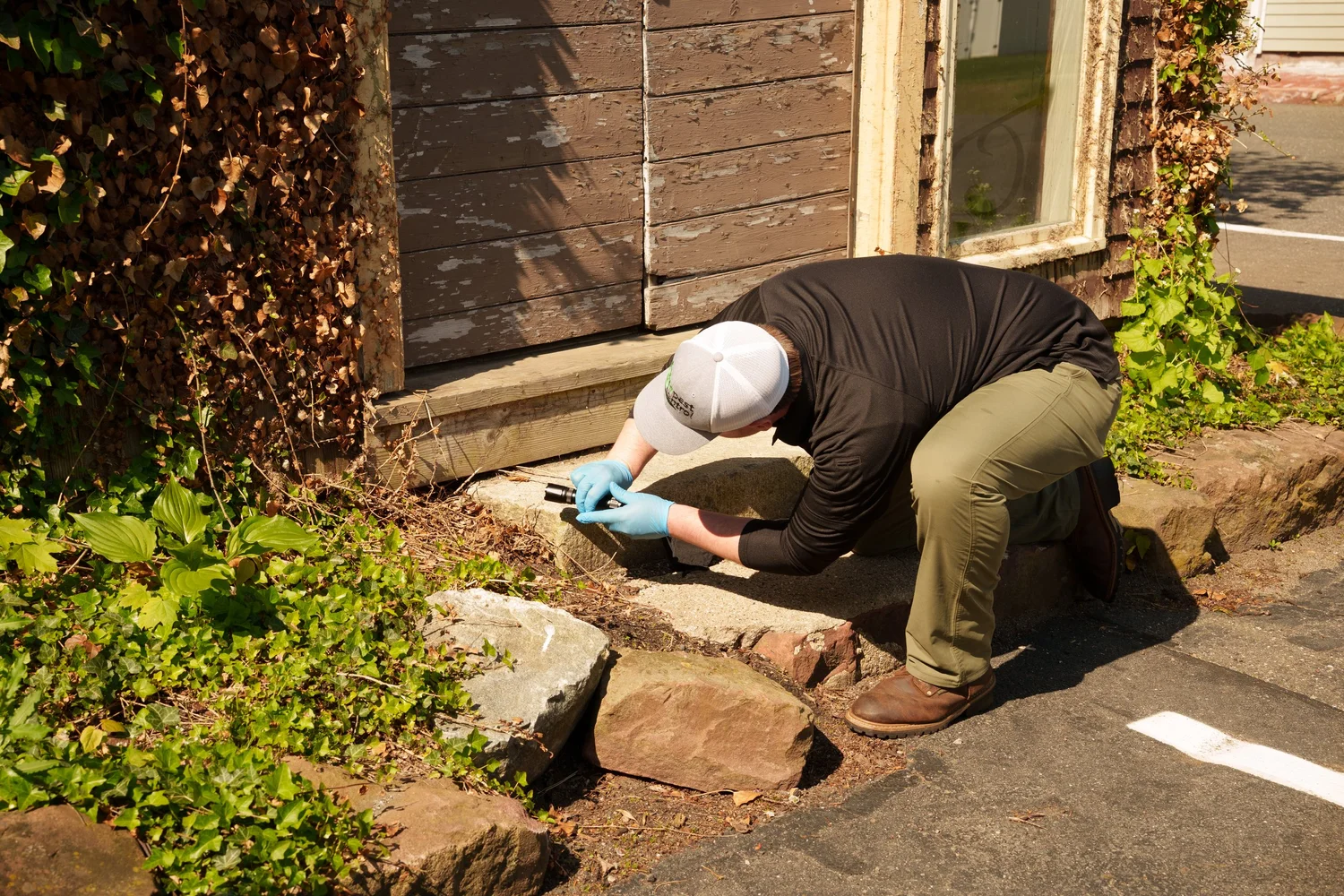
Look Up, Not Just Along the Baseboard
On the older homes we work on in West Hartford, the roof drainage is where we find water most often. Built-in gutters are the detail we watch for: instead of a metal trough hung off the fascia, the gutter is formed into the cornice itself and lined, so that when a seam opens, water does not spill down the outside of the house where someone would notice. It goes into the cornice, the rafter tails and the top of the wall, quietly, until somebody notices ants. Slate roofs with original copper flashing produce the same result at valleys, chimney saddles and dormer cheeks.
That sequence is the one we meet repeatedly here. Ants appear on an upstairs window. The window gets treated. The ants come back the following Summer, because the wood they are working on sits above the window in framing nobody has looked at, staying wet every time it rains. Treating the trail while the water keeps running books a repeat visit for next year.
Worth knowing while you wait for us: carpenter ants carve wood and leave it behind; they do not eat it, so the galleries come out smooth and dry and the excavated material gets pushed out as frass. Termites eat the wood and pack their galleries with mud. Early carpenter ant damage is usually cosmetic, and we are not going to manufacture urgency over a few ants on a casing. The cases that turn structural are the ones written off for years, or fought with repellent sprays that scatter a colony into satellite nests.

From Photo to Treated
Identification comes first
Send a photo of the ant or the swarmer. Ruling out termites is the highest-value minute in the whole job.
A free evaluation, inside and up
Free anywhere we serve. You get a call the day before and another twenty minutes out. On these homes, we pay particular attention to roof drainage and to any areas where water is reaching the framing.
We treat the structure without opening it
Chasing every satellite nest is how treatments turn into demolition. Our protocol renders the entire structure incapable of supporting a colony, so the walls stay closed and there is no contractor's repair bill attached.
We tell you what is feeding it
If roof water, a failed gutter lining, or a flashing detail is keeping wood soft, you will hear about it specifically. Leak and carpentry repair are jobs for a contractor, and we will say which trade you want.
We keep protection active
Foragers keep arriving from dead wood in the surrounding area, so the protection is what holds the line between treatments. Ongoing prevention holds the line without a contract.
Why Homeowners Here Call Us
- We connect the ants to the water, which is what decides whether the problem returns next Summer
- No demolition nest hunt, so your finishes stay intact
- Licensed under supervisory license S-6070, third generation in the trade since 1976, with non-commissioned technicians who are paid to solve the problem rather than close a sale
- Low-risk materials with limited indoor use, safe once dry, usually within twenty minutes
Carpenter Ant Questions from West Hartford
Will they destroy my house?
There is no water stain anywhere. Can it still be a moisture problem?
I only see a few. Is it worth calling?
Can you fix the wet wood too?
How much does carpenter ant control cost in West Hartford?
Recent Google Reviews
Every Service We Offer in West Hartford
Found Big Black Ants? Start With a Photo
Carpenter ants remain manageable when handled early and correctly. Send an image of the insect first, and we will tell you what you are dealing with.
Follow the water, treat the structure, leave the walls alone.