
How Long a Rodent Seal Really Lasts Before It Fails
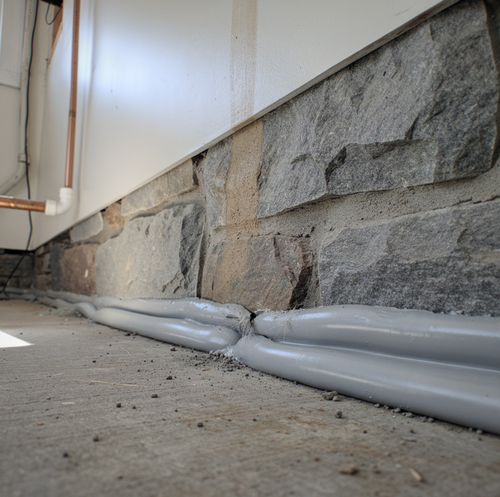
A completed rodent seal isn't a chemical treatment you schedule again and again. It's a specific set of openings, physically closed, that a technician traced back to the routes rodents were actually using at your house, rather than guessed at from the driveway. The day the work finishes, every gap you had is gone, and your house behaves, for a while, like a structure with no openings left to find.
That part is simple enough. What's harder is picturing your house years later: a sill settled a little, a downspout soaking one corner, a stretch of trim something's been testing since spring, whether you've noticed it or not. A seal doesn't fail all at once, and it won't fail the same way at your house as it does two doors down. It loses ground exactly where four forces concentrate, and knowing where tells you when your next check is actually worth scheduling.
What a Completed Seal Is Built to Stop
Exclusion work starts with clearing out whatever is already living inside your walls or attic; sealing then closes the route it would otherwise use to get back in. Once a gap is closed with material chosen to resist gnawing, the specific route a mouse or rat was using stops working, and it keeps not working as long as nothing around it changes.
A finished seal covers one thing: whether the openings a technician found on inspection day are closed. It still ignores the openings that don't exist yet, and your house keeps producing new ones for as long as it stands. You won't see most of that process from the driveway, and the seal is not frozen in time: its materials age while the building around it keeps moving. A seal only covers the ground it was built for, on the day it was built.
What Opens a Seal Back Up Over Time?
Good sealing holds for years, but no home stays exactly as it was on the day the crew finished. A 3-to-5-year re-seal check exists because four separate forces work at the same weak points on your house the whole time: your home settles, the materials used to close a gap age at a different rate than the wall around them, freeze-thaw cycles open hairline gaps a warm season alone won't reveal, and rodents keep gnawing at anything softer than metal or cement, testing the same edges over and over.
None of those four forces waits for the others. Settling can crack a bead of sealant loose at a foundation joint while a mouse is, at the same time, working a soft spot in a fascia board three feet away, and neither problem shows up on the same schedule as the other. That's why the interval is a check on your specific house, not a guess: a technician re-examines the exact points that were closed the first time, and looks at what has changed around each one since then.
You don't need to track all four forces yourself; a technician does that at each visit, and most of that skill is simply knowing where a house tends to fail over the years. A reopened gap is easy for you to miss on your own, because the most common entry points sit low, shaded or partly hidden behind landscaping, where a trained eye expects them and a quick look passes over them.
Fresh droppings, a new gnaw mark, or daylight at a previously sealed spot are worth reporting between visits, since a technician can confirm whether that point reopened or a nearby route is now active.
Why Freeze and Thaw Cut Both Ways
Freeze-thaw cycling gets blamed as a cold-weather problem, and the cold half is real: water works into a hairline crack in masonry or around a foundation joint, freezes, expands, and pries the gap open a little wider each time the temperature swings below freezing overnight. But the warm half of the same cycle matters just as much for your house. Sealant and the surfaces it's bonded to expand and contract as the seasons turn, and every expansion-contraction cycle stresses that bond a little more, whether the stress comes from ice in winter or from sun-heated masonry in summer.
A gap that opens from freeze-thaw rarely stays cosmetic at your place. Once a hairline crack exists at a foundation joint or around a utility penetration, it becomes the softest edge nearby, and a mouse or rat that's already testing your exterior finds it faster than you would walking the same wall. The crack didn't get bigger because a rodent chewed it open first; the movement made the opening, and gnawing is what turns a hairline gap into a route a rodent can actually use.
What Opens Faster in an Older Home?
Older construction opens gaps sooner than a newer, tighter building envelope does, and the reason is structural, not a matter of upkeep. A fieldstone or rubble foundation was built from irregular stones and mortar, not a poured, continuous wall, so it carries far more individual joints where settling and moisture can work, and the framing above it has had decades to shift, dry, and separate at points that were snug when the house was built. If you own one of these older homes, you may face dozens of small openings instead of one obvious hole, none of which flags as the problem alone, and finding every one of them takes patient work.
That doesn't mean every gap at an older house is new. Some of what a technician finds on a later visit is simply a point that was never fully closed the first time, because a fieldstone foundation can hide a second, smaller opening a few inches from the one that was sealed. Checking the stone or masonry around your original seal, not just the exact spot that was worked on, is part of why a later visit at your house takes a careful look, not a quick glance at the same handful of points.
A Seal That's Holding vs. One That's Due
You can often tell whether a seal is still doing its job or starting to age, without needing to know which of the four forces is responsible. The table below lines up what each looks like at the same four locations a technician checks first at your house.
| Location | Still Holding | Likely Due |
|---|---|---|
| Foundation joint | Sealant flexible, no visible gap where it meets masonry | Hairline crack or crumbling mortar at the same joint |
| Exterior trim and fascia | Firm to the touch, no soft or splintered edge | A soft spot or a fresh gnaw mark at a corner |
| Utility line penetration | Sealant intact and pliable around the pipe or wire | Sealant shrunk, cracked, or pulled away from the line |
| Vent and grille screens | Mesh flat and fully attached | Mesh bent, torn, or pulled loose at one edge |
None of this adds up to a guarantee either way. No honest company can promise your house will stay sealed forever, because rodents will also find openings in spots that even a trained technician cannot physically reach, and something softer than metal or cement will eventually give way somewhere. What the check changes is how long a new opening at your place sits there before anyone notices it.
Frequently Asked Questions
Good sealing holds for years, and a technician recommends bringing you back on-site every 3 to 5 years to re-seal what's aged. Between those scheduled visits, a no-contract maintenance service keeps someone watching your property routinely, so an early gap gets noticed well before your next scheduled check arrives.
A steel wool plug can hold your opening for a while, though it may rust over time. Treat it as a bridge, not a substitute for a technician confirming nothing near you has opened too.
Rodents don't find a house at random; they follow scent markings left by earlier rodents, so the routes into your walls stay marked after the animals leave. A seal closes the physical opening, but the next arrivals show up at your old entry points.
A technician confirms your appointment the day before and again within 20 minutes of arriving, then rechecks the points sealed on your first visit before looking further out for openings that have since appeared. You can expect a real look around your whole property, not a glance at the old seals alone.
A lot bordering trees or open land keeps outside pressure on your seal, since more rodents test the exterior than at a lot with less cover. That pressure won't shorten how long a joint holds, but it means a new opening near you gets found faster.
Yes, and it doesn't need a visible sign to justify it. An exterior-facing point, taking sun, rain, and the widest temperature swings, is worth a look before an interior penetration in your home that stays in a steady climate, since it carries more of the stress that can reopen a gap. Scheduling that walk-through near the multi-year mark, not only after something turns up, is what keeps a small opening from sitting unnoticed near you for a full season.
Schedule a rodent exclusion check — a licensed technician can confirm whether every previously sealed opening is still intact or a new gap has opened somewhere along the exterior foundation. Green Pest Control serves the Farmington Valley. Call (860) 658-2266.
