
Why Plugging a Yellow Jacket Nest Hole Backfires Inside the Wall
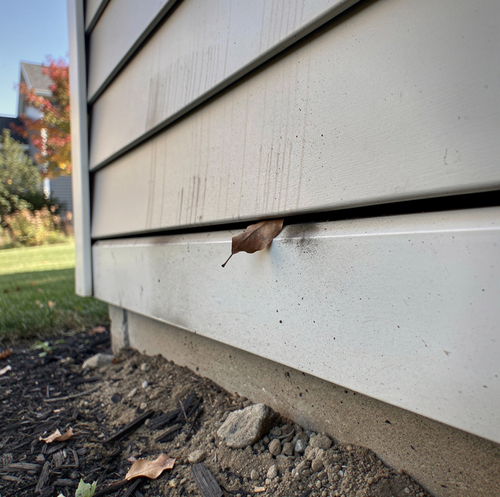
The usual advice sounds sensible. You find the gap where yellow jackets slip into your siding, you hit it with a can of spray or push caulk into it, and the nest dies behind your wall where you never have to look at it. You close one small door, you wait a few days, and your problem starves in the dark.
The colony has other plans. Workers shut inside your wall look for another exit, and your side of the drywall is often the nearest one. A spray at the entrance meets the guards and misses the paper nest deeper in the void behind your siding. Below, you will see how the colony responds to each, and how you and your family stay clear of it.
Why a Blocked Exit Sends the Colony Inward
A yellow jacket nest in a wall is not a hole with insects in it. It is an enclosed paper structure built in the hollow space behind the siding, and queens commonly start one between the layers of a home's siding, leaving only a small gap where workers come and go. The nest material itself is wood fiber mixed with wasp saliva, and the structure is completely enclosed except for a small opening at the bottom. That opening is the only part of the nest you ever see, which is why it looks like a small problem.
Close the gap and nothing inside the wall changes except the exit. The queen keeps laying, the workers keep foraging, and every worker that wants to leave now has to find another route. Wall cavities are not sealed boxes. They open onto the rooms at small gaps, and workers moving through that space can turn up within a couple of days, coming through a light fixture or out along a baseboard. Plugging the entry or spraying it typically drives the colony deeper into the wall and toward the inside of the house, and with a hidden in-wall nest the colony frequently breaks through to the interior.
The standard instruction for nests in wall voids is to move away immediately and not plug the entrance, since disturbed wasps may enter the house or building. That advice not to plug the entrance comes as much from people who study the insect as from those who remove it.
A blocked exit also changes the colony's mood. Workers that were ignoring you on their way in and out are now confined, disturbed, and crowding against whatever opening they can find, and when one breaks through to a bedroom or a kitchen, the ones that follow arrive defensive, not foraging. You have turned a nest that sat outside your living space into one that opens into it.
What Swarms Out When the Entry Gets Sprayed?
Spraying feels different from plugging, because the can promises to kill rather than trap. The trouble is reach. A store-bought aerosol hits the workers standing at the entrance and the first few inches of the void, while the nest itself may sit well inside the wall, around studs and insulation the spray never gets past. The colony loses some guards and keeps its queen.
Some cans are sold as foaming or long-range jet sprays that promise to reach a nest from a distance. Distance does not solve the problem of a nest hidden behind a wall, because whatever comes out of the can still has to travel through a small opening and around everything that lies between the gap and the comb. What reaches the colony is a disturbance, and the colony meets disturbance with numbers.
The colony is built to respond this way. Any noise or disturbance can provoke stinging. Insect stings release alarm pheromones that attract additional workers to sting, and venom from each sting carries the same chemical call, so every sting pulls more of the colony toward the spot where it happened. The person holding the can is the closest target, often standing on a ladder under the eaves, where a sudden swarm is a fall risk as well as a sting risk.
Spraying, caulking, foaming, or plugging the gap yellow jackets use in siding or trim can drive a stinging colony into the house or out at you, so leave the hole alone and let a licensed technician treat it.
What Swarms Up From a Ground Nest When It Is Disturbed?
Not every nest is in a wall. Yellow jackets also nest underground, and they commonly take over abandoned chipmunk burrows, where a mower passing over a hidden ground nest can trigger a swarm in seconds. The vibration of a mower, a string trimmer, or a shovel reaches the nest before the person does, and the workers pour up out of the hole toward whatever is moving above it.
Ground nests are easy to miss until someone is on top of one. The entrance is often a plain hole in the lawn, at the edge of a bed or under a shrub, and the steady traffic of workers in and out is the clearest clue. Getting stung twice in one patch of yard is another. A minute of watching from several steps away shows you more than any close look.
A ground nest brings its own temptation: pouring something down the hole, stamping it shut or covering it with a rock. Each of those disturbs the nest in the same way a mower does, and covering the hole leaves the returning foragers guarding the immediate area while they search around for their way back in. The safe handover here is simple. A licensed stinging-insect technician treats the burrow before the area is mowed, played on, or dug in again, and until then your part is to keep people and pets well away from it, flag the spot so nobody runs a mower over it by accident, and hold off on yard work nearby.
Why the Nest Is Bigger Than the Hole Suggests
The size of the opening never changes, which is why it misleads people. The colony behind it keeps growing. A colony starts with a single queen that survived the winter, builds all season, and peaks in early-to-mid fall, when the nest is most populous and the workers most aggressive. A hole you notice early in the year may lead to a small founding colony; the same hole later on can lead to thousands of workers.
Nests quickly reach a population of approximately 4,000 to 5,000 workers with 10,000 to 15,000 cells by August and late September. A plug or a spray that might have stirred up a young colony meets a full one if you wait, and a full one is the version most likely to push through a wall.
The growth cuts both ways across the year. A nest found in spring is small but still growing, and blocking it then only pushes a smaller colony inward. A nest found late in the season is large and at its most defensive. Neither timing makes plugging or spraying safe.
What a Technician Does Differently
The difference lies in where the treatment goes. The correct approach treats the colony where it lives without trapping it against your living space. In practice, the entry stays open while the colony is treated, so the workers keep using the route that leads away from your rooms instead of hunting for a new one.
A technician also brings things a homeowner on a ladder does not: protective gear, an understanding of how the void runs, and the judgment to spot when a nest has already moved deeper than the entrance suggests. A technician also plans for the workers who are out foraging during the visit, since they return to the same entrance afterward. Keeping the work at the colony's own entrance also keeps the disturbed workers on the exterior side of the wall, away from the rooms you live in. None of that is a method you should copy, and nothing in this article is a guide to applying anything yourself.
The First Few Minutes After You Find the Hole
The moment you spot workers streaming in and out of a gap, the useful moves are all about distance. Step back to where the flight path is not crossing your head, and watch long enough to see where the hole is and whether it sits in the siding, the trim, or the ground. A photo from a safe distance is worth more than a close look, and it gives the technician a head start before the visit.
Then think about the people and animals who might cross that path without knowing it. Bring pets in, keep children away from that side of the house, and put off mowing, trimming, or ladder work near the spot. If the nest is in a wall, check the rooms that share that wall so you can catch early signs of anything making it through.
When you make the call, the details that help most are the ones you gathered from a distance: where the hole is, whether it sits in siding, trim or ground, roughly how busy the traffic looked, and whether children or pets use that part of the yard. None of that requires getting any closer than you already were.
What you leave alone matters as much. The spray can stays on the garage shelf, the caulk gun stays in the drawer, and the hole stays open rather than blocked, because an open exit is what keeps the colony heading outside while a technician gets there.
Frequently Asked Questions
Night makes the trap more complete, not safer. Almost the entire colony is back home after dark, so a plug shuts all of them in, and the search for another exit starts by morning. You would be doing it near the entrance in poor light, with no way for you to see how many workers are sitting inside the opening.
Unlike honey bees, yellowjackets can sting repeatedly and often do so near their nesting sites. That second half is why keeping your distance from the hole protects you better than moving fast once they are out.
Stay clear and let someone else handle it. If you know that you are allergic to insect stings, you should not attempt to remove a colony yourself. If you are stung and your reaction goes beyond the sting site, seek medical care right away.
Leave the room, close the door behind you, and keep children and pets out. A towel along the gap under the door helps. Swatting or spraying them indoors only adds alarm pheromone to a closed space. Workers inside mean the colony found a route through your wall, so call for help the same day.
Yes, once activity has stopped, and a technician has confirmed the colony is dead. Sealing is the last step, never the first. If your gap is a split or loose piece of siding, closing it properly may mean repairing the siding itself, which is usually a job for a contractor.
Usually not, though it can happen. Abandoned nests typically decompose and disintegrate during the winter, or are occasionally reused by another queen. So a dead nest inside your wall is not a threat on its own, but the cavity and the gap you spotted are both still there. A new queen looking for a sheltered site in early spring can find the same opening you found yourself, which is the strongest reason to have it closed once your wall is confirmed empty.
Book a free evaluation for a yellow jacket nest — a licensed technician confirms where the colony sits in the wall or ground and treats it there, without trapping it against your living space. Green Pest Control serves the Farmington Valley. Call (860) 658-2266.
