
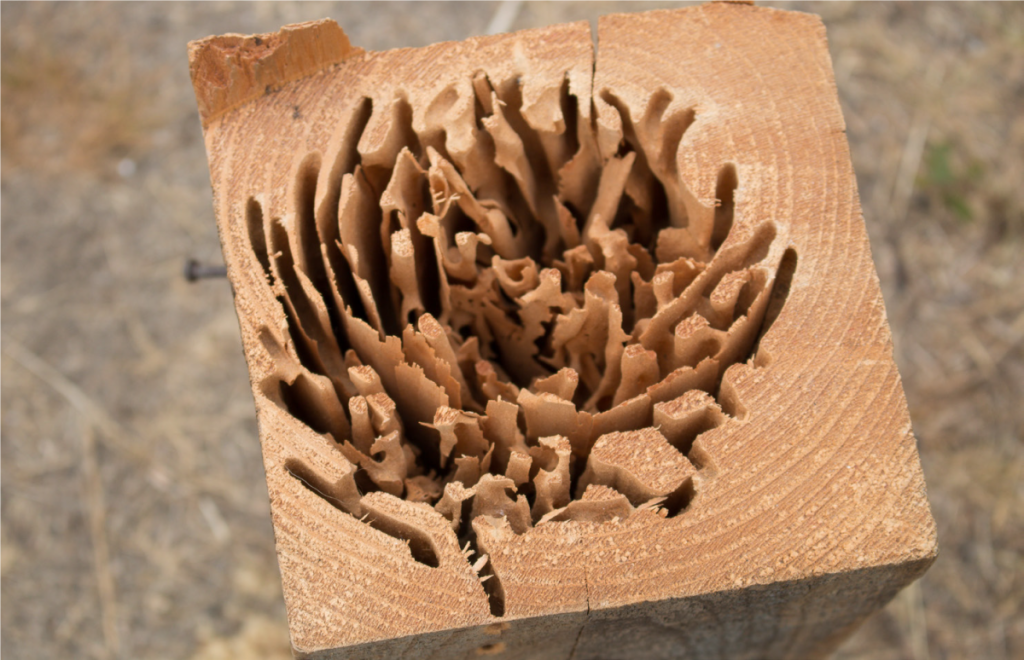
Carpenter Ant Control in Windsor, CT
The most common thing we hear on a Windsor carpenter ant call is that the homeowner has already sprayed the windowsill where the ants are and they came back anyway. That is not a failure of effort. Carpenter ants work wood you cannot see, and on older homes with wood sash the water reaching it often comes in through the window itself.
What Points to Carpenter Ants
- Sawdust-like shavings, called frass, gathering below a sill, a casing or a piece of trim
- Winged swarmers indoors, most often in Summer
- Large black or reddish ants working a trail along a casing or the siding beneath it
- A faint rustle inside a wall on a still evening
- Smooth, dry galleries in wood wherever it has been opened up
The Window Is the Water Source
Windsor sits where the Farmington meets the Connecticut, and much of the land along both rivers lies within the 100-year floodplain. The town says something useful about that in its own plan: much of it could not be built on under today's rules, and many of the structures standing there predate the regulation. A house in that position lives with damp that a newer house on higher ground never deals with, and damp is the whole story with this insect.
The windows are where it usually starts. If your house still has its wood sash, and plenty of the older Windsor homes we work on do, then it depends on one consumable: the glazing putty holding the glass into the frame.
Putty does not last forever. It hardens, shrinks, cracks at the edge, and eventually lets water past the glass and into the sash rebate. From there it runs down inside the frame, into the sill, and into the framing behind the casing, and it does all of that on the inside of the assembly where nothing looks wet from either direction. Add a sill whose paint film has failed, or a storm window that traps water rather than shedding it, and the wood behind a perfectly respectable-looking window can stay damp for long stretches.
Carpenter ants do not bore into sound, dry timber by preference. They excavate wood that has already softened, and a window frame that has been quietly taking water for years is the softest wood in the wall. Which is why the ants turn up at windows, why treating the visible trail achieves so little, and why the same window produces ants again the following Summer.
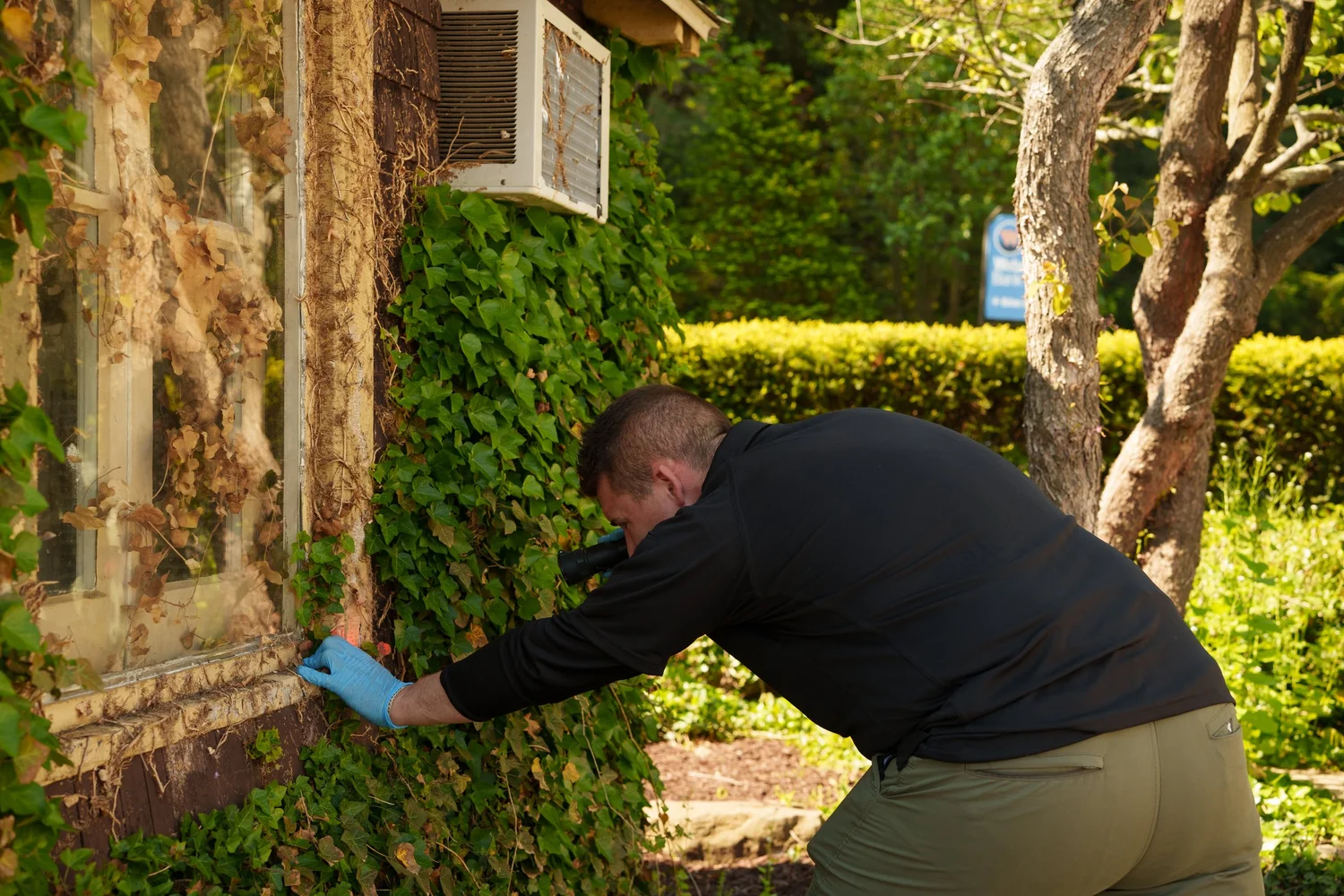
Go and look at your windows from outside on a dry day. Cracked or missing putty, a sill that holds a puddle rather than shedding it, paint lifting at the bottom rail, a storm window with blocked weep holes. Any of those is worth telling us about when you call, because it points at where we should start.
From Photograph to Treated
Identification comes first
Send an image of the insect. Whether it is an ant or a termite decides the method and the urgency.
A free evaluation that includes the openings
Free wherever we serve. Confirmed the day before, with a twenty-minute heads-up on the day.
We find the wet wood
Windows, sills, casings, and anywhere else water is reaching framing without announcing itself.
Whole-structure treatment, finishes intact
Chasing every satellite nest is how treatments turn into demolition. The protocol treats the structure to make it a poor host for a colony.
Protection stays up
Foragers keep arriving from nearby dead wood, so ongoing prevention is what stops the yearly recurrence. No contract behind it.
Ants, Termites, and Why the Difference Decides Everything
Carpenter ants carve wood and leave it behind; they do not consume it. The galleries come out smooth and dry, with the excavated material pushed out as frass. Termites eat the wood for its cellulose and pack their galleries with mud. That single difference changes the diagnosis, the treatment, and how worried you should be.
Two practical consequences follow. First, the frass under a sill is diagnostic: it is excavated wood, so where it lands roughly indicates where the gallery is. Second, damage accumulates at the pace of excavation rather than consumption, which on a window frame is slow. Nobody needs to panic over a few ants on a casing.
Carpenter Ant Questions from Windsor
They keep coming back to the same window. Why that window?
Does this mean my windows need replacing?
How do I know it is not termites?
Will you open my walls?
I have already sprayed. Have I made it worse?
Are the treatments safe around children and pets?
How much does carpenter ant control cost in Windsor?
Recent Google Reviews
Every Service We Offer in Windsor
Why Windsor Calls Us
- We trace the ants back to the water, which is what decides whether they return next Summer
- No demolition nest hunt, so your casings, trim and plaster stay where they are
- Honest about scope: we handle the ants and tell you plainly which trade should handle the wood
- Non-commissioned licensed technicians under supervisory license S-6070, third generation in the trade since 1976
- A small team, so you are dealing with the same handful of people rather than a rotating crew
Send Us the Photo First
An image up front can save weeks of treating the wrong insect. After that, we can talk about which windows to look at.
The ants are downstream of the water. We start upstream.