
Powder-Post Beetle Control in Simsbury & the Farmington Valley
Targeted Treatment for Aged WoodLong-Term ResolutionNo Contracts, No SalesmenCT Licensed B-3361
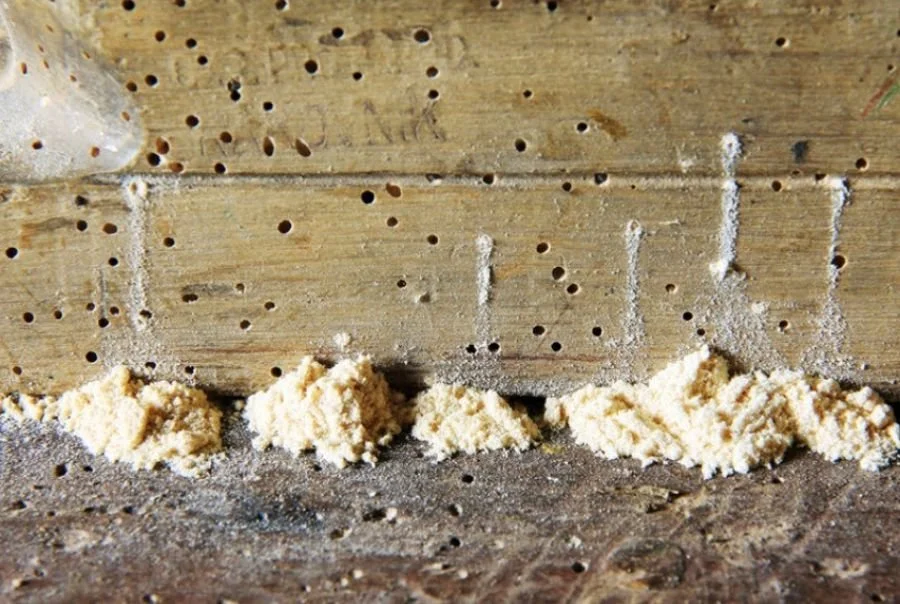
Tiny round holes with flour-like powder beneath them are the classic sign. The damage is slow and mainly goes unnoticed, so the best approach is often protecting wood if it has both signs of exit holes and no treatment history.
Found tiny holes and powder? Send us a photo. Beetle, termite or carpenter ant, we'll tell you which.
Three Things To Consider
Powder-post beetles cause real worry, but a few facts make the situation much clearer.
Fresh Powder Certainly Means Active
Live, feeding beetles produce fresh, powdery frass that sifts out of the exit holes. Holes with no visible fresh powder may still be active territory since larvae feed deep inside the wood for years. New homeowners are always advised to protect where exit holes are observed and no treatment is on record. Our desiccant-based techniques simply take away the ability for these insects to survive the conditions; a decades-proven, low-risk process.
They're Not Termites, but They're Serious
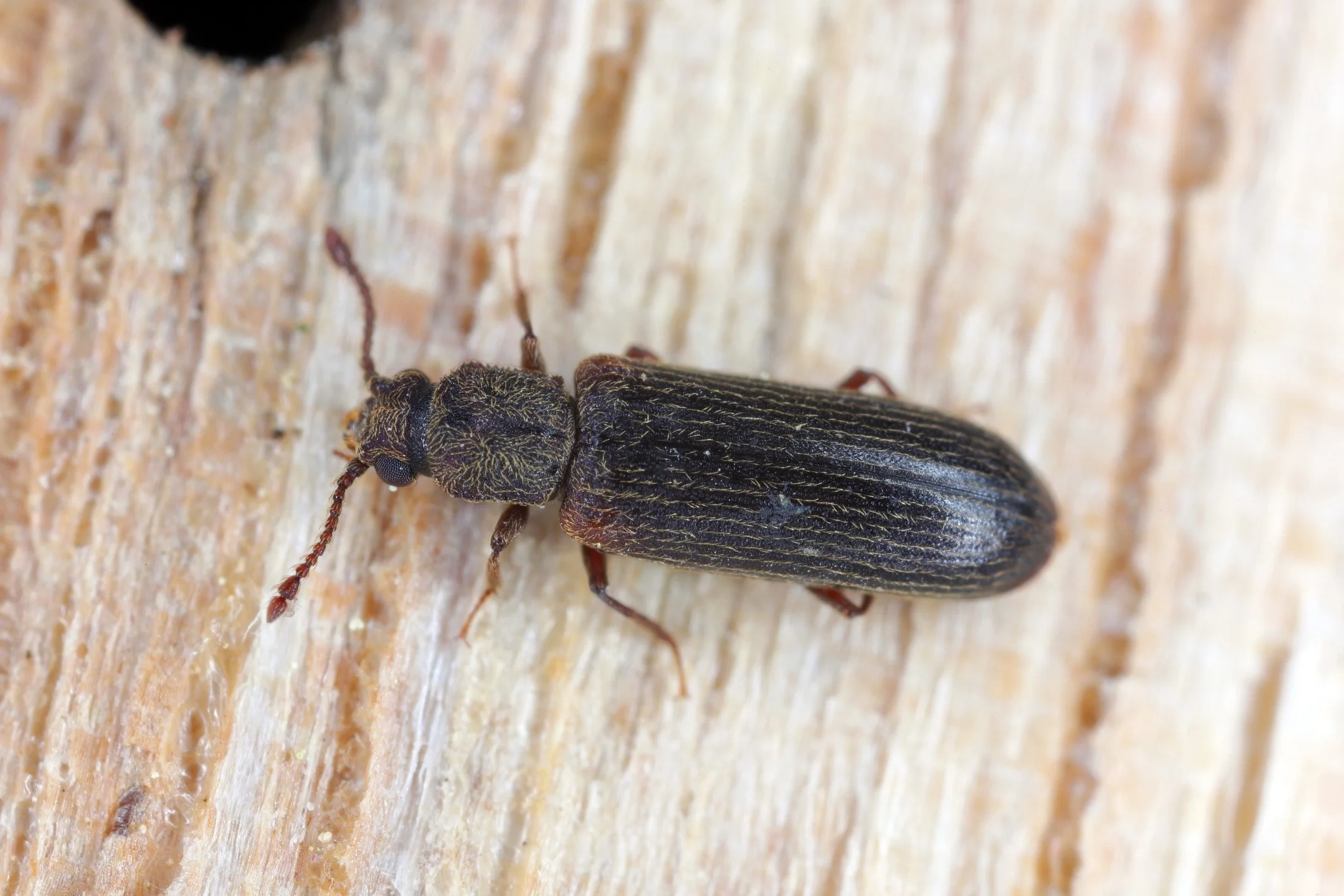
Their larvae feed on the starches in seasoned wood, tunneling narrow galleries and turning the interior to powder. The damage accrues slowly, so there's no need to panic, but left alone, they're second only to termites among wood-destroying insects. The identification isn't a formality. It is the decision the entire plan hinges on.
They Can Reinfest Seasoned Wood, So Prevention Matters
Powder-post beetles can reinfest dry wood repeatedly, laying eggs in the pores and cracks of unfinished hardwoods. We've seen homeowners self-procure an infestation, then watch new holes appear in the same wood two years later. That is exactly the trap our industry-leading products and techniques are meant to close.
What We Look For, and What We Treat
Signs of powder-post beetles
- Tiny round exit holes, pinhead-sized (about 1/16 to 1/8 inch)
- Piles of fine, flour-like frass beneath beams, floors, furniture or trim
- Fresh powder sifting from holes, a sign of active beetles
- Holes in hardwood floors, paneling, beams, antiques and trim
- Wood that sounds or feels weakened in heavily infested areas
Where we find them
- Structural beams, sill plates and framing
- Hardwood flooring, paneling and trim
- Antique and wood furniture
- Unfinished, seasoned hardwoods like oak, ash and maple
- Damp basements, crawlspaces and other higher-moisture wood
How they enter
- On infested lumber, furniture, flooring or antiques brought indoors
- Adults laying eggs in the pores and cracks of unfinished wood
- Wood with higher starch content, newer or improperly dried
Situations we handle
- Infestations with fresh frass and new exit holes
- Holes observed for the first time, and no other apparent evidence
- Protecting hardwood floors, beams and antiques
- Homes with damp wood or recently introduced infested items
How Our Powder-Post Beetle Control Works
You Reach a Real Person or Send Us a Photo
Powder-post beetles versus termites or carpenter ants, correct identification is the first step, and we can usually call it from a photo.
We Evaluate for Free
We may also offer a free evaluation so we can visit and take down further details. We confirm the day before and again within 20 minutes of our arrival.
You Get an Honest Recommendation and Price
Sometimes that means treatment; sometimes it means simply removing and replacing a single piece of infested wood. No selling you treatment you don't need.
We Treat the Active Infestation With a Desiccant
The desiccant dries out the larvae boring inside the wood, applied the low-risk way to the affected timbers and surfaces.
We Address the Moisture That Invited Them
Damp basements, crawlspaces, unsealed wood: the conditions that make a home hospitable to reinfestation.
We Help You Prevent a Comeback
Keeping wood dry or being careful about untreated lumber or antiques. We'll give you the practical checklist.
“Green Pest Control is the best! They are knowledgeable, responsive, trustworthy and excellent to work with.”
— Matt Cross · Google reviewWhat Affects the Price and What Interests Us First
Powder-post beetle jobs range from a single piece of furniture to widespread structural wood. We evaluate free, then quote exactly what's needed. You've already found the holes and powder, so it's an evaluation to scope what's active, not a paid inspection to go looking for a problem.
- Whether the wood has any record of previous treatment
- How widespread it is: one item, one room, or structural timbers
- The type and accessibility of the affected wood
- Whether removing and replacing a limited piece of wood is the better fix
- Moisture conditions that should be corrected to prevent reinfestation
- Whether ongoing monitoring is recommended afterward
- Discounts when a Preventative Maintenance Service is already in place
Sometimes the Best Answer Is Free
We genuinely won't recommend treatment for holes that turn out to be inactive. The free evaluation gets you an honest assessment first, sometimes the best, cheapest answer is that you don't need us at all.
No pressure, no contract, no treating dead holes.
Honest, Knowledgeable Help Our Neighbors Trust
Why Valley Homes Get Powder-Post Beetles
Older Homes With Hardwood and Antique Timbers
The same character that makes these homes beautiful (real oak, ash and maple, sometimes generations old) is exactly the seasoned hardwood the beetles lay their eggs in. The homes most at risk are exactly the older, character-filled ones the Valley is known for.
Antiques and Reclaimed Wood
An infested piece brought home from an estate sale or salvage yard can carry beetles indoors. If you've recently brought home a great salvage find and then spotted fresh holes, that timeline is usually the answer to how it started.
Damp Basements and Crawlspaces
Structural wood close to the ground or in a humid cellar is more vulnerable. Improving ventilation or addressing a chronically damp cellar does double duty, less hospitable to beetles, and better for the house overall.
Unfinished and Unsealed Wood
The beetles lay eggs in the pores of unfinished wood: raw basement beams, the underside of a hardwood floor, unpainted trim. Coincidentally these unsealed surfaces also allow professional formulations to absorb into them far more effectively.
Slow Damage, Long Timelines
Larvae can feed inside the wood for months or years before adults emerge. The flip side is reassuring: there's almost always time to address it properly once it's found, a measured assessment beats a panicked, expensive decision every time.
Worth Protecting What's Irreplaceable
A hand-hewn beam or an heirloom dresser can't be replaced. We treat them with the care they deserve, which sometimes means the gentlest effective option and a careful eye rather than the most aggressive treatment available.
The Technical Side of Real Powder-Post Beetle Control
Confirming a cause for concern
Fresh, powdery frass or bunched pin-sized holes are the main indicators we generally come across, with a potential to look like or cohabitate with all other wood destroying insect species in our area. At times water damage also has some similarities in appearance. A firm identification is the first step we take before providing professional recommendations for any concern.
How a desiccant treatment works
A desiccant works by drying out the larvae tunneling inside the wood rather than relying on heavy chemistry, a low-risk way to reach the insects in the galleries beneath the surface, fitting our whole philosophy of solving the problem with the smallest footprint.
Why moisture is half the battle
A damp crawlspace or unsealed cellar beam is an open invitation, while drier, sealed wood is far less hospitable. Addressing the moisture both supports the treatment and is one of the most effective long-term preventives there is.
The reinfestation cycle
What makes these beetles persistent is their ability to reinfest seasoned wood generation after generation. The real solution isn't just killing the current larvae but breaking the cycle, then changing the conditions so the next generation has nowhere hospitable to live.
Telling wood-destroyers apart
Termites eat wood and pack galleries with mud; carpenter ants carve clean galleries and push out coarse shavings; powder-post beetles bore narrow tunnels and leave fine powder and pinhole exits. Having handled all three across the same region for years, we can usually call which one we're looking at from a photo and a few questions.
Powder-Post Beetle Questions We Hear Most
How much damage can powder-post beetles do?
Their larvae tunnel inside dry, seasoned wood, turning the interior into fine powder. Heavy infestations can weaken beams, flooring, furniture or trim, they're second only to termites among wood-destroying insects, but the damage occurs slowly, so there's usually time to address it.
How do I know if the beetles are still active?
Fresh powdery frass sifting from the holes and new holes appearing is a tell-tale sign. Sometimes the areas below can be cleaned and monitored. Regardless of frass or new holes, if evidence has no record of being addressed, the recommendation is always to protect the wood and ensure they no longer spread.
Are powder-post beetles the same as termites?
No. Termites eat wood for cellulose and pack galleries with mud; powder-post beetle larvae feed on starches in seasoned wood and leave fine powder and pinhole exits. Different pests, different treatments.
How did they get into my home?
Most often on infested lumber, flooring, furniture or antiques brought indoors, or adults laying eggs in the pores and cracks of unfinished wood.
Do I have to replace the infested wood?
Not always. For limited cases, removing one piece is sometimes the best fix and we'll say so. For wider infestations, desiccant treatment of the affected wood is the answer, and we'll tell you honestly which situation you're in.
Is the treatment safe for my family?
Yes. The desiccant approach is a highly effective, sodium-based low-toxicity option by design. It is applied locally to all accessible surfaces having evidence of beetles, and not broadcast throughout the building.
How do I prevent them from coming back?
Keep the wood dry, monitor vulnerable or previously treated surfaces, and inspect reclaimed lumber and antiques before they come through the door. We'll give you a practical checklist.
How much does treatment cost?
It can depend on the volume of surface areas infested, degree of difficulty to access treatment sites, how widespread the evidence is, and the condition of the wood to name a few. Our prices are at or below market average and always reflect our desire to earn long-term relationships with clients. Our materials and techniques remain superior to the alternatives.
Tell Us What You're Seeing, We'll Take It from There
A real person, a free evaluation, and an honest answer: treatment, a single board replaced, or nothing at all if the holes are long dead. No contract, no salesman, no pressure.
Protecting the irreplaceable, calmly, correctly, and only when it's needed.